
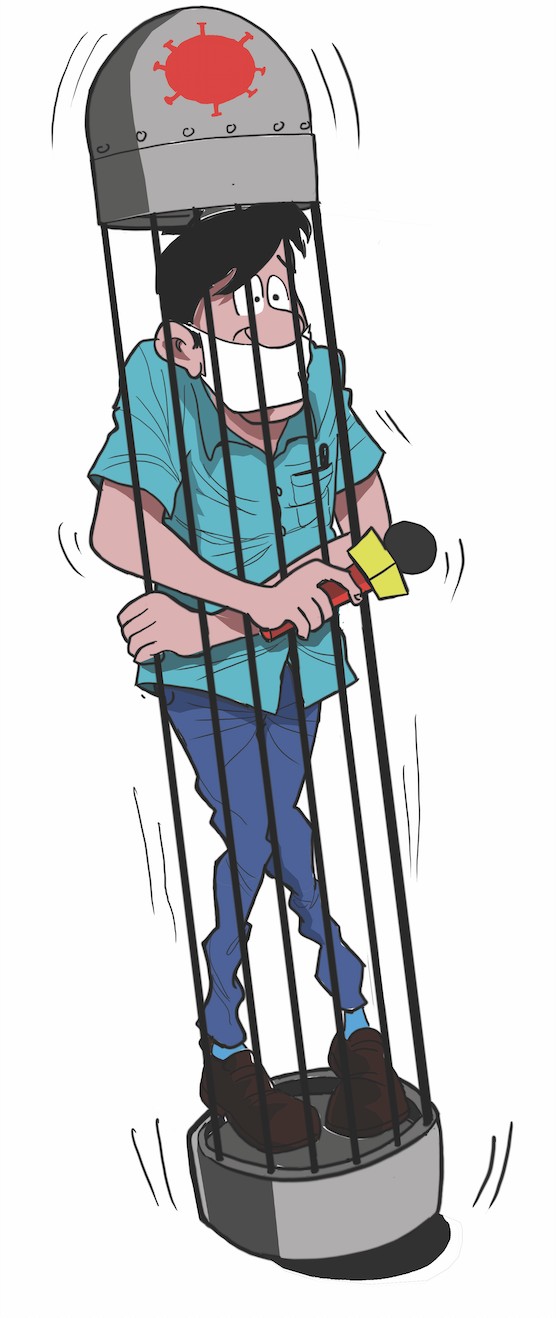
In many countries across the world, even those with history of defending democracy and press freedom, the coronavirus pandemic has become a cover for suppression and control. Lockdowns are an excuse for crackdowns.
Just as quarantines curtail freedom of movement, so the global outbreak has been used to clamp down on the freedom of expression. To be sure, the trend started long before the coronavirus, as demagogues used the free media and free elections to stoke populism and get themselves elected.
Journalism is not a crime... and fake news on social media is not journalism, Namrata Sharma
The chief purveyors of falsehood are the ones who are using the pretext of ‘fake news’ to mute criticism. And here in Nepal, as the government of Prime Minister K P Oil is cornered in a intra-party power struggle, there is increasing intolerance of criticism as we have noted in this space in the past two years.
In a speech on May Day on Friday, Prime Minister Oli used the occasion to lash out at the press and social media for endangering Nepal’s stability. “The Nepal Communist Party and citizens will never allow attempts to undermine stability by those with vested interests,” he said.
Starting with the Penal Code criminalising satire, the ban on journalists publishing personal information on public officials, drafting a Media Council Bill that could haul journalists over the coals on vague infringements, jailing bloggers and YouTubers, and a draft Information Technology Act with hefty fines for ‘improper’ social media posts, it looks like the government strategy is to gag the media in installments.
Some of these provisions are being applied to critics of the government, but selectively, so that people accused of crimes of the same nature during the nation-wide lockdown get different punishments.
Some who have been tracked down for Facebook posts on social media have been returned to their guardians, others like former secretary Bhim Upadhyaya last week was imprisoned on charges of spreading misinformation about the Covid-19 pandemic and defaming senior government officials. He has since been released on bail, but the message is to kill the messenger. He is being made example of, so others behave themselves.
Upadhyaya was the 14th person to be charged under the Electronic Transaction Act during the COVID-19 lockdown. Of these, the Police Cybercrime Bureau has filed cases against two individuals while the Metropolitan Crime Division has charged one. Police have also taken in five for ‘posting baseless information’.