
In this installment of the memoirs of veteran Gurkhas we begin 89-year-old Bharati Gurung's story this week. He fought in the Northwest Frontier Province in present day Pakistan and Afghanistan, and during World War II. His story is part of Lahurey ko Katha that records the lives of 13 retired Gurkha soldiers, most of them over 75 years old. Published by Himal Books, this fortnightly column has been translated from Nepali by Dev Bahadur Thapa for Nepali Times. Bharati Gurung remembers fighting fearsome Afghans, daring German soldiers and how Gurkha soldiers were thought to eat the flesh of dead enemy soldiers.
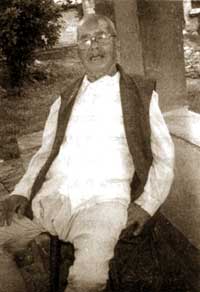 I arrived in Dehradun after my enlistment on 20 October 1932. In the course of our six-month training, war had broken out in Afghanistan but we hadn't taken the oath of allegiance. There were strict orders from above not to send recruits to the front if they hadn't sworn allegiance. so, a few days after that notice, we all took our oaths at Landikotal in Pakistan. The war lasted till 1934 and afterwards we were sent to Dehradun. In 1934-35 fierce fighting began again at Landikotal in Baluchistan, which is now in Pakistan. In that war Subedar Mehar Singh Gurung of Parbat was killed. His brother Prem Bahadur Gurung of the same regiment came through unscathed. In 1937, we were once again sent back to rest.
Three notorious countries of the world, Germany, Italy and Japan joined hands to crush England and America. Gradually, a full-scale world war started in 1939. Initially, it was just a propaganda war. Hitler made a propaganda film depicting the sky filled with their planes, every inch of the land filled with their tanks and the sea with their ships. This went to the extent that quite a few viewers could not bear to see the whole movie and left the cinema. For their counter- propaganda, the British made Gurkha soldiers shave their heads except for a tuft at the back to resemble a wireless antenna. They spread rumours that these soldiers ate the flesh of fallen enemies. There also was a regiment from Africa about whom similar lies were spread. 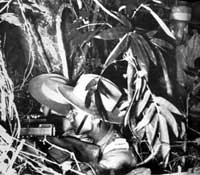 The Germans showered us with leaflets in Italy and Africa from their planes, telling our soldiers that their lives were worth only Rs 16 and called us to sit and eat with them. The greatest battle was fought in Africa. In Tunisia we fought or three years against Hitler's troops. His men were daredevils, brainwashed by Hitler.
The Germans did not marry short women and always looked out for tall, healthy mates. While it is customary among our men to select and seduce women, with them it was the opposite. The women folk looked out for men who were tall and young. In general, their men married by 35, the women by 25. The parents are happy with their daughters' choice.