

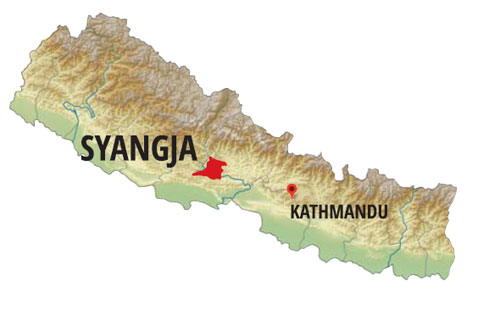
Every time I visit my hometown in Syangja, the most frequently asked question is: Which way is Nepali politics headed? Since I have always been over-optimistic about Nepal’s future, my answer is that there is hope.
Waling in Syangja is where I grew up in an ‘upper’ caste family that was so poor that I used to be malnourished as an infant. When I was a toddler my family seriously considered giving me away for adoption to a Norwegian engineer working in the Andhikhola Hydropower Project. I was saved by the violent opposition of my mother. I have heard that story so often that it feels like a memory. Much later, I tried corroborating it in the historical context with economic data and the political condition of Nepal at that time.
Waling was at the centre of Garhaun Kot, one of the cluster of 24 states west of Kathmandu that was merged in to the Gorkha Kingdom during the expansion of the late 18th century. It was ruled by the Khand dynasty. Dilip Pratap Khand, the NC politician whose father was elected to the first parliament of 1959 and was himself elected Deputy Mayor of Waling municipality in local elections held 20 years ago places this kingdom of his ancestors at the start point of the Shah dynasty.
There is little history of the time, but it is not difficult to imagine that local states ran almost like a miniature Kathmandu darbar with the same court intrigues and whimsical ruling family. But unlike Kathmandu, even the rajas here were not rich and with no economic activity other than agriculture, their subjects lived in grinding poverty. Brahmins like my grandfather may have been high in the caste hierarchy, but were poor and oppressed by the rajas.
According to one family story, my great-grandfather was punished by the Raja because he dared challenge his favourite in a stone throwing competition. Being a Brahmin, grandfather would have been spared physical punishment but it was perfectly possible for him to be driven into exile. My grandfather had spent 30 years of his adult life in Northeast India. At the age of 76, grandfather faced a medical complication at Manipal Hospital in Pokhara and was referred to a big private hospital in Kathmandu. He was unconscious and died before reaching a city he had never seen while alive.