When he went to work in Malaysia four months ago, Ram Hari Katwal had everything most Nepali men dream of: a house, a wife and two little children.
Today, he has lost almost everything. His wife Hima and one-year-old son Bikram are dead, his house is gone. But his five-year-old Biraj survived.
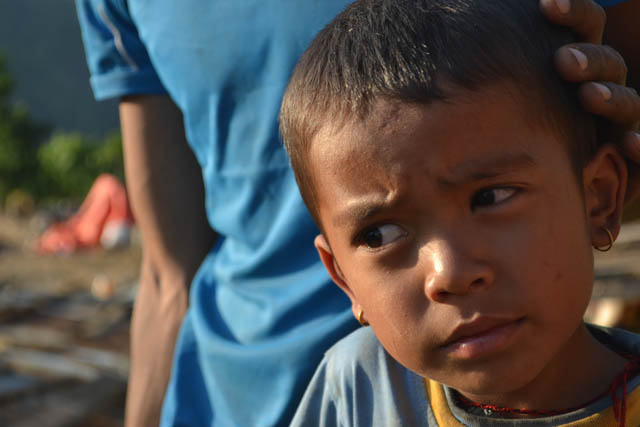
AFTERSHOCK: Biraj Katwal now lives with his father who returned from Malaysia after his wife and younger son were killed in the earthquake, and his home in Melamchi destroyed. Photo: Om Astha Rai
"I could not see my wife and son before they were cremated," said Katwal with a faraway look. "I wanted to return home immediately but it took me two weeks to get permission from my company."
Katwal, 26, is now with his son in a temporary shelter made of timber and tin he salvaged from the ruins of his house in Melamchi of Sindhupalchok. He has decided not to return to Malaysia. It was only last year that Katwal built a house with a bank loan, and he went to Malaysia to pay it off.
"I have not paid off my loan yet," he says. "And I now have to take more loans to rebuild my house, the government is never going to give us enough."
One silver lining about the fact that more than 2 million Nepalis like Katwal are working abroad means that their families can use the money they send home to rebuild their homes. Many Nepali young men also survived because they were not here when the earthquake struck.
However, the absence of able-bodied men in the villages was acutely felt in the rescue of people trapped under the rubble on the first few days after the quake struck. Now, there may be cash but there is a shortage of men for reconstruction.
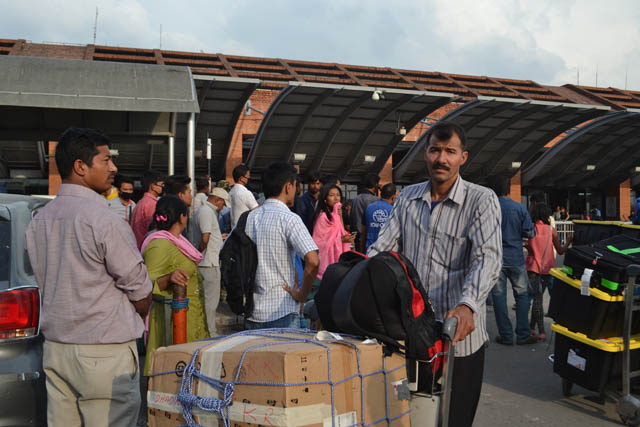
In village after village, women, children and the elderly are left to fend for themselves. This week at Kathmandu airport, every flight from the gulf and Malaysia was full of migrant workers returning home.