
 |
It's 8:30 in the morning and long lines of uniformed girls and boys carrying bags nearly as big as themselves are waiting for buses or walking to school here in Birgunj. Private and government schools and colleges have mushroomed in this border town, but a different kind of school has been functioning outside the purview of the state for years.
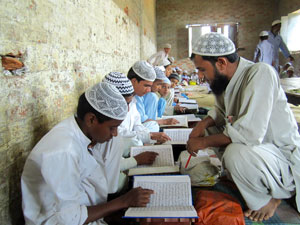
Islamic religious schools known as madrasas which offer courses in Farsi, Urdu, Arabic along with Islamic history, philosophy, ethics and culture are the institutions of choice among Nepali Muslim families. Although certificates from madrasas are generally not recognised by the government, parents prefer faith schools over 'regular' schools because they want their children to grow up with Islamic values and traditions.
In the past decade, the Muslim community in Birgunj has experienced rising literacy and women's education in particular has progressed considerably. Religious leaders have been encouraging female education and more parents are sending their girls to schools. However, with little state support and supervision, madrasas are struggling to pay their bills and provide better facilities. As a result, the quality of education is suffering.
Sheikh Samir, chairman at Yateemkhana Daruk Yata Islamiya in Chapkaiya says his madrasa is in a perpetual financial crunch. The school runs entirely on donations from Muslim families during Eid each year.
Like Samir, Hafeez Sheikh Baidullah's madrasa at Lathgalli is also dependent on donations from local businessmen. "We need help with funding, teacher recruitment, and renovation of our buildings. But the government has shown no interest so far. Classes are still going on, but it's very difficult to teach when the infrastructure is so poor and when there are no books," explains Baidullah.
Char Hafeez, who teaches at a madrasa with 150 students, says his school faces similar problems and the District Education Office (DEO) has repeatedly ignored their pleas for financial help. While lack of funds puts madrasas in a precarious position, Muslim students also face another challenge: since most madrasas offer classes until tenth grade, only a handful of students go on to colleges and universities. Parents are reluctant to send their children, especially girls, to co-educational and non-religious institutions.