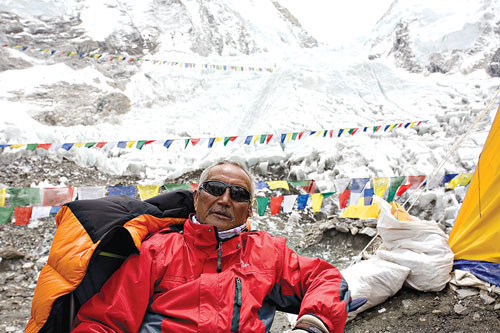
Heavy unseasonal snowfall engulfed Mt Everest this week as a team of eight Nepali guides fixed ropes and ladders on a new, hopefully safer route up the Khumbu Icefall. More than 300 climbers from 35 expeditions are waiting at Base Camp for the route to be ready and the weather to clear.
The ‘Icefall Doctors’, as they are called, are doing the most dangerous part of the Everest climb: spending long periods on a treacherous, moving glacier exposed to avalanches from the West Shoulder. Last year, one such avalanche on 18 April killed 16 Nepali guides, only 13 of the bodies were retrieved.
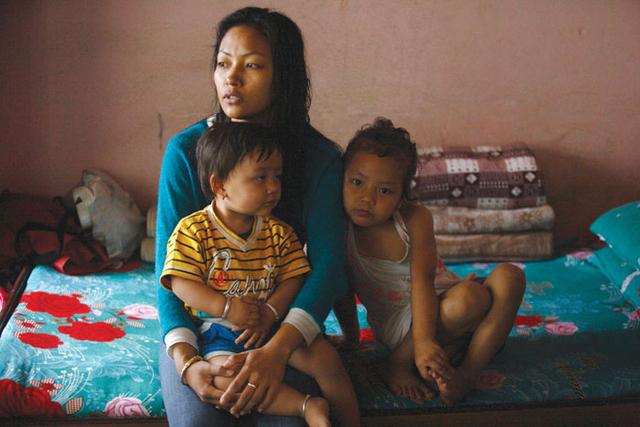
STILL MISSING: Menuka Gurung, wife of Ash Bahadur Gurung, one of the 16 guides who was killed in last year’s Everest avalanche, with her children at home in Thamel. Gurung’s body remains undiscovered along with two others. Photo: Gopen Rai
“Had it not snowed heavily, some climbers would have already reached Camp 1 to acclimatise, but we are working to repair the damage caused by the snow,” said Lama Kaji Sherpa of the Sagarmatha Pollution Control Committee, which is part of the team that opens the icefall route.
As the mountaineering community prepares to mark the first anniversary of the Everest avalanche tragedy last year, the Nepali guides have gone back to what they have to do for a living – risking their lives to fix ropes, ladders and ferrying rich western clients to the top.
Few things have changed but much remains the same on Everest. Devastated by the deaths of their friends and the magnitude of the tragedy, the mostly-Sherpa guides last year refused to go up, forcing the cancellation of all expeditions. They demanded for more safety and compensation for the families.
The government agreed to increase their life insurance amount to Rs 1.5 million and medical insurance to Rs 400,000. It has also made it mandatory for expeditions to bear the cost of rescue helicopters for all members, including their guides, porters and support staff.
“Mountaineering guides and porters had always demanded better insurance and arrangement of rescue helicopters, but it was never heeded,” says Santa Bir Lama of the Nepal Mountaineering Association (NMA).
As per its commitment made to Sherpas last season, the government is now creating a fund using five per cent of mountaineering fees to be spent in Solukhumbu district which will be used to support mountaineers and their families in case of future deaths and injuries on the mountain.
Diwash Pokharel of the Everest Summiteers Association says the tragedy did lead to reform. “It highlighted the issue of Sherpas and created pressure on the government as well as expedition companies to do more for their risky work.”
However, despite the attention to insurance and compensation, the disproportionate risk that the 300 high altitude workers employed every year face on Everest has not diminished. The least-paid workers are still doing the most arduous and dangerous work on the mountain.