
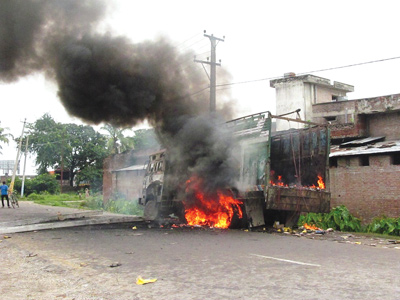
Protests spearheaded by Madhesi parties were largely peaceful in Birganj until Sunday evening. No one had died and only a few protesters had sustained minor injuries in the first two weeks of the indefinite Madhes shutdown.
But things started turning ugly from Monday morning, and five protesters were killed in police firing in the next 48 hours. One more protester died in the adjacent district of Bara. Some of the injured were rushed to Kathmandu for treatment. On Tuesday afternoon, the government declared Birganj as a riot-stricken area and deployed the army to contain the violence.
What suddenly triggered this violence in the central Tarai? There had been no major clashes despite Madhesi parties’ promise to provide Rs 5 million to families of those killed during the anti-government movement.
The answer is the traditional rivalry between two Madhesi political forces. The way the Armed Police Force (APF) dealt with the situation also made things worse.
An alliance of Federal Socialist Forum Nepal, Tarai Madhes Democratic Party, Sadbhavana Party and Tarai Madhes Sadbhavana Party had announced an indefinite Tarai shutdown after a Madhesi protester, 25-year-old Rajiv Raut, was killed in police firing in Saptari on 18 August. This alliance had been holding peaceful protests every day. Anil Jha of Nepal Sadbhavana Party and Matrika Yadav of CPN (Maoist) felt left out, and they formed another alliance to take credit for the Madhes uprising.