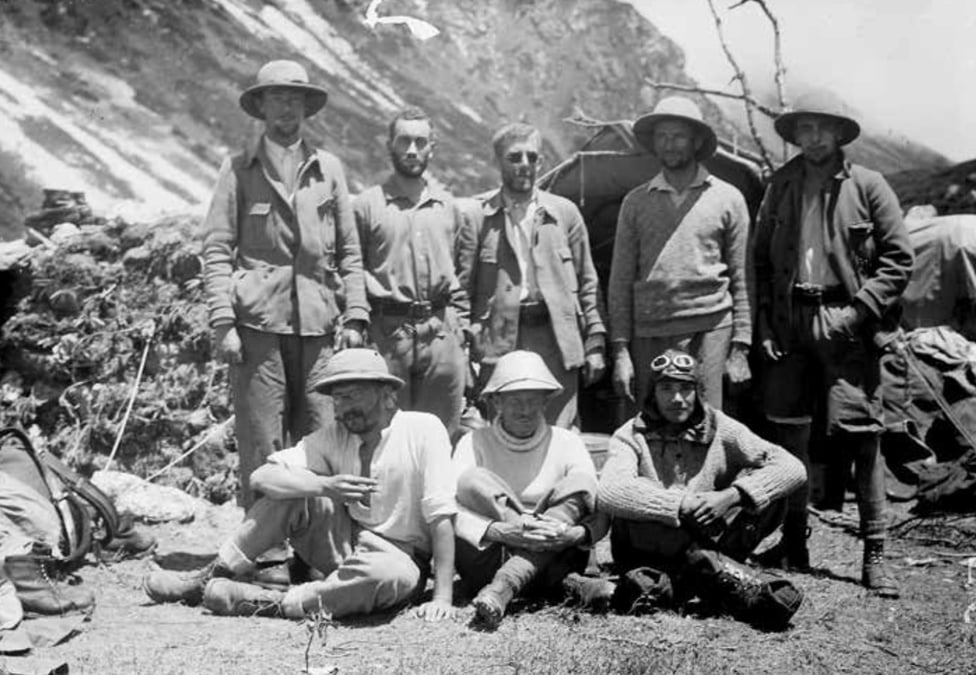
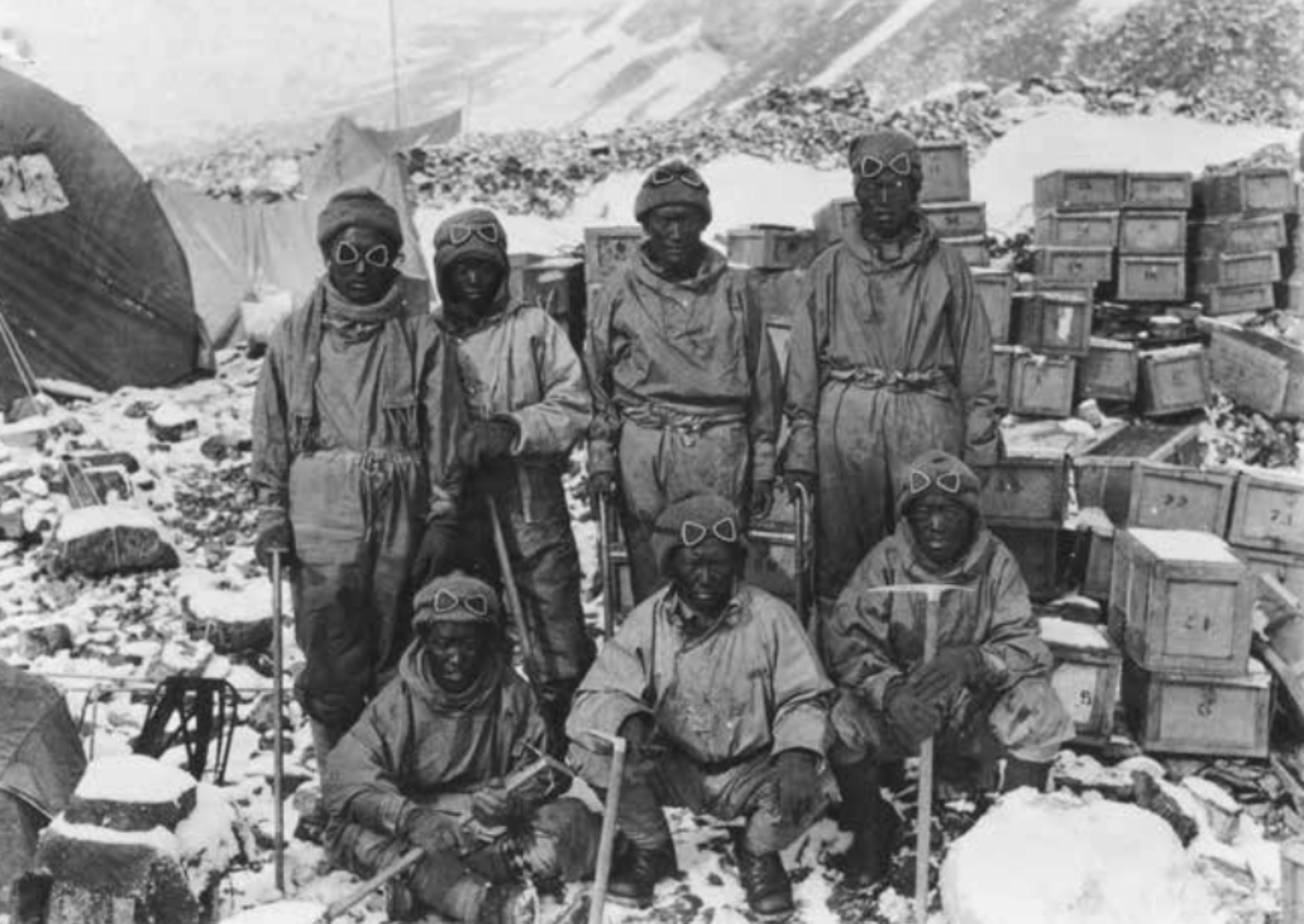
NATIONALISM AND NATIONS: The 1929 Kangchenjunga team at Camp III. Standing from left to right: Peter Aufschnaiter, Wilhelm Fendt, Paul Bauer, Joachim Leupold, Alexander Thoenes; stiiting from left to right: Eugen Allwein, Harry Tobin, Karl von Kraus. Photos: CHASING MALLORY’S DREAM
While writing his new book, mountaineering historian Edward Morgan calculated the number of climbers who had been above 8,000m prior to the French Annapurna expedition of 1950.
It turns out 35 climbers had been higher than 8,000m, and the most famous of them were mountaineers like George Mallory. Of those 35, 20 were Sherpa or Tibetan porters on Mt Everest, Kangchejunga, or Nanga Parbat, none used bottled oxygen, and all carried heavy loads.
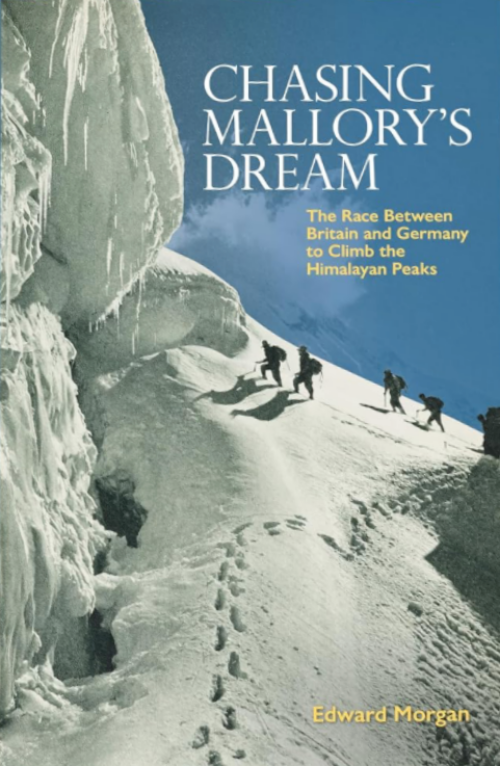
“I think the achievement of these 20 porters should be better known,” says Morgan, whose book 'Chasing Mallory’s Dream: The Race Between Britain and Germany to Climb the Himalayan Peaks' chronicles some of the extreme sacrifices made by climbers from Nepal and Tibet in Himalayan mountaineering during the interregnum between the two World Wars.
Nepali and Tibetan porters who took loads up to Camp VI at 8,170m on Mt Everest in 1924.
Britain and Germany had just emerged bruised and battered after WWI, and barely 21 years later, were preparing to kill each other all over again in WWII. But even then, their climbers were sometimes working together and learning from each other in the Himalaya.
Despite the bad blood between Germany and Britain there was a spirit of camaraderie and mutual respect among young mountaineers of both countries — even if they were on opposite sides of the trenches in the war. It was only later as the Nazis rose to power that climbers started regarding each other as rivals, dividing even the German alpine community over support for the Nazis.
Even so, Morgan’s carefully researched book with valuable archival images also points to British and German climbers continuing to cooperate and exchange notes right up to 1938.
Newspapers in both countries extolled the successes of each other’s Himalayan expeditions and offered sympathy when disasters struck — like the 1934 and 1937 German Nanga Parbat expeditions, which together killed 26 climbers, nine of whom were from Nepal.
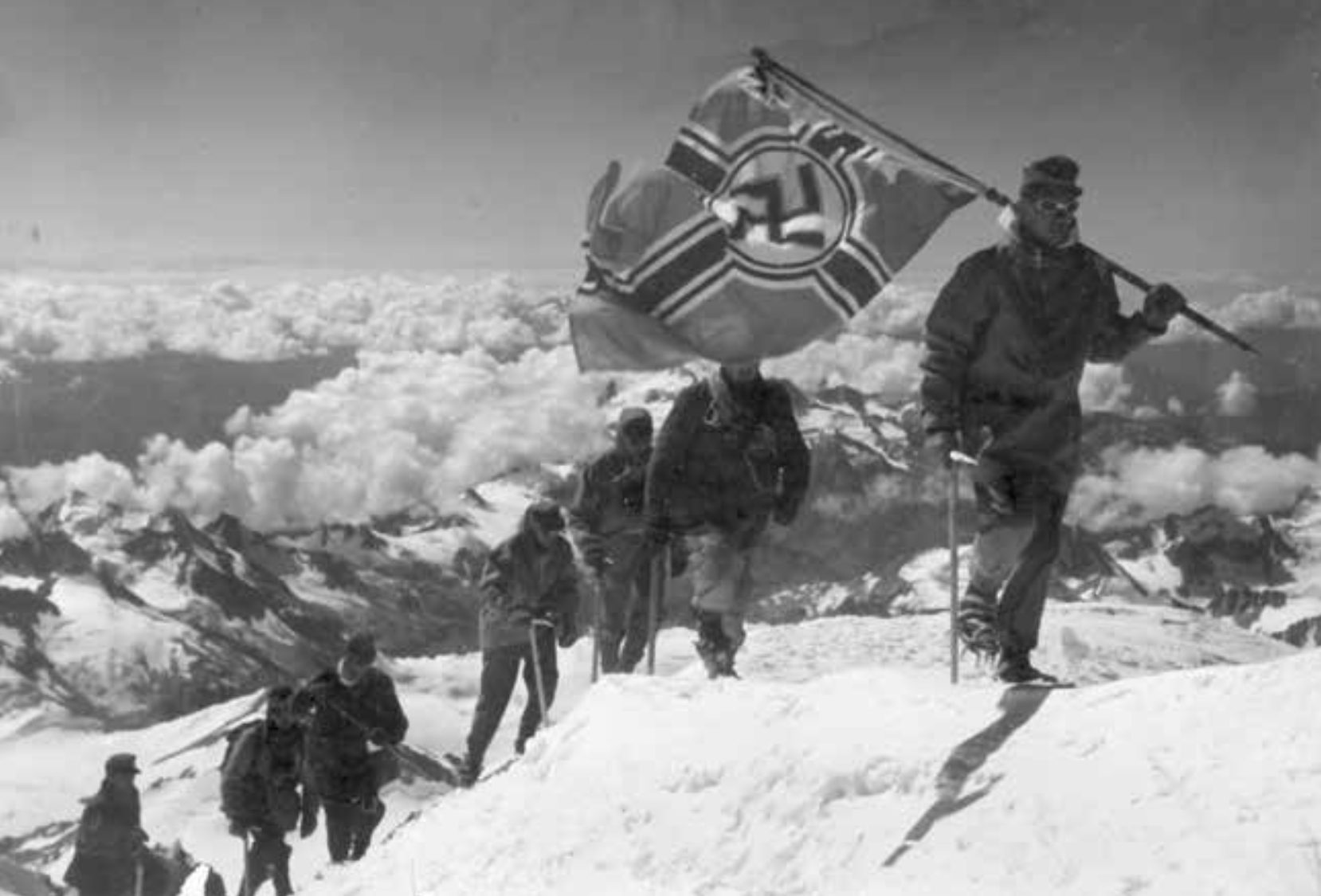
German climbers on Elburz during the war.
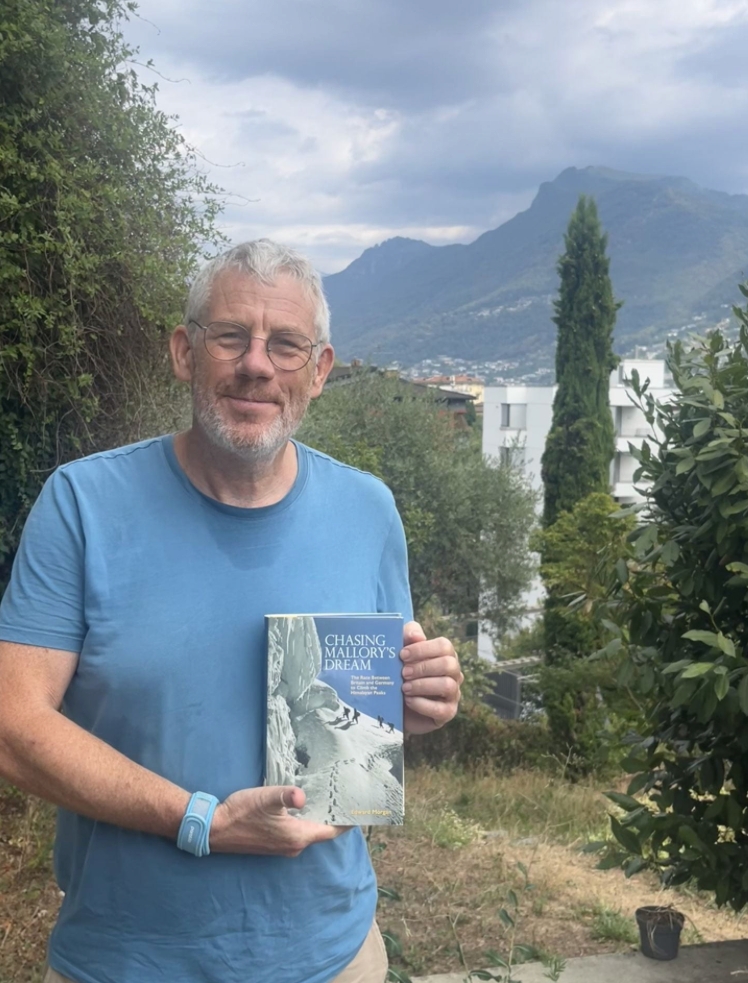
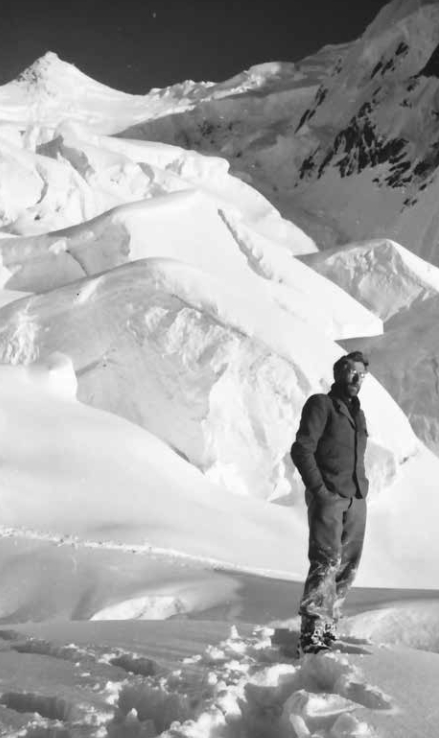
Morgan (pictured, left) writes about how right up to a year before Britain declared war on Germany, the British in India helped the Germans recover bodies buried on Nanga Parbat Camp IV the previous year by flying the team to Gilgit in a Royal Air Force plane.
TRENCH TO PEAK
At a dinner at the Himalayan Club in Calcutta in 1930, British surveyor Kenneth Mason raised a toast saying “there is room for all climbers for all nations” in the Himalaya. German expedition leader Paul Bauer replied that Mallory and Irvine who had perished on Mt Everest in 1924 “will always live in the memory of those who try to follow their footprint”.
And that seems to be where Morgan gets the title of the book about ‘chasing Mallory’s dream’. His cast of characters is long: Britons Frank Smythe, Geoffrey Bruce, Tom Longstaff, Noel Odell, Eric Shipton, Bill Tilman, Edward Norton, John Noel; and German climbers Willi Merl, Günter Oskar Dyhrenfurth and his wife Hettie, Eugen Allwein, Peter Aschenbrenner, Peter Aufschnaiter, Heinrich Harrer.
The author is careful not to leave out Nepali and Tibetan climbers on his list: Tenzing Norgay, Nursang, Ang Tsering, Tejbir Bura, Tsing Norbu, Nima Dorje, Nima Tashi and many others. There were both ‘Gurkha’ and ‘Sherpa’ guides, and Morgan conceives that some of them had fought in the trenches of Flanders Field. The list contains the names of those famous, infamous, and not so famous who climbed or died in the Himalaya in those years.
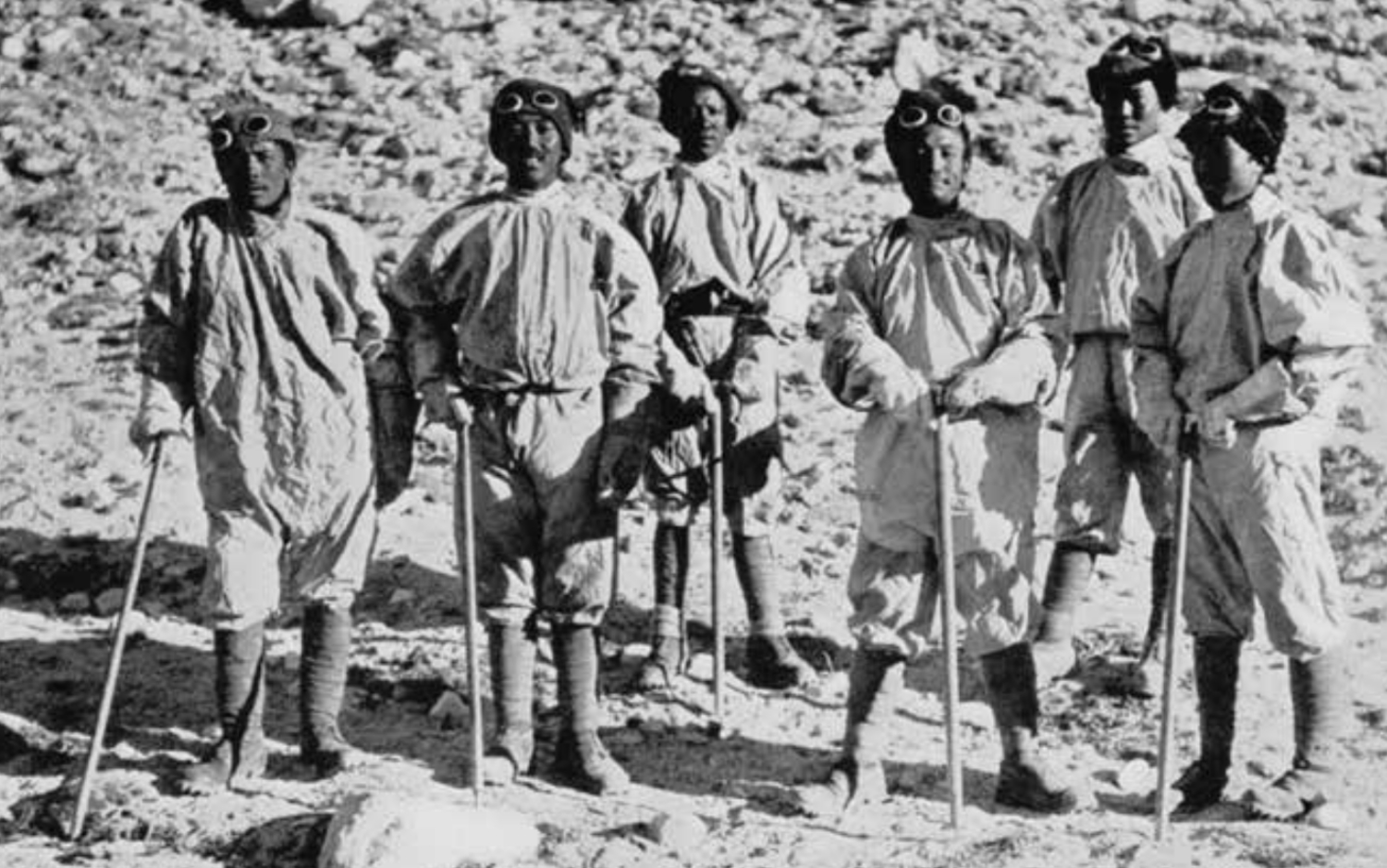
The porters, referred to the climbers as 'Tigers', who carried loads to establish Camp VI at 8,350m on Everest in 1933. Ang Tharkey, Da Tsering, Nima Dorje, Ang Tsering, Pasang, Tenzing Tarke, Rinzing. Kipa Lama is missing from the picture; the exact positions of others are unknown.
Mason and Bauer had fought on opposite sides in the trenches of WWI, and organised the joint International Himalayan Expedition on Kangchenjunga in 1930.
As Britain and Germany struggled with economies ravaged by the war and the loss of so many young men, the former and future enemies also cooperated in the Himalaya. While the Germans were technically superior in alpine style ascents, the British climbers were better at siege-tactics and strategy. Together, both had a formidable common enemy: altitude.
Mountaineering was seen and described in military terms as if virgin peaks needed to be ‘conquered’ or ‘vanquished’. British mountaineer and broadcaster John Laurence Longland wrote: ‘Climbing Everest is not reasonable and amusing sport; it’s a kind of war…’
Paul Bauer on Nagna Parbat in 1938.
Even as the Germans were climbing Nanga Parbat in 1939, war broke out in Europe. The British captured expedition members and imprisoned them. Aufschnaiter and Harrer made a jail break in 1944 and crossed the Himalaya to reach Lhasa which was a daring adventure in its own right captured in the book, Seven Years in Tibet, later a movie starring Brad Pitt.
Morgan analyses European imperial competition driving the quest for conquest, individual ambition, and military-style expeditions on the big mountains of the day, and delves into how nationalism played a role for mountaineers in the Himalaya even as their own countries went through convulsions. But Himalayan climbing was not a race, Morgan tells us, and nobody won.
Nationalism carries on, and mountains are symbols of national identity. The Himalaya has the dubious record of being the highest battlefield in the world on Siachen Glacier. The competition to claim Tenzing Norgay or Nims Purja as our own is not over, even as Nepali companies take over organising commercial expeditions.
While the Germans were climbing Nanga Parbat in 1934 for national glory, back home pogroms were taking place in the Night of the Long Knives. And Kristallnacht was happening when the Germans arrived in 1938 on an expedition to recover bodies of compatriots killed on the mountain the previous year.
George Mallory is remembered for his “because it is there” remark, but Morgan ends his book with a lesser known Mallory quote: “Have we vanquished the enemy? None but ourselves. Have we gained success? That word means nothing here.”
Chasing Mallory’s Dream
The Race between Britain and Germany to Climb the Himalayan Peaks