Empirical climbing
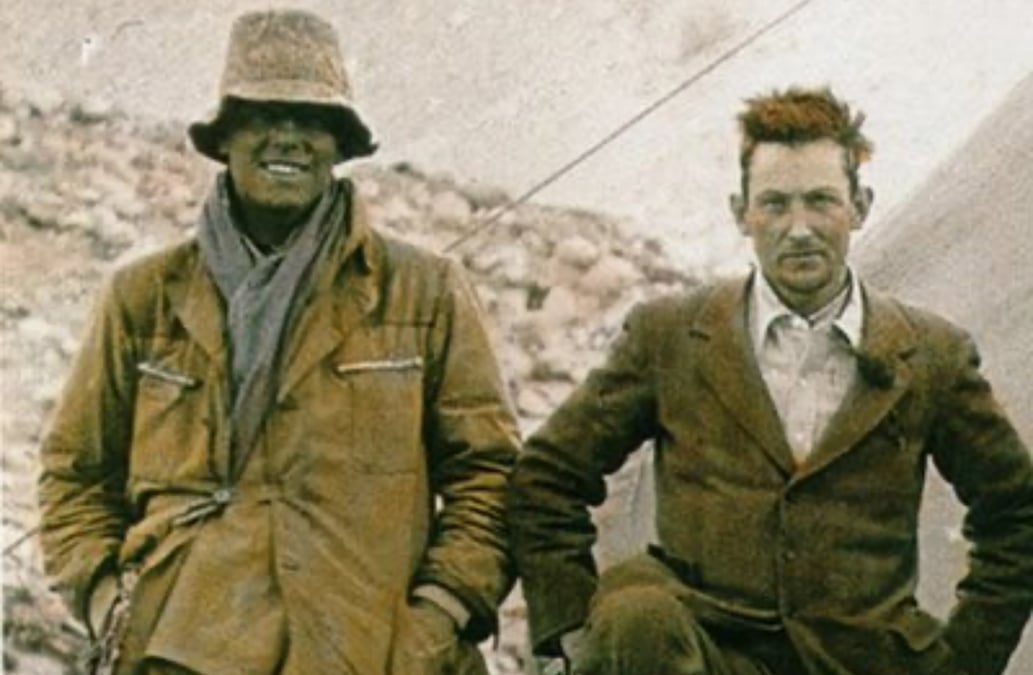
There have been many books and even films made about George Mallory and Andrew Irvine who disappeared below the summit of Mt Everest exactly 100 years ago.
But on this centennary of their expedition, The Last Englishmen: Love, War and the End of Empire by the American biographer Deboarah Baker (The Convert: A Tale of Exile and Extremism) puts the 1924 British attempt to climb the world’s highest mountain in political, geopolitical and cultural context.
The Last Englishmen reads like historical fiction, but it actually a meticulously researched backgrounder on two main protagonists: a geologist and a surveyor — both siblings of famous British poets of the era.
Geologist John Bicknell Auden is older brother of poet Wystan Hugh Auden (The Ascent of F6), and the map-maker Michael Spender is the brother of anti-Fascist poet Stephen Spender (I Think Continually).
The cast of characters in Baker’s book seem to be suffering post-traumatic stress of World War I, and are drawn to the pristine tranquility of the mountains, the Himalaya in particular. Badly bruised by the loss of so many young men, Britain itself needed healing, and the conquest of the world’s highest mountain was seen as a way to redeem some of the empire’s tarnished glory.
The fact that Mt Everest had to be accessed through India (because Nepal then was closed off) also meant that the British could use a successful ascent to prove that it was a civilisational force different from other European powers bent solely on extraction and exploitation of their colonies.
India was going to be ruled differently, which is probably why Baker used the famous Jawaharlal Nehru quote (“I am the last Englishman to rule India”) for her title of this book.
Other characters include other British explorers Eric Shipton and Bill Tilman (‘the terrible twins’ of mountaineering) who between them have at least four high Himalayan passes named after them across Nepal. Then there are the Bengalis in Calcutta, including the poet Sudhin Datta (of Parichay Adda) who caught between his Anglophilic disposition and the tug of Indian independence.
It is easy to get lost in Baker’s story-telling because she multitasks — weaving so many strands into her tapestry. But at the epicentre of it all is Mt Everest and the British drive to get to the top first (before the Americans and especially the Germans) even amidst India’s independence struggle.
Although The Last Englishmen came out in 2018, it is during the centennary of the most celebrated mysteries of mountaineering that it should be read because of Deborah Baker’s effort to give us the state of affairs in the period between the world wars.
In one telling sentence, she summarises: ‘… the tortured conceit that Everest, a mountain that wasn’t even in India, was a proxy for England’s global domination.’

Guiding Everest
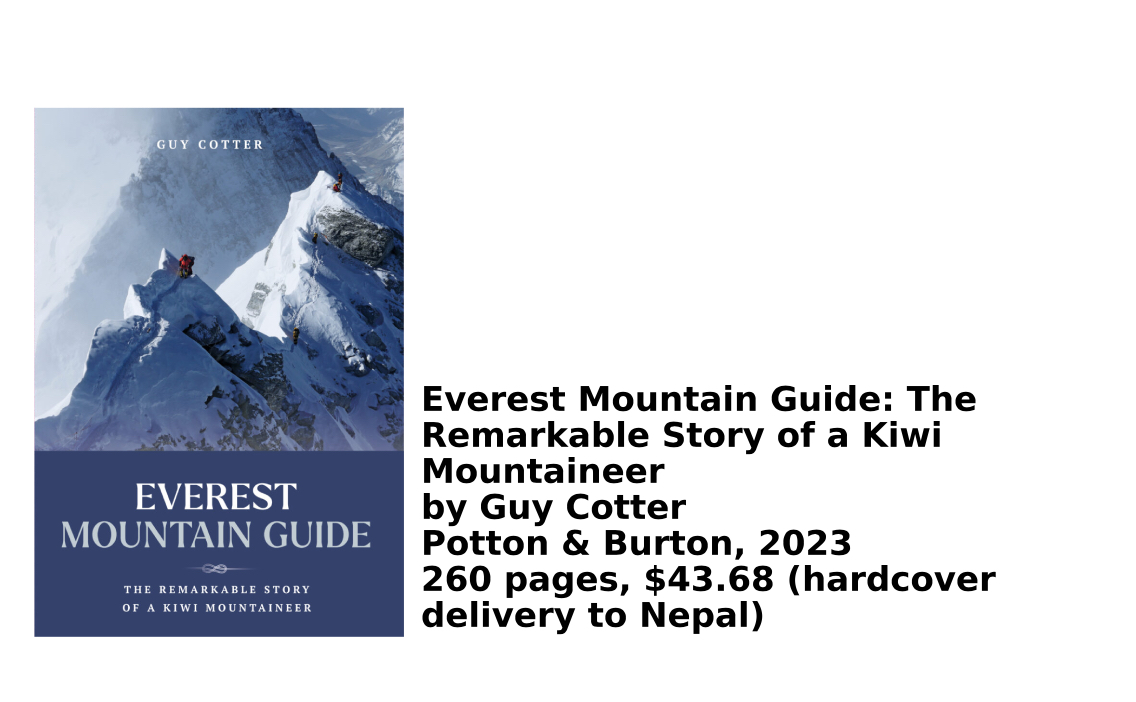
Guy Cotter, a mountaineer and mountain guide whose father was a climbing buddy of Edmund Hillary, has been organising expeditions to the Himalaya for over 20 years.
He was at Everest Base Camp during the tragic spring 1996 season when 8 climbers died in a blizzard near the summit. In fact, Cotter was talking on the radio to Rob Hall high on Everest and patching him to his pregnant wife back in New Zealand. The event was depicted in the 1989 film Everest and the 1997 bestseller by Jon Krakauer.
Everest Mountain Guide is a guidebook on how mountaineering has changed (or not changed) since the military style assaults that began with the early expeditions 100 years ago. Cotter, now 58, took over the company Adventure Consultants after Hall died, and has himself climbed Everest five times.