
 It is documentary season once again as Film South Asia (FSA) returns for the sixth time. With 45 films from all over South Asia vying for the coveted Ram Bahadur Trophy, FSA 2007 promises to be a visual treat. As always, India, with its tradition of documentary filmmaking, leads the race with the largest number of entries, but this year Nepal showcases four films and there are even entries from Afghanistan and Bhutan.
Out of nearly 300 films, there are 48 (45 competitive, 3 non-competitive) on cultural, social and political issues, natural disasters and their aftermath, and reconciliation - all themes very familiar to South Asians. There are also films on South Asian subjects from countries outside the subcontinent. As always, many filmmakers will be present at the showing of their respective films and will be available to discuss their work.
A three-member jury, led by Saeed Mirza, will judge the films. The Ram Bahadur trophy, awarded for best film, carries a cash award of $2,000. A Best Debut award is also available, along with $1,000, to encourage filmmakers to try their hand at documentary making.
This year, the festival opens with Living Goddess, a celebrated film on the lives of the Kumaris. The film's director will be present, along with a special guest, the Bhaktapur Kumari.
A one-day music video festival will follow the four-day FSA, charting the evolution of music videos throughout the region.
Film South Asia is a biennial, contemporary documentary film festival that showcases the best in documentary filmmaking from around the region. It is the only event dedicated to showing quality non-fiction films in South Asia. Since its inception in 1997, FSA has been showing documentaries every two years. Continuous Journey, directed by Ali Kazami, was voted Best Film at FSA 2005.
FSA is organised by the Himal Association and will take place on 11-14 October at Kumari Cinema in Kamalpokhari. Tickets are priced at Rs 30. 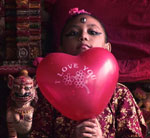 Living Goddess
Worshipped as living deities, the Kumaris are hold-overs from an ancient culture. Living Goddess unfolds through the eyes of three young girls - goddesses and witnesses to the unfolding of an ancient prophecy. An out-of-touch king who survived the notorious palace massacre of 2001 wrests power for himself as a Maoist-led civil war rages. Defying the king, ordinary people take to the streets demanding freedom, only to be confronted by the might of the king's army. As the Kumaris watch, their world changes irrevocably as their lives collide with the ushering in of a modern era. 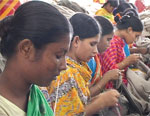 Bostrobalikara (Garment Girls of Bangladesh)
This captivating documentary focuses on the garment girls of Bangladesh's notorious sweatshops. The camera tracks the lives of these girls, the hardships they have to endure, the meagre salaries they earn and the indifference of those who employ them. Filmmaker Tanvir Mokammel follows these girls from the factories and sweatshops into their personal lives, which makes for an entrancing film.  Casting Shadows
Set in the heart of the B-grade movie industry in India's heartland of Mumbai, this light-hearted documentary takes a look at the unusual lives of two look-alikes. With contrasting ages, ideals and personalities, these two men have nothing in common save the alias they share, that of the greatest star in Indian cinema history, Amitabh Bachchan. 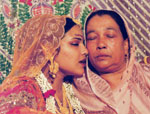 Every Good Marriage Begins with Tears
British filmmaker Simon Chambers comes through with a charming documentary on the lives of two rebellious London Bangladeshi sisters who go back home against their will for arranged marriages. The film explores the universal theme of love, but also touches on issues of conflict between migrants and their children, dispels cliched myths about the treatment of women in Islamic society, and presents the tender, human face of a community that is often misunderstood and targeted as a result of terrorist attacks on the West. 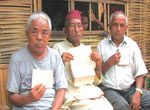 Eviction
American filmmaker Grady Walker chronicles the lives of Bhutanese refugees languishing in camps in Nepal. Eviction focuses on different perspectives and stories from camps in Jhapa, and also follows a refugee seeking asylum in New York City.
Seven Islands and a Metro
This film is a tale of cities: Bom Bahia, Bombay, Mumbai - the multilingual Bombay, the Bombay of intolerance, the Bombay of closed mills, of popular culture, sprawling slums and real estate onslaughts, the metropolis of numerous ghettos, the EI Dorado, and Mumbai, city of dreams. The documentary follows the journey of an insignificant settlement to the coveted status of a metropolis.
 Chaama deu; tara nabirsa (Forgive! Forget not!)
A former detainee of the infamous Bhairabnath Battalion tells of his horrifying experiences during the 15 months he was held without any proof of his guilt. The journalist detainee goes through the painful detail of an experience that not many others survived.
Mast Qalandar (The Ecstatic)
One of the most legendary mystics of ancient Islam, Mast Qalandar was a 13th century Sufi saint who spread his teachings of love, tolerance and ecstasy. Every year, almost a million devotees from all over Pakistan, India and Afghanistan journey to Sehwan Sharif, the site of Mast Qalandar's shrine, and seek individual and collective ecstasy. The film follows the pilgrimage and explores the ancient mystic Islamic way of life.
 Hami Kunako Manche (We Corner People)
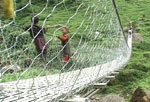
Kesang Tseten's monumentally successful Hami Kunako Manche follows the lives of the 'corner' people, those residing in the farthest reaches of Rasuwa district. Here there is no electricity and not a single shop. The only school goes up to grade 3, and villagers have to walk four hours just to buy salt or chilli, or to sell their meagre bamboo weavings, their only means of subsistence. The film documents what happens when a bridge comes to this place, radically changing the lives of the inhabitants. 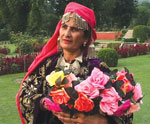 Jashn-E-Azadi (How We Celebrate Freedom)
Every year on 15 August, the Indian flag goes up in the heart of Srinagar, Kashmir, staking India's claim to the land. But the empty streets and sullen silence that greet this action spark off old questions about freedom. The war over Kashmir has left 60,000 dead and 7,000 missing. Using a beguiling mix of rare archival material, poetry and text, this film is a proactive look at Indian democracy in the 60th year of India's independence, and a reflection on power, resistance and the terrible cost of freedom. 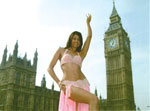 A Very British Bollywood
When the British government created tax breaks for foreign filmmakers to produce feature films in the UK, they were expecting Hollywood. Instead, they got Bollywood. Having landed on British soil, Indian filmmakers are breaking with Bollywood traditions and moving into different genres. Out with the musical and in with story lines aimed at a western audience. A Very British Bollywood follows the making of these films, principally Private Moments, an erotic comedy that revolves around the sex lives of four young women in London.