

Text and photos: Dambar Krishna Shrestha in China
The last two decades of economic growth in China has transformed the once steady communist state into one of the most vibrant economies of the last century. China's skyline might be decorated with skyscrapers and modern architecture but the country has still retained the old world charm by preserving some of the most important pieces of its rich cultural heritage. It is still one of the few countries in the world that provides every traveler with the best of both the worlds.
Time travelling in Xi'an
Xi'an district is one of the most important and visited centres of Chinese culture and civilization. The Terracotta Army, or the "Terracotta Warriors and Horses," in Xi'an in Shaanxi province, is often referred to as the eighth wonder of the world. The preservation of this UNESCO world heritage site of Chinese civilization has been lauded globally. It is a collection of terracotta sculptures depicting the armies of Qin Shi Huang, the first Emperor of China. This form of funerary art's purpose was to protect the emperor in his afterlife.
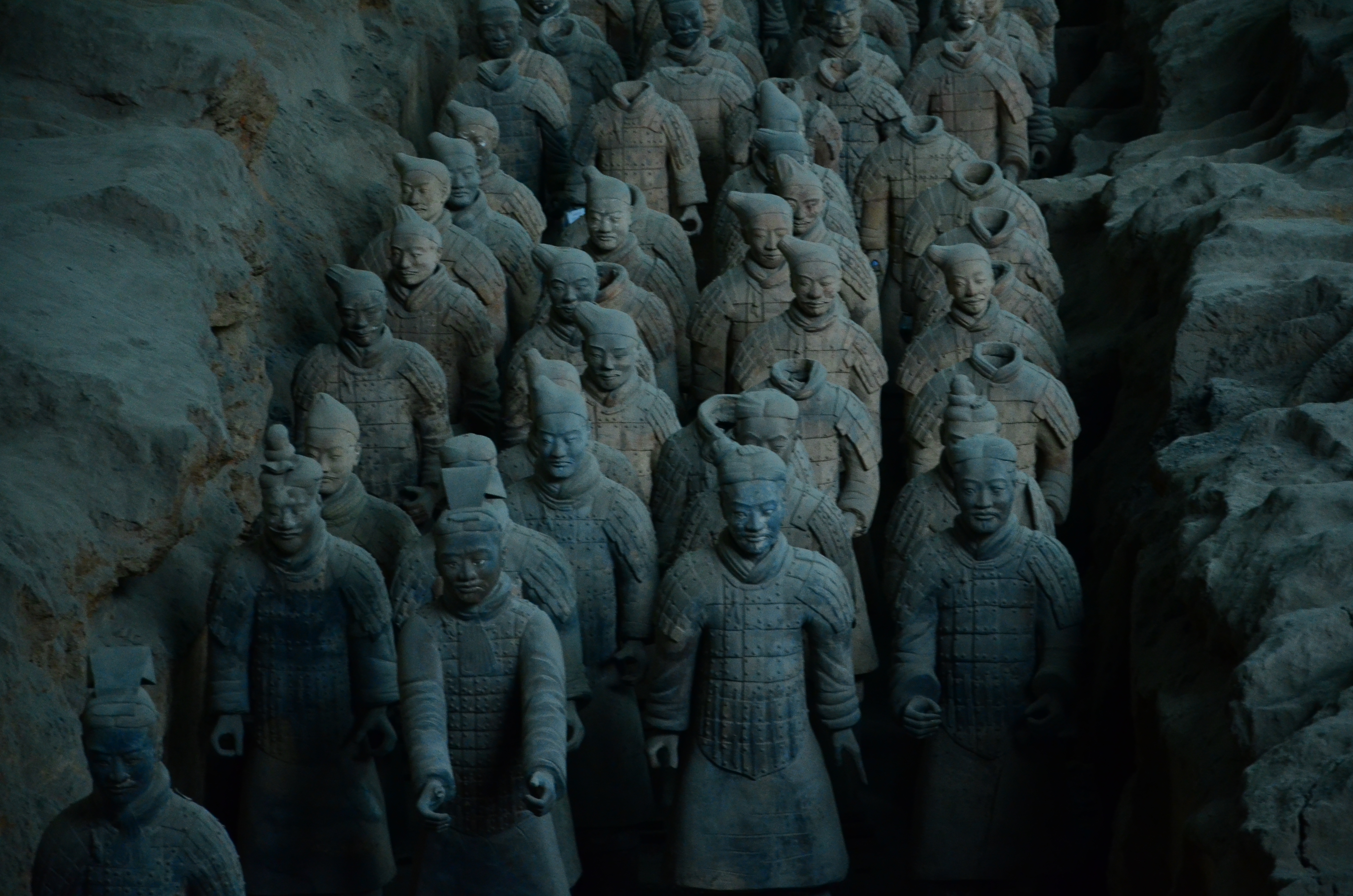 Xi'an district is one of the most important and visited centres of Chinese culture and civilization. The Terracotta Army, or the "Terracotta Warriors and Horses," in Xi'an in Shaanxi province, is often referred to as the eighth wonder of the world.
The figures, dating from approximately the late third century BC, were discovered in 1974 by local farmers. The figures include warriors, chariots and horses, and vary in height according to their roles. The tallest are the generals. Current estimates are that the three pits containing the Terracotta Army preserve more than 8,000 soldiers, 130 chariots with 520 horses, and 150 cavalry horses, the majority of which are still buried in the pits near Qin Shi Huang's mausoleum.
Local artists bring to life this three thousand year old civilization through traditional parades and martial arts performed within the premise of the city wall in Xi'an.
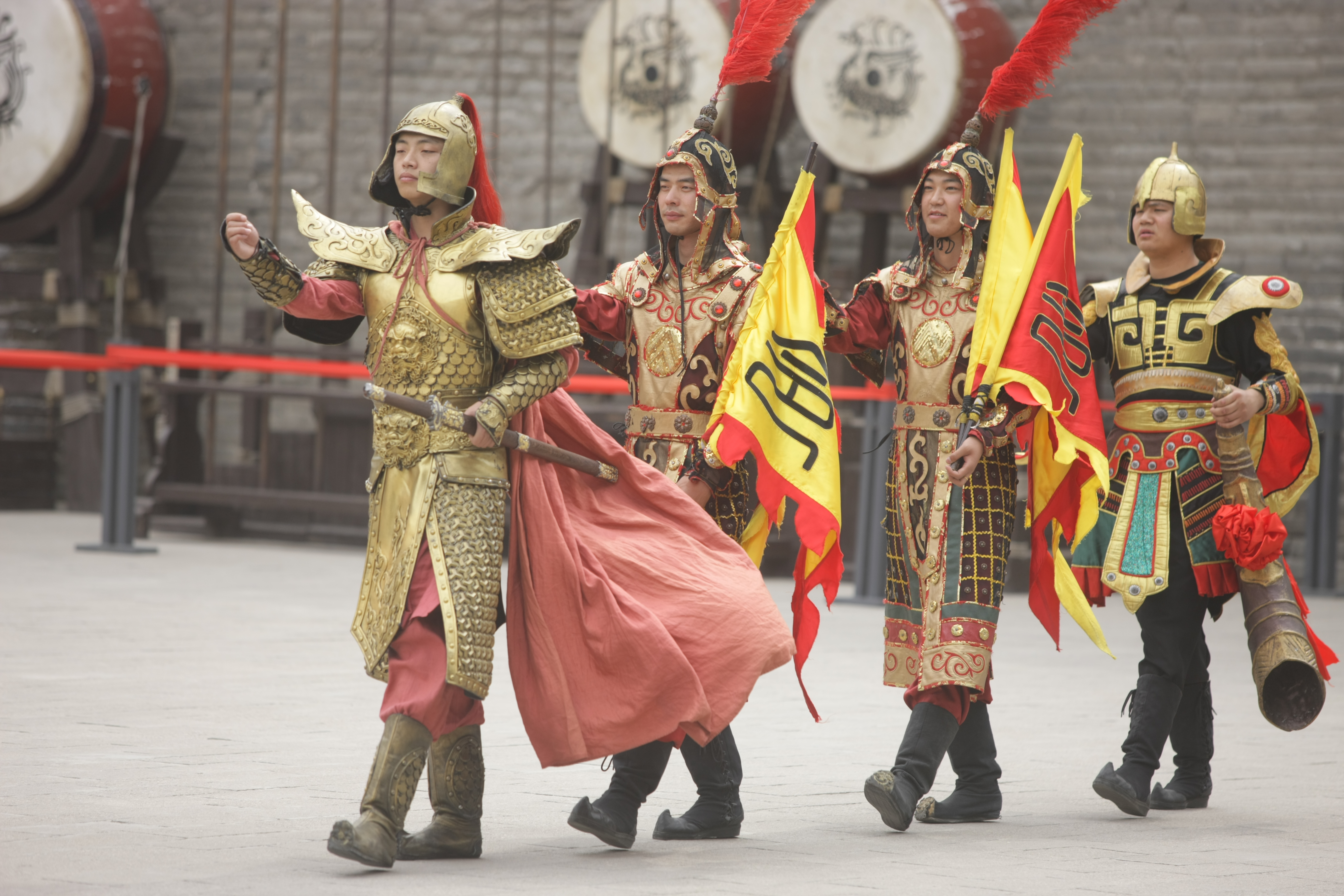 Actors dressed in ancient army armour reenact for tourists at the Xi’an City wall area.
The several museums, models of the old Silk route and daily cultural shows ensure that everyday in Xi'an is like a walk back in time. The neighbouring village of Chenlu outside the city wall still has an old world charm to it which is evident in the lifestyle and tradition that the village is still soaked in after thousands of years.
Discovering Taiyuan
Taiyuan is an industrial city, the largest in North China's Shanxi province, on the banks of the Fen River in it's fertile upper basin. It is popularly known as the Dragon City. The hills surrounding Taiyuan is considered the dragon's head, the city resembles the mighty dragon's body and the river that flows below resembles the tail.
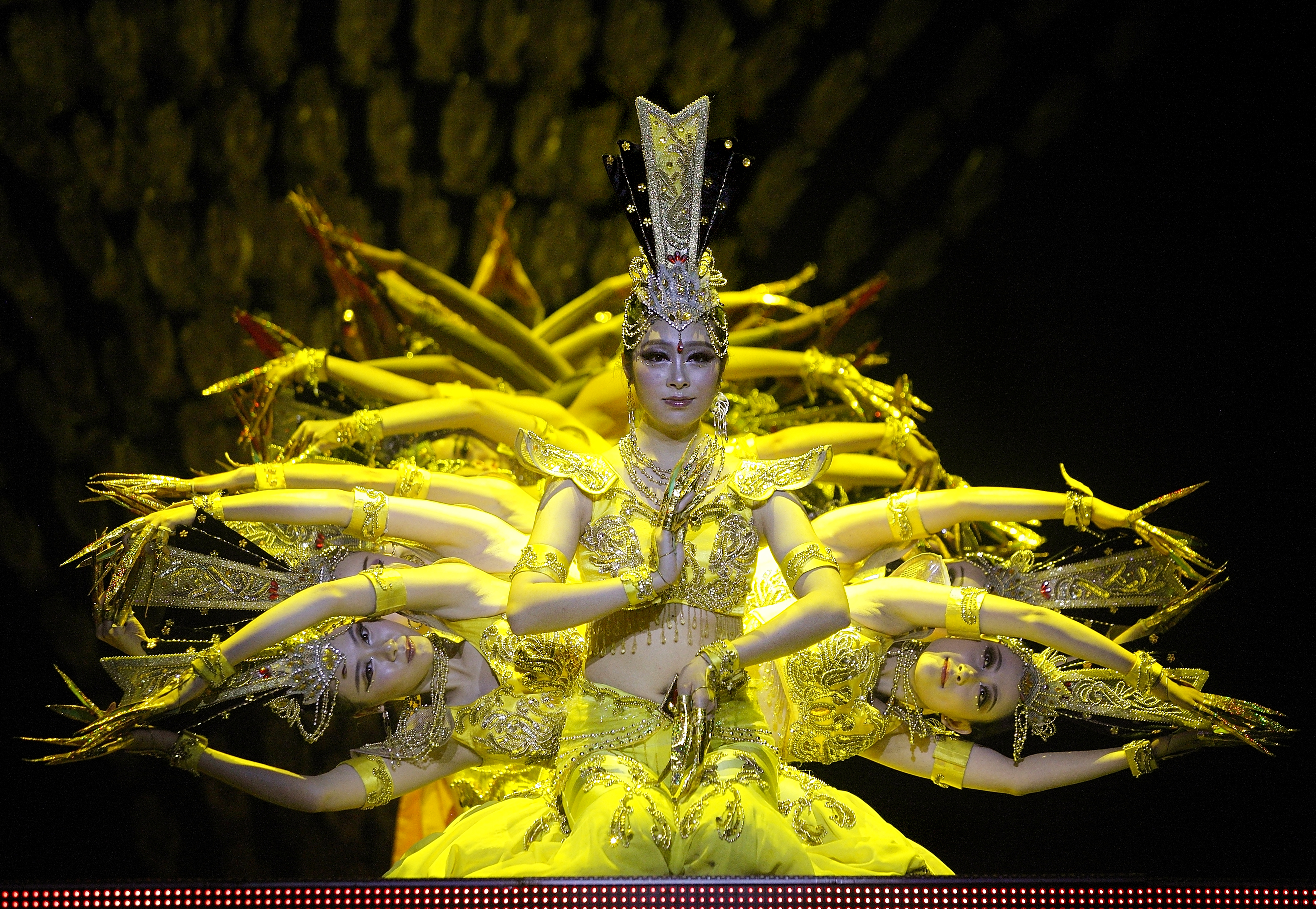 Performers of the 'Dance of Thousand Hands (Goddess of Mercy)' that was playing to a full house at a local theatre in Taiyuan.
The local performing artists put up folk dances reflecting the historical and cultural roots of the city. We had the chance to watch the mesmerising Dance of Thousand Hands (Goddess of Mercy) that was playing to a full house at a local theatre. It was a visual treat watching 55 people on stage capturing life's ups and downs from the divine to everyday life. If plays and dances aren't captivating enough, check out the beautiful evening light show at Taiyuan to end your day on a colourful note.
At the end of a busy day drop by the famous noodles house that whips up a delicious show, making each meal unforgettable.