
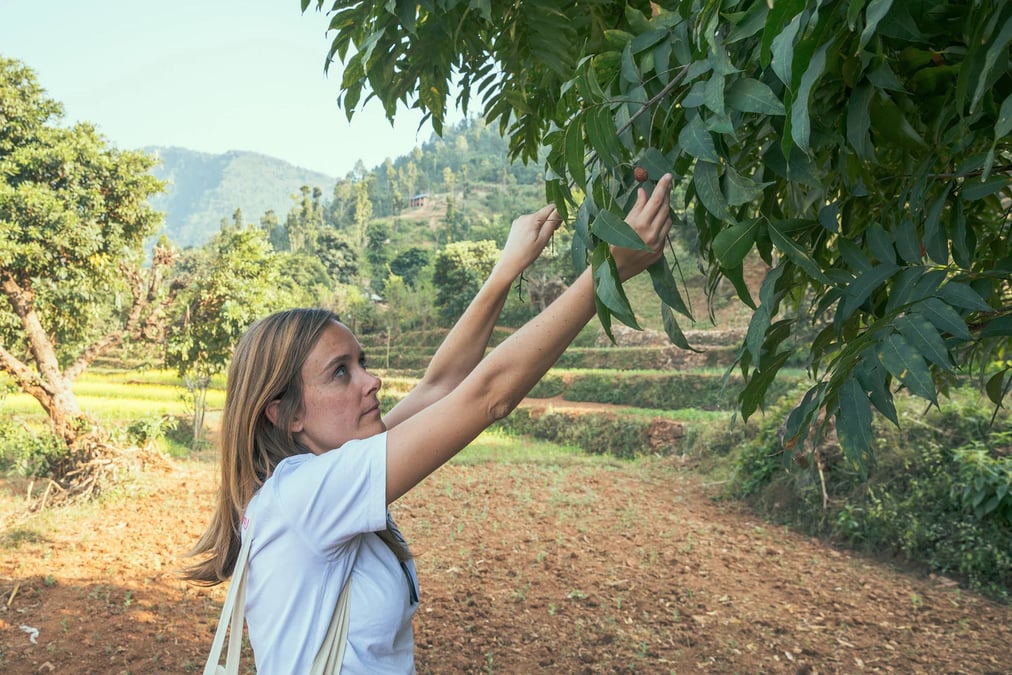
When Walter De Boeck was trekking in Nepal with his daughter Anke, they were overawed by the sheer diversity of rare plants with remarkable medicinal and cosmetic properties. An idea took root.
Anke, a lawyer, had always wanted to leave the corporate world and strike off on her own with her friend Isabel, whose sensitive skin made her an expert in natural skincare.
For his part, Walter has over 30 years of experience in botanical extracts, as well as an extensive network in Nepal from the time he first visited in the 1980s.
So: why not a skincare company that develops all natural and organic products from the Himalaya?
After much behind the scene work that involved sourcing raw ingredients from Nepal, getting an extract and analysing it in a lab in Europe, integrating it into products and quality control, CÎME (pronounced ‘sim’ and means ‘peak’ in French) was launched in 2012.

“The idea was to use the Himalayan plants, local knowledge and work together with partners in Nepal to combine it with modern, cutting-edge science in Europe to create an end product that was organically certified,” explains Anke.
But organic products were not as popular back then, not even in Europe, so Anke and Isabel had to do significant groundwork to take the concept and CÎME from the lab to the market. Finally, CÎME became the first organically certified skincare company in Belgium.
It uses a range of medicinal and aromatic plants, but one of the key ingredients is the Himalayan edelweiss which grows above 3,000m, and has an inbuilt mechanism to adapt to harsh conditions at that altitude.
“The plant is full of antioxidants and has skin rejuvenating properties. When we analysed the extracts in a lab here, we found it to be much more potent than its European variety,” says Walter.
THE NEPAL OF IT ALL
Walter applied for a job opening for a junior officer with the UN in the 1980s, and chose a posting in Nepal over Idi Amin’s Uganda.
Recalls Walter, “Nepal was the beginning of my lifelong professional career in medicinal and aromatic plants. It was my first time outside Europe, and an eye opener.”
The Nepal government had started trial farms to cultivate Himalayan aromatic plants. The one in the highest elevations was in Khaptad at 3,013m, and the raw material was processed at the Herbs Production and Processing company in Koteswor. The intersection is still called ‘Jadibuti’ after the company, which was set on fire during a pro-royalist rally last year.
“The company was never a commercial success, it was bureaucratic but it was a start, a lot of young people got to know the trade and later started their own businesses,” recalls Walter.
CÎME has also faced its share of bureaucratic hassles in Nepal and faced difficulties in registering a cultivation plot — so has to contend with a collection permit. The Department of Plant Resources is tasked with publishing a list of herbs that can be cultivated for export purposes. If it is not on the list, the plant has to be collected in the wild.
Cultivation permits are tangled in bureaucratic red tape and bribes that takes months for importers to receive their product, says Walter whose company uses soap nuts that fall from a tree to make value-added products by making an extract in Nepal. Yet, the government still doesn’t have it on their list of exportable products.
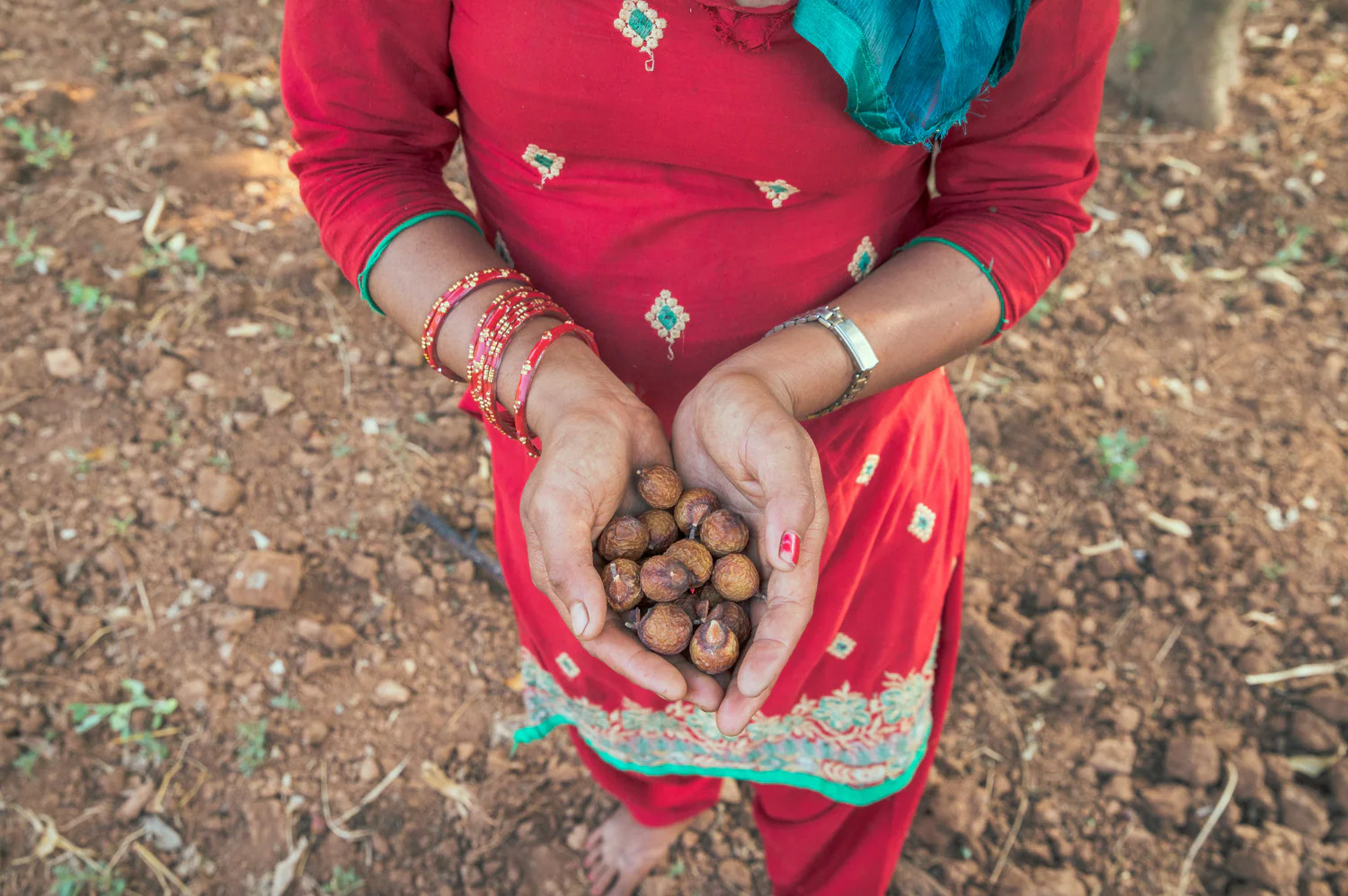
Most shampoo and soaps contain petroleum-based sulfates, cleaning agents that remove oil and dirt but also strip hair and skin of their natural protective layer. Soap nut, on the other hand, is a natural alternative which does the job harmlessly. It is being increasingly used in detergents, shampoo and body wash products globally.
Known as rittha in Nepal, soap nuts have been used in ancient Ayurveda and grow across the foothills of western and far western Nepal. More than 40,000 tonnes are grown every year with potential for more. A soap nut tree takes about 9 years to bear fruit, but once mature, it can be harvested up to 90 years.
CÎME with local partner Satya International and the Dutch brand Seepje have planted nearly 5,500 soap nut trees across 11 sites in the Karnali province. Every year between October to February, villagers collect ripe soap nuts, separate the shells to dry and process them into concentrated powder to be exported to Belgium.
Villagers involved in the process, most of them women, are guaranteed a fair wage, adding to their regular income. Because a part of the production process takes place in Nepal and the extract is more compact to transport than the shells, the company is also reducing its ecological footprint.
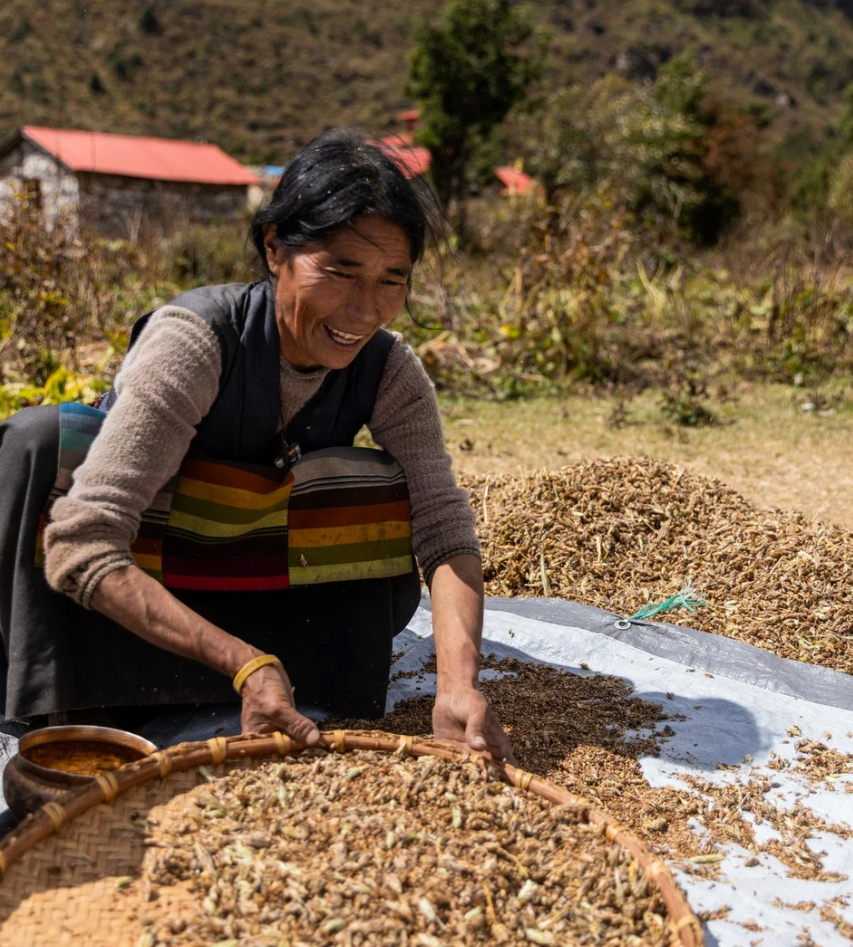
The company also makes essential oil out of wintergreen that grows all over Nepal, and have several small distilleries in Dolpo to process the aromatic shrub.
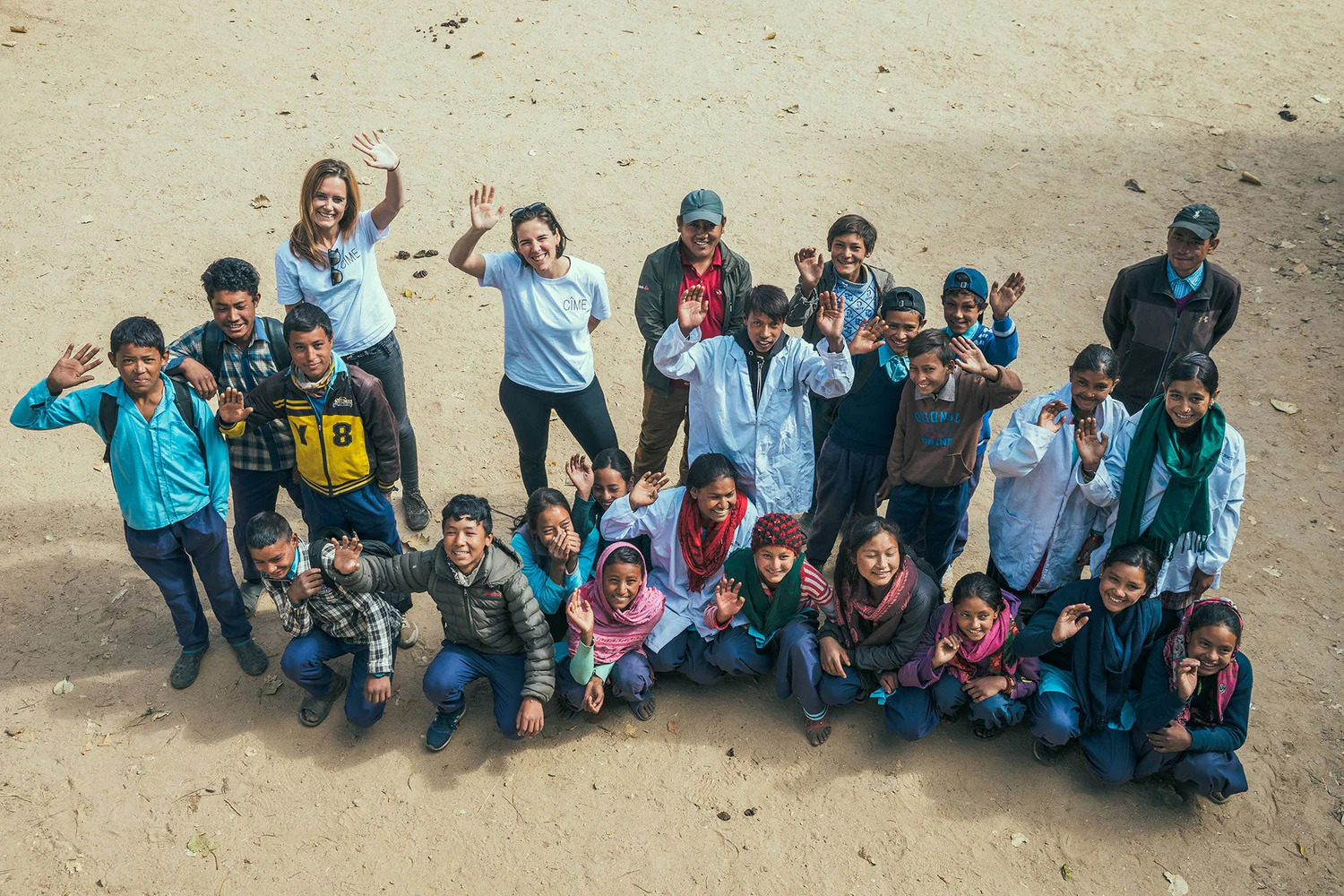
CÎME also supports local schools in Humla from where the dhatelo shrub is sourced. The plant is rich in omega fatty acid and locally used as cooking oil, it also has cosmetic uses as a moisturiser and to repair damaged hair.
“After fashion, the beauty industry is one of the most polluting in the world, because of microplastics, hormone disruptors, and we wanted to change it all,” says Anke. “Women are often sold unrealistic beauty ideals, so we wanted to go organic as well as show real women of all colours and sizes.”
That is how the Honestly Aging line came about, which uses the butter tree (chiuri) from Nepal. CÎME champions its mantra that commits to ‘caring, not correcting’.
“We don’t call our products anti-aging, one should be happy to be aging and healthy. We do not stop the process, no one can,” says Anke. “But we help women age gracefully by supporting their skin in the best way possible.”
The first year of its launch, CÎME had a turnover of €100,000. It has grown every year since and is now a €1.4 million business.
“We don’t need to be the biggest in the market,” says Walter. “Big brands try to put a lot of emphasis in marketing and that’s a big part of the expense. We rather put those resources into ingredients.”
A limited stock of CÎME Skincare products can be found in Nepal at Himalayan Biotrade shop in Darbar Marg.
After his stint in Nepal in the 1980s, Walter worked in Africa and later set up his own herb extract business in Europe which his daughter Anke has now stepped into.
He has been back to Nepal several times since his first visit: “Regardless of the bureaucracy and everything else, Nepal is still a mystical and peaceful land with accommodating people.”