Anuj Sep 24, 2010
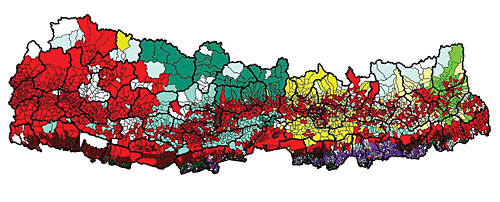
Yes, you are right if when all those areas signifying RED (Bahun and Chhetri) in your map turns into YELLOW = Bhotia / BLUE - Mongoloid stock or GREEN = Rai Limbu or Madhesis or Dalits. Let we see any cuties from Dixit or Mahato family marry Rai or Limbu or Dalit or Bhotia...all these sooth saying of yours will reach deaf ear and mean nothing !!
Guinthe Sep 25, 2010
This article is not powerful as it could have been. A very solid story could be told about changing face of Nepal in this relevent and interesting topic. But I don't think the writing was strong nor were the examples properly put. Looks like Kunda Dixit did not get to spend much time editing this write up.
Kenji Sep 25, 2010
We've seen the rapid change in attitudes toward caste & ethnicity in Nepal via personal experience. 30 years ago when my Newari wife's oldest sister married a Magar gentleman, they were socially ostracized, and there were no elaborate wedding festivities. Ten years later when my wife and I married, this goraa guy was welcomed into the family, although we still attracted stares as we walked together around Kathmandu. In the intervening years, her cousins have married Chettris, other-religion Newars, and there was a Slovak wedding too, and nowadays no one gives my wife and I a second glance when we're out and about in the Valley. Some of the credit for this rapid change is probably due to the Maoists, both for their efforts to uproot the caste system and gender discrimination in the areas they controlled, and for causing a flood of young people away from Maoist recruiters to the safety of the cities, where they were free to mingle with other ethnicities without the rigid social structures of the rural areas.
Manu Sep 25, 2010
I am Marwari and my wife is Newari... I am a Jain and she is Buddhist... we call ourselves Nepali... and life is "peaceful" and couldn't be better... thanks for a very interesting and timely article. We need to bring positive aspects of our country in front...
Anup Sep 25, 2010
A 600-word piece interviewing a few families in some cities does NOT prove that "the trend towards inter-ethnic marriages is helping knit together Nepal's social fabric." To call an entire country a rainbow nation, I'd highly recommend spending several weeks reporting extensively, including the far-flung places, and then coming up with a such conclusions.
KiranL Sep 25, 2010
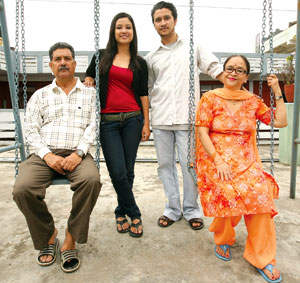
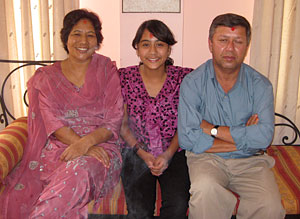
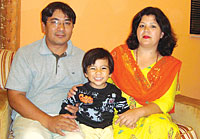
Thank you, Rubeena Mahato, for a compelling story about Nepal integrating itself even though the politicians and extremists are trying to disintegrate it. You have illustrated the growing trend towards inter-ethnic marriages with some fine examples like the Poudyal, Dali, Shrestha, Subba families. There are hundreds of others like them, and in all classes of society. A very positive and hopeful read.
suresh Sep 25, 2010
good article surely nepal is going to be rainbow nation magar marrying chhetri and vice versa was never a big deal in my village . now even in villages intercaste marriage are accepted even though they are not accepted at first but later most of the parent do realize. i hope our parents ( my and my girlfriend) will read this .
sashi Sep 26, 2010
But why such a silence on the 6 million untouchables: Dalits: Doms, Kami, Chamars, Mushars, ?
Sunil Thapa. USA Sep 26, 2010
there has been a huge trend in interracial marriages in the West especially in the USA. In Nepal's case, it should never have been divided by castes in the first place as the entire world sees Nepal (If they see it at all) as a small underdeveloped poor country. Inter ethnic marriage is the only way forward and it is time for any group to somehow think they are superior. There is no blue blood anywhere. Only the most deprived and weak would have chosen the hills of Nepal to settle and irk out a living. It is difficult now, can one imagine how it must have been in the past with no roads and electricity? Very good Article indeed!
R RAI Sep 26, 2010
Nepalese have always been relatively more liberal as far as inter-ethnic and inter-caste marriages are concerned comapared to other south Asians.
Also, people in east Nepal are more permissive compared to people in far-west and west Nepal.
rishav Sep 26, 2010
Nice article. But I think Nepal has always been a melting pot or at least a salad bowl regarding it's mixture for sometime. Things have definately moved along, I've heard about times when even a jaycee brahmin marrying an upadyhay brahmin would be frowned upon. Even prejudice within ethnic as well as the same caste groups but I think things have moved along.
I believe our differences and our mixtures is what makes us unique who we are and long may it continue.
Nepal is unique in regard to it's different ethnicities and how we interact with each other even more so compared to India. Inida's ethnic division is mostly between Dravadian and Indo-aryan but even then the people are heavily mixed up but their major stubbling areas of diiference are religion and caste rather than ethnicity.
My only fear would be if this continued ethnic uprising continues, we may become more prejudiced in marrying each other than foreigners who are outside of our cultural/political sphere. The idiocracy of the whole thing e.g. Northern Ireland with it's troubles between Catholics/Protestants some families would be more accepting of marrying someone non-christian than if they were from the other faith of Chritianity. This could happen in Nepal too if were not careful.
Fanta Sep 26, 2010
Before brahmin would only marry brahmin. Nowdays they marry chhetri, thakuri, rana. BUT they don't marry Rai, limbu, gurung, tamang and others because they think others are low caste.
Before rai would only marry rai, gurung would only marry gurung as they have less contact with other caste as they live in one community.
Nowadays rai would marry limbu, sunuwar and gurung will marry magar, tamang,thakali as they have similar custom and tradition. They would also have no problem marriage between rai-gurung, limbu-tamang.
BUT they don't marry brahmin, chhetri and others because they think brahmin & Co are corrupt by looking at corrupt politican, mayor, police, local government officals who are mostly Brahmin & Co.
DG Sep 26, 2010
The VDC map is a good picture-projection of the present living situation of the country. Good work NT to put it with the article.
There is not a single VDC that is mono-ethnic in the whole of Nepal.
Its mult-culture is its greatest asset. Its fair and festivals are celebrated by all communities. They have been marrying inter caste from a long time but now due to the forward looking trend and working together males and females this is accelarated. So many Nepalis are working and residing in foreign lands ; this has lead to acceptance of inter- caste marriages. In every family you will find someone who has inter married.
This shows the spirit of the new Nepal ,.
All Nepali Nepal is in the making. (cp. All American American).
DG Sep 26, 2010
# 8 Sashi.
Dalits should now go back to their original thars. They should retain their dalit identity only for reservation and quota by keeping the names of their feather and grand-father.
So then they can be integrated quickly in the Khas hierarchy. They can marry and will be reverted into their former position from which they were down graded. This applies to almost all of hill dalits.
kale Sep 26, 2010
Polygamy is illegal.But still it is prevalent to some extent.
In the past many all Madhesi officers working in the hills used to take hill wives.With urbanization and the rise of rich business class there will be increase in inter class marriages and polygamy in the future.
R RAI Sep 26, 2010
I do not think Castes (Bahuns etc.) are marrying within castes and ethnics(Rais etc.) are marrying within ethnics.There has been no such dichotomy.I have bahun chettri as well as Newar Gurung relatives.
Ganesh Rasik(a Rai married to a Sherchan) declares in his popular book "Das gajaa maa ubhiyera" he is proud of having family members belonging to various ethnics and castes including Bhattarai Bahun and Biswakarma.
In east Nepal it is common for an ethnic to have other ethnics or castes as his/her relatives.
R RAI Sep 27, 2010
@Fanta- please do not make a mistake of calling a Rai or a Limbu low caste when they are around otherwise you may receive a good "marmat"(eastern qolloquial for a good beating). Kirats never accepted casteism even when Pundit Chhabilal pokhrel and swami prapannacharya tried to give them high caste status.
I know bahuns considered themselves as the highest caste and even considered europeans untouchables. But did / do others give a damn ?
arjun budhathoki Sep 27, 2010
everything is ok except whn women have two caste written after their name.its horrible.smriti dahal shrestha for example.oh nooooooooooooooooooo.
who cares Sep 27, 2010
i believe some of the reasons behind emerging as a rainbow nations are:
- in general nepalese society is not radical. so parents, family have to accept children's decision eventually.
- education, international media, mixed society- exposure to other ethnic in workplace, schools, neighbourhood etc.
- money replacing everything.
- freedom of speech improving; dialogue, debating rather than raw power. but tragedy is, idiot govt., media is curving our freedom of speech instead of motivating public to take part in debate.
- ...
who cares Sep 27, 2010
and one of the other main reasons is-
we are following lesser and lesser of our ethnic traditions, cultures.
anil bhattarai Sep 27, 2010
we have no problem with whom we are living but this so called politician makes issues of our family matters and take advantage by spoiling� our relationship. so i request all nepalese not to be their political agenda.
Rajaram Sep 28, 2010
#21 anil bhattarai.
Not only politicians,how about our ultras : identity activists,identity terrorists, identity -fricks with their closed agendas ?
the phenomenon of universalization is subtly destroying traditional cultures.
It is a fact that every culture cannot sustain and absorb the shock of modern civilization. The paradox is how to reconsile modern and the old dormant civilization and take part in universal civilization. There is no single truth.and its dogmatism. We need real dialogue and come out from inside the tunnel. We can see silver lining of inter caste harmony through the institution of marriage in our diversely settled communities that is Nepal in reality.
Tapan Sep 28, 2010
The map shows the villages also by thin lines inside the districts can Nepali Times produce one magnified map at a later date with enlargements when it is related with other issues?
yam gurung Sep 28, 2010
Nepal govt must introduce strong legislation ASAP to end the cast system, which is creating a very unhealthy and unpleasent environment amongst the Nepali people.With this kind of fuddle and fatalism thinking in the21st century.Nepal will never progress with other develop countries.
AiDeeAh Sep 28, 2010
I feel it is mostly some amongst the elite and the politicians who tend to kindle ethnic hatred to serve their own interests. The vast majority of Nepalese are way more tolerant than the politicians, ethnic elites and media make us out to be. Sure, we may not fully understand every aspect of the other's culture and we still have prejudice and biases as a result of this ignorance but at the end of the day we have embraced and absorbed the differences in our society fairly well compared to many other places in the world.
jange Sep 28, 2010
24. yam gurung Nepal govt must introduce strong legislation ASAP to end the cast system, which is creating a very unhealthy and unpleasent environment amongst the Nepali people.With this kind of fuddle and fatalism thinking in the21st century.Nepal will never progress with other develop countries.
The legal basis for the caste system was abolished some 60-70 years ago.
Rajaram Sep 28, 2010
There is examples of Rana Maharajas elevating caste rules and promoting castes to higher echelon.,inthe past .Jung Bahadur has done that and Bir Sum Sher also has done that . Every one including the priests agreed and accepted the rulings and practiced that system in the past. it was not because they were dictatorial rulers, but because they practiced what they preached. Thewy eat with their vardars with those caste personsat their court; drank wa ter served by those caste persons. So their effort was successful'
King Mahendra promulgated the Naya Mulki Ain about 45 years back abolishing untouchability but it continued ;why is it so?
The reason is clear, he did it just to show to the world that he did the reform. He never took the pain to eat with the priest ckass with the dalits as in a public ceremony. So the law remained in paper only. It is not practiced in urban areas but is still in vogue in remote part of the western Nepal.
The caste system must go lock, stock and barrel.
Anuj Sep 28, 2010
Theoretically, the 1st MULUKI AIN that was promulgated during Rana Regime, was officially abolished in 1963. History goes, "Prime Minister Junaga Bahadur Rana, the founder of 104-year long autocratic Rana rule, promulgated the Muluki Ain ("National Code") of Nepal in 1854. It divided all the Nepalese people in fourfold caste hierarchy: (1) Tagaddhari ("Sacred thred wearing" or "Twice-born"), (2) Matawali (Liquor drinking), (3) Pani nachalne choi chhito halnu naparne ("Water unacceptable but no purification required, if touched" or "Touchable Low Castes"), and and (4) Pani nachlne choi chito halnu parne ("Water unacceptable and purification required, if touched" or "Untouchable Low Castes"). The Muluki Ain (National Code of Nepal) of 1963 abolished caste based untocuhability, but in practice it remained unchanged. After the People's Movement-I of 1990 and People's Movement-II of 2006, Prime Minister, Cabinet and Parliament/Legislature passed several resolutions to abolish it, but its practice remain unchanged." Ref: http://www.undp.org.np/constitutionbuilding-archive/pdf/CASTE%20BASED%20DISCRIMINATION%20IN%20NEPAL.pdf
However, having read above document and what we observe around social and cultural practices in Nepal, we must accept and realise that caste system is still prevalent and practiced. We can provide scores of anecdotes and stories (even faced by ourselves and humiliated to this day) to justify my arguement. To qoute 5. Anup "A 600-word piece interviewing a few families in some cities doesNOT prove that" rightfully says that this article is a "wishful thinking" towards Utopian society, while it is too shallow to understand in actual, what is happening in rural Nepal.outside Kathamndu valley.
Daniel Gajaraj Sep 28, 2010
The origin of writing K. C. as a sub-caste title.
The offspring of Brahmin marriage with other castewas introduced as Khatri in the past . Kesar Bahadur K.C. was the first one to start writing the last name as K.C.Before him his clans wrote Khatri. General Padam Bahadur Khatri continued writing Khatri.
The story is interesting. Kesar Bahadur was a product of Hare School in Calcutta ,. He did his Master from Presidency College, Calcutta University. It was British Rule in India at that time,.
King's Counsel was a great honour; they used to write K.C. after their name. As a great practical joker and as a learned man and scholar with a sense of great humor Kesar Bahadur adopted the title K.C. Now it has become a customary title as a Nepali one.
R RAI Sep 28, 2010
Thank you Mr Gajaraj for very interesting information-I hope sociologists and historians will remember this.
Talking about Non-Dalit marrying a Dalit , Bhojpur in east Nepal witnessed an event many years ago.This relates to late Narad Muni Thulung (a Rai) who had served as Defence minister and even acted as Prime-minister during Matrika P Koirala's government in Koirala's absence(later a Raj sabha member). When one of his sons decided to marry a Biswakrma Narad Muni Thulung welcomed it and celebrated it.This happened almost 40 years ago!
Narad Muni had been influenced by his uncle an Arya-samaji.
yam gurung Sep 30, 2010
Jange.The legal basis for the caste system was abolished some 60-70 years ago.
But it is only in the paper not in practice.Caste system stll exist in Nepal.And they also teach in the schools and also in the newspapers written by the politicians etc.On the 14th May 2010 British Forces Broadcast Service BFBS in Kathmandu,introduce a programme call Ethnic People of Nepal.Based on the book written Madhu Sudan Pandey.There is a caste system in the Gurung community and they are stubborn etc.This caste system was first created by late Narahari Acharya and the leaders of Nepal.And it has created a friction and a very unheathy and unpleasent environment,amongst the Gurung community and others.
kiran Sep 30, 2010
wheather you marry with your caste or different caste you always need to follow your culture .And don't forget that our culture makes us true nepali not the caste or color of people.
bishnu Oct 1, 2010
People should not be discriminated by cast. Scientifically, it is better to have intercaste marriage.
John Oct 24, 2010
What is the source of the ethnicities map please?