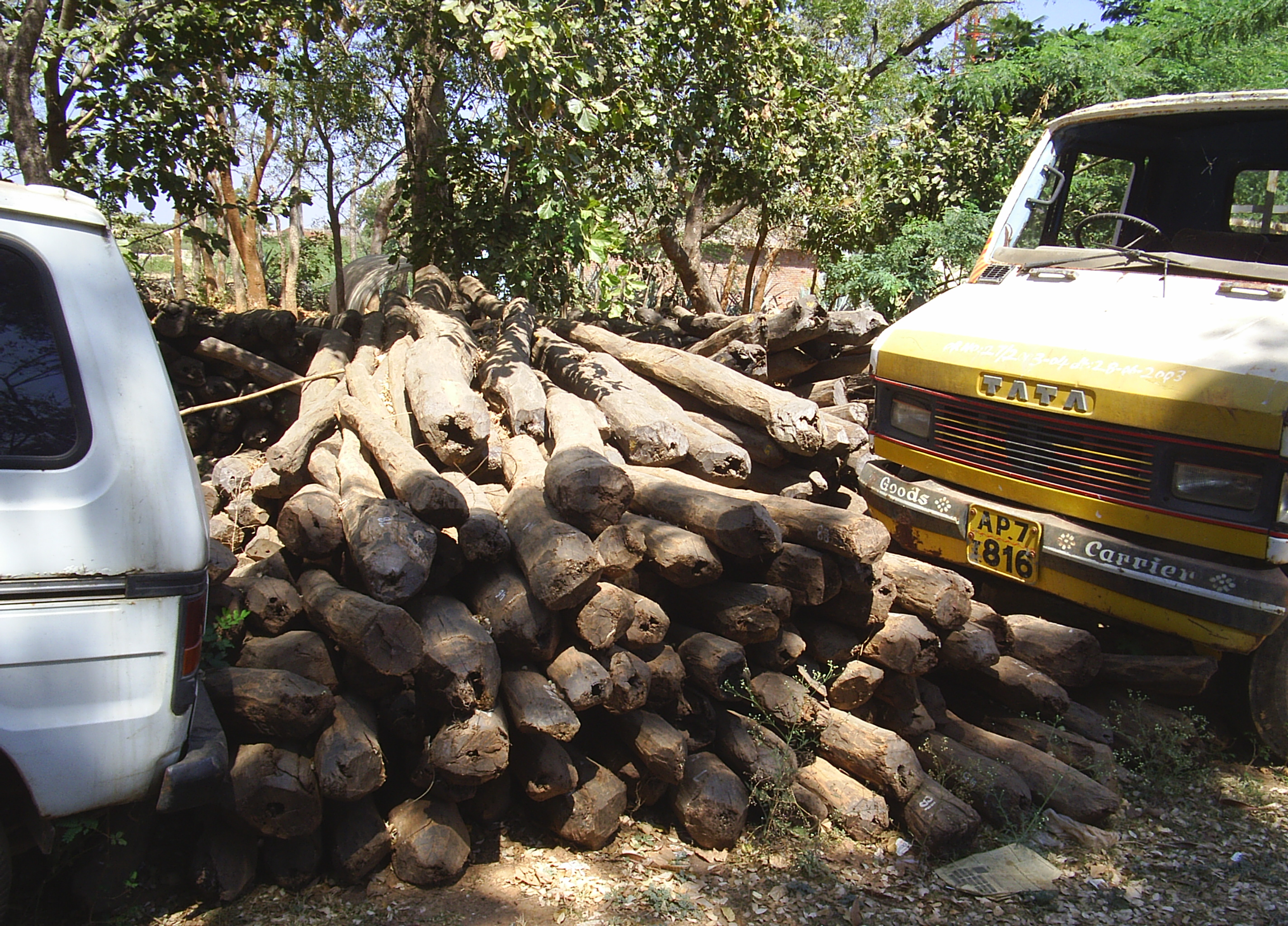
Over the years, Nepal seized truckloads of the contraband timber being smuggled from India to China. But the red sandalwood is stuck as officials cannot seem to be able to get rid of it.
Under Nepal’s domestic law implementing the Convention on International Trade of Endangered Species (CITES), an international treaty meant to prevent the trafficking of endangered plants and animals, Kathmandu must ask the India to take back confiscated items.
New Delhi has agreed to take back certain amount of the wood, but more than 273 tons of one of the world’s most prized timbers is still sitting in Nepal which does not seem to want to upset its next-door neighbour.
“India is a key ally,” says Maheshwar Dhakal at the Ministry of Agriculture, Forest, and Environment. “We worry that putting the timber up for auction could draw criticism from India and strain bilateral relations so Nepal has simply held onto the stock.”
Nepal’s own law says that once the country of origin agrees to take back the confiscated material, it is required to collect it within 90 days and cover the cost of repatriation. If it declines to take back the material or fails to repatriate it within the stipulated period, the law allows Nepal various options: sell the wood by auction, hand it to a public institution for research or religious purposes, or destroy it after approval from local administrative officials.
So far, not one of these options has been taken up by Nepal on the confiscated red sandalwood, ‘red sanders’.
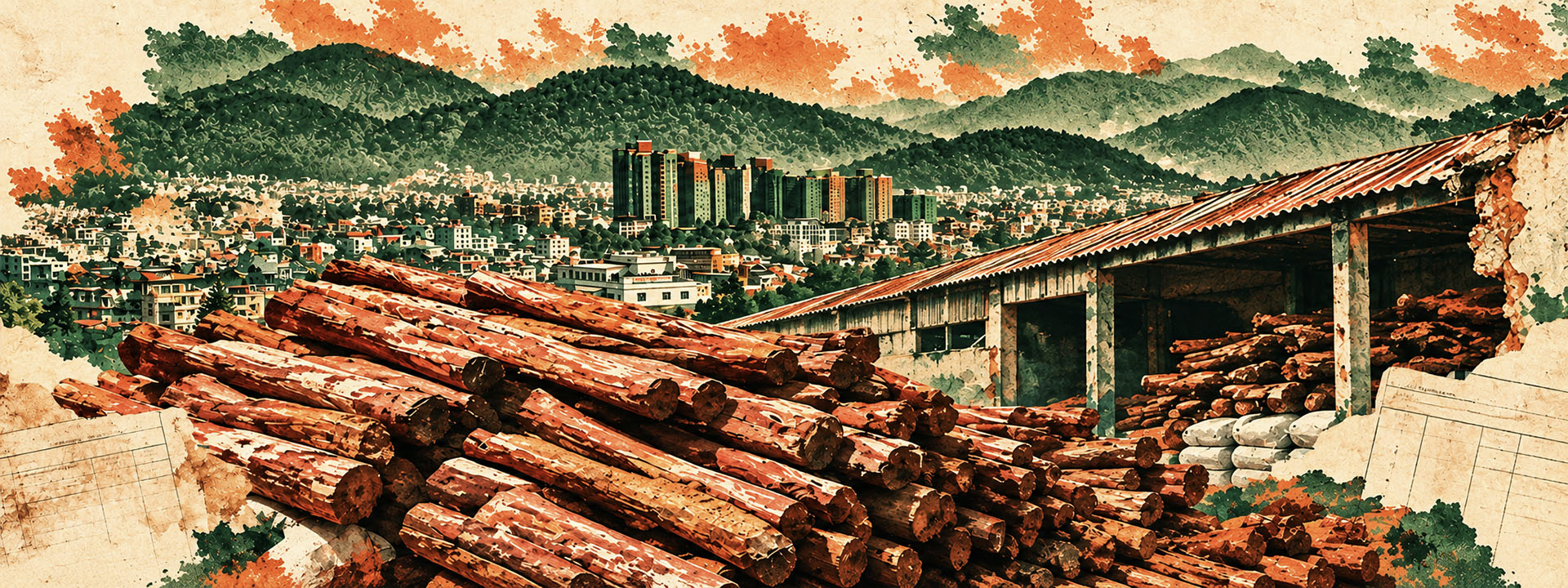
Red sandalwood grows naturally only in a small stretch of southern and eastern India. Prized for its striking red hue and unique medicinal properties, it is used in China to create ornate furniture, musical instruments and even to make traditional remedies.
It is so rare and valuable that it has become one of the most trafficked timbers on the planet, according to the World Wildlife Fund.
ROTTING TIMBER
In 2017, Nepal burned a stockpile of confiscated wildlife parts that it had accumulated for years. But its inventory of seized red sanders is in storage in several places, with some rotting, while at least 19 metric tons have been pilfered.
“Nepal hasn’t put red sandalwood up for auction in over two decades,” says Dhirendra Pradhan at the Department of Forests and Soil Conservation. “That choice rests entirely with the Cabinet – we can’t move forward without a clear mandate, and this lingering uncertainty has turned into a major administrative headache.”
In January 2025, more than 460 kg of red sanders were seized from alleged smugglers in Kathmandu, adding more to the stockpile.
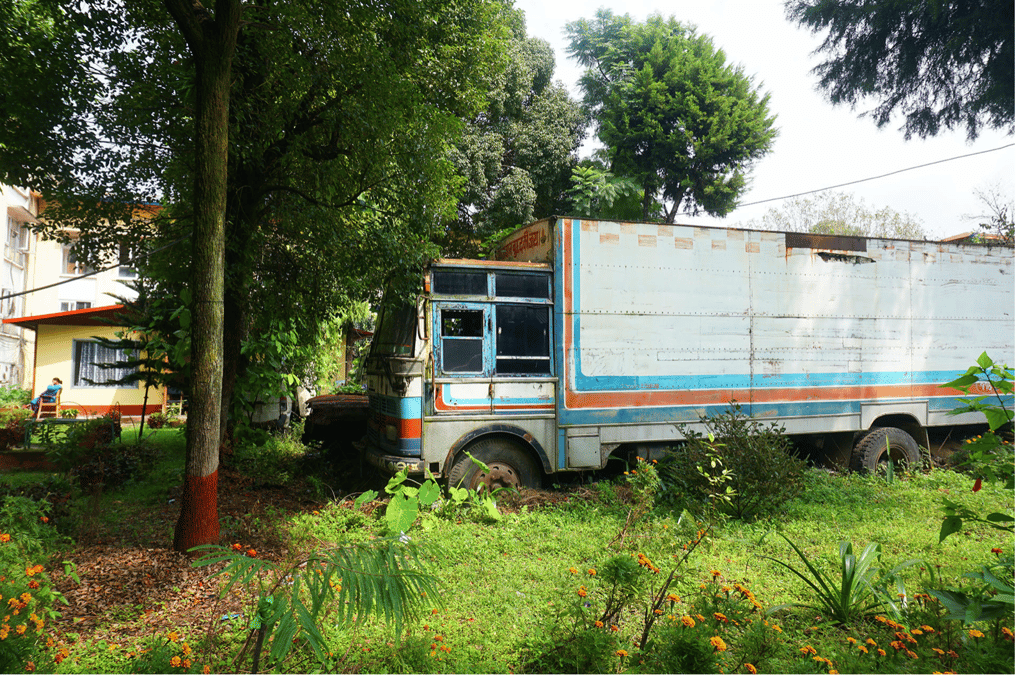
At the Department of Forest and Soil Conservation (DFSC) in Kathmandu, the timber fills seven trucks, their faded, peeling paint revealing years of stagnation. Elsewhere in the country, warehouses at more than 20 divisional forest offices are also full of the smuggled wood.
Since September 2009, 35 police and forest guards have provided round-the-clock security for the red sanders in Kathmandu.
“This is an issue that needs to be resolved,” said Netra Bahadur Karki, of the paramilitary Armed Police Force. “The team could have been deployed elsewhere, but the government is spending resources to guard the red sandalwood. Still, once the state assigns us this responsibility, we have no choice but to carry it out.”
Adhikari, whose responsibilities include ensuring the import and export of endangered species comply with national laws and regulations, worries that more of the stockpile will be stolen, or that its quality will decline.
Nepal’s government has changed 15 times since 2008. The country’s political instability has meant successive administrations did not have enough time to deal with the red sanders stockpile.
“Frequent changes in government have caused the issue to languish,” said Dhakal. “Officials who work on it continuously are often transferred or disconnected from the process. As a result, one government starts the process, but another takes over before it is completed. The new government then has to begin again, leaving Nepal unable to decide on its own.”