PM Balendra Shah left for his first bilateral visit to India from Kathmandu Airport on Sunday afternoon. Photo: PMO NEPAL
Prime Minister Balendra Shah flew to New Delhi on Sunday for a visit lasting just over 24 hours, his first official bilateral visit.
In this ritual visit to India, he carries one of the oldest briefs in Nepali politics – to navigate between the two biggest countries in the world.
Last week, while seeing off his party’s lawmakers on a trip to China, he reportedly told them that Nepal must keep “balanced relations with both neighbours”, and asked them to make clear to his Chinese hosts how their Belt and Road Initiative could serve “Nepal’s national interest”.
The words are new, the problem is not. In his Dibya Upadesh, dictated in 1774, Nepal’s founding king Prithvi Narayan Shah opened his advice on foreign affairs with ‘दुई ढुङ्गा बिचको तरुल’ -- a yam between two rocks.
Photo: PMO NEPAL
Back then, the rocks were the East India Company and Qing China. Today they are India, Asia’s rising giant, and China, a world power. The yam’s task has not changed: how to grow without being crushed.
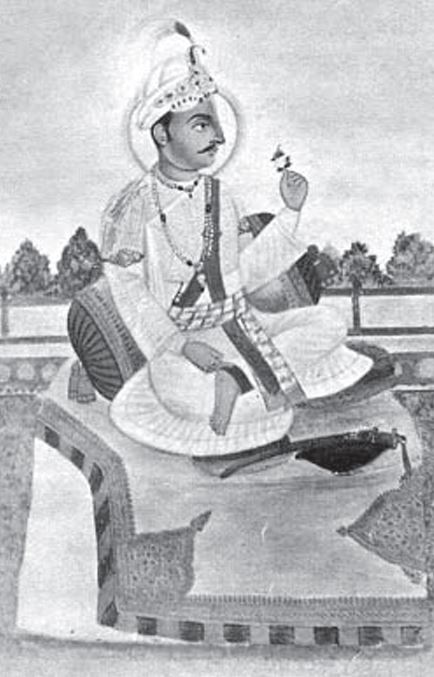
In Ludwig Stiller’s 1968 translation, Prithwinarayan Shah (illustration, left) in the Light of Dibya Upadesh, the passage reads:
‘This country is like a gourd between two rocks. Maintain a treaty of friendship with the emperor of China. Keep also a treaty of friendship with the emperor of the southern sea (the Company). He has taken the plains. He will realize that if Hindustan unites, it will be difficult, and so he will come seeking places for forts.’
The king was under no illusion about the southern power. ‘One day that force will come,’ he warned, and advised: ‘Do not go down to the plains to fight. Withdraw to the hills to fight.’ Stiller reads the passage as ‘a healthy fear of the British’ joined to ‘the necessity of maintaining relations of friendship with these powers’.
That is the whole doctrine in a few lines: be wary of both neighbours, quarrel with neither, and keep your own ground.
Eighty years later, Jang Bahadur Rana (pictured, right) turned the king’s advice into law. The Muluki Ain of 1854, Nepal’s first legal code, was more than a penal code. In our book The Mulukī Ain of 1854: Nepal’s First Legal Code (Heidelberg, 2021), Simon Cubelic, Axel Michaels and I call it ‘a kind of constitution’, and its opening chapters on the throne and royal affairs read like one.
There, friendship with the two neighbours is no longer a king’s wish but a duty of state. Even the king could not break it. The code says that if a reigning king, ‘without the advice of the prime minister, gives an order that breaches an agreement with an emperor to the south or north’, he ‘shall be dethroned’.
Courtiers were bound too. Anyone who ‘lies in [a matter] which brings an unexpected calamity with China or the English’ was to lose his post and be jailed for 12 years, and anyone practising ‘fraud or deceit regarding matters relating to China or the English’ faced six years.
If a Chinese or British envoy committed a crime in Kathmandu, ‘the courts of our own government shall not investigate the case. One shall write to their government’. Selling land to ‘neighbouring emperors or kings’ was forbidden – even to the king.
Friendly relations with Britain and China was a necessary precondition for Nepal’s survival as an independent state, became a directive of state policy”.
COSTLY LESSON
Jang Bahadur’s code was written after a costly lesson. Prithvi Narayan Shah’s fear came true in the Anglo-Nepal War of 1814–16. The Treaty of Sugauli, signed in December 1815 and ratified in March 1816, cost Nepal a third of its territory, from Kumaon and Garhwal in the west to the lands it had taken from Sikkim in the east, along with much of the Tarai (parts of which were later returned).Yet Nepal kept what mattered most. While the Company swallowed kingdom after kingdom in the plains, Nepal remained one of the few non-European kingdoms that were not colonised and could maintain its ground against British India and China. Bravery in battle played its part, but so did the tightrope: never giving either boulder a reason to roll.
Following the dharmashastra, Brahmins and women were exempt from the death penalty in Nepal. Yet in 1834 Kathmandu and the East India Company agreed that cross-border robbers would be put to death by whichever side the crime took place on.
A letter from 1835, DNA_0004_0100, kept in the National Archives of Nepal, shows what this meant on the ground. Ranavir Simha Thapa, writing from Palpa to General Bhimsen Thapa, quotes the royal order he had received (quoted here from the Documenta Nepalica translation):
‘Because of robbery and theft in the cross-border areas, the friendship [between Nepal and the Company Government] will suffer, and their peoples, too, will. Therefore, [the proclamation, announced by] the beating of drums, that anybody from the Four Varnas and Thirty-six Jatas shall be punished by death if [charges] of theft and robbery are proved shall be delivered in every praganna [and] mauje.’
“Anybody from the Four Varnas and Thirty-six Jatas” meant everyone, Brahmins and women included. As I show in Homicide Law in 19th-Century Nepal (Heidelberg, 2024), the exception was made for the purpose of ensuring smooth diplomatic relations regardless of what the dharmashastra and customary practice enjoined.
The frontier official saw the domestic cost straight away. Announcing executions every 15 days, he wrote, ‘our subjects will be very alarmed and the country will fall into some disrepute’. Keeping the neighbours friendly has always had a price at home.
The tightrope did not end with the Ranas. Since the 1950s, governments in Kathmandu have often tried to play the northern card against the southern neighbour: the road to Kodari in the 1960s, Chinese arms in the late 1980s that preceded India’s trade squeeze of 1989, and the transit agreement with China and the Belt and Road deal signed after the 2015 blockade.
Each move made headlines. Few produced lasting results. India remains Nepal’s main trade partner and its route to the sea, and many projects promised from the north are still on paper.
The lesson is not that Nepal should pick either boulder. It cannot, geography has decided that, as it did for Prithvi Narayan Shah. But a yam between two rocks need not stay small or silent. Nepal has to grow alongside both neighbours, with open discussion at home and a clear position abroad, shaped by its own economy, its own needs and its own location.
That is what the Muluki Ain tried to make permanent: friendship with both, decided on Nepal’s terms, and no single ruler free to gamble it away. As Prime Minister Shah sits down with Narendra Modi this week, with Beijing watching, that old advice still holds. The rocks are bigger now. The yam has to be wiser.