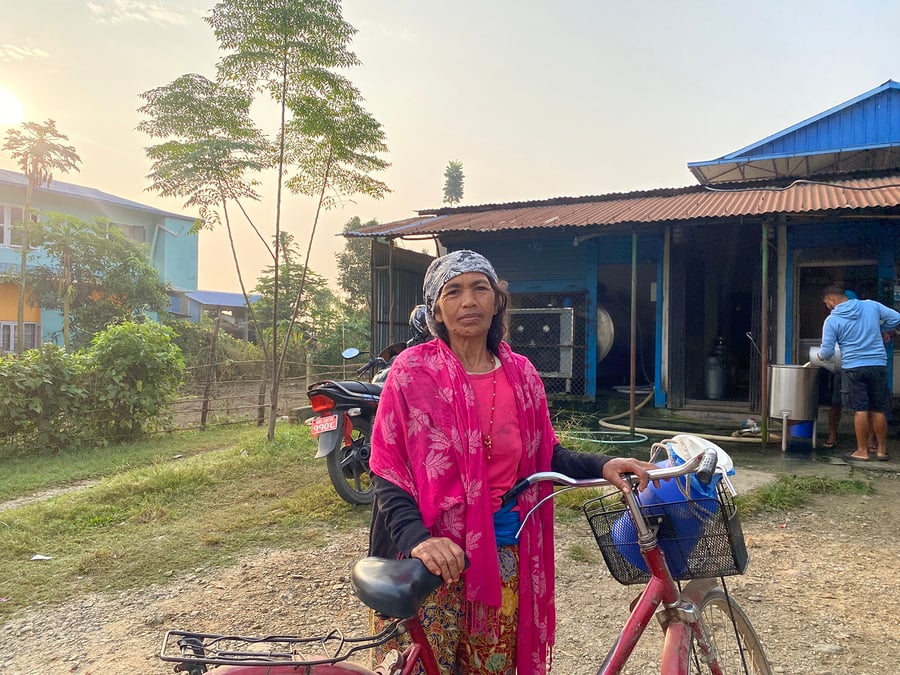
As soon as she milks her cow, 52-year-old Punam B K is off, pedaling her bicycle furiously along the highway with a blue milk can in the front basket.
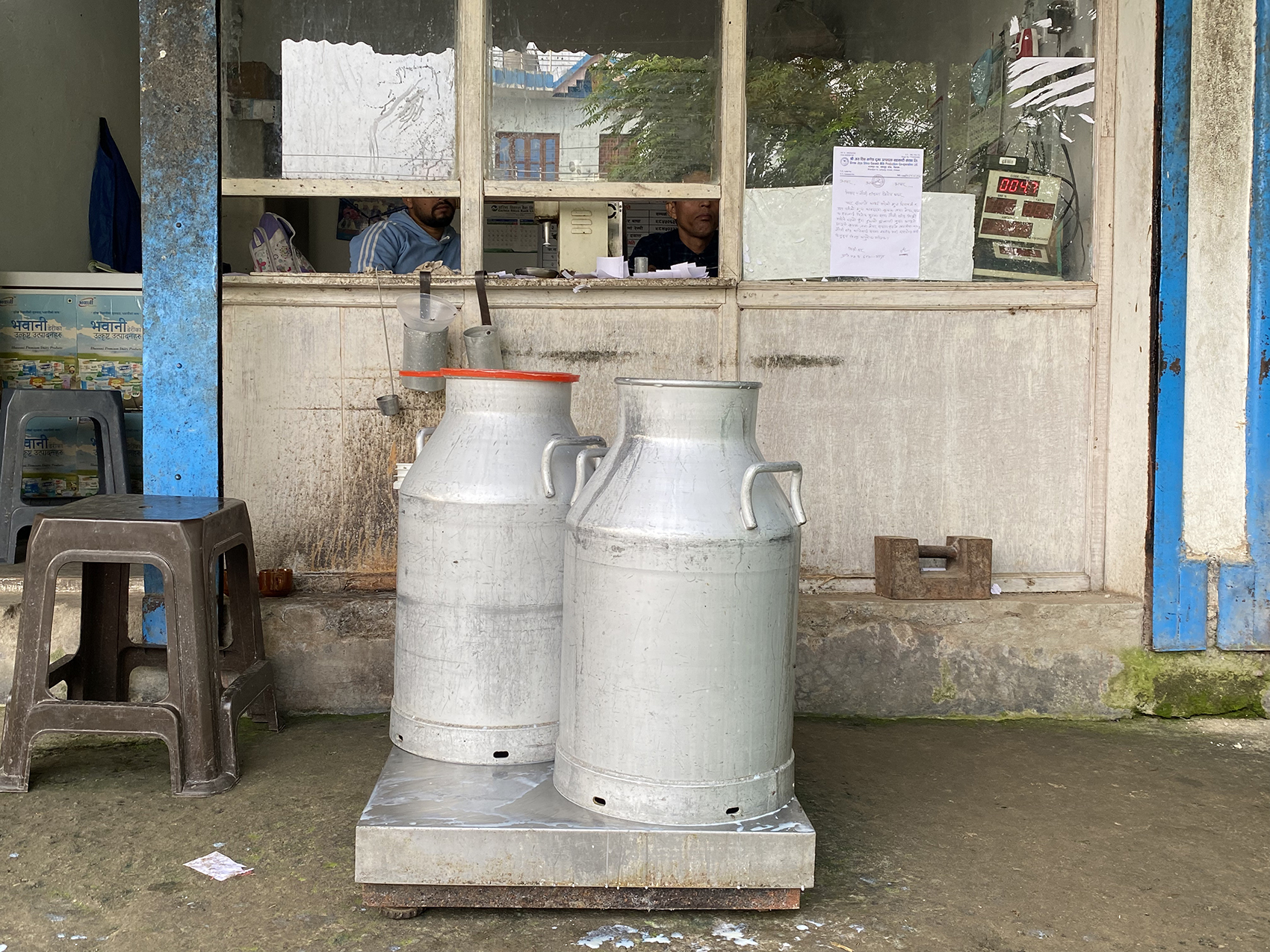
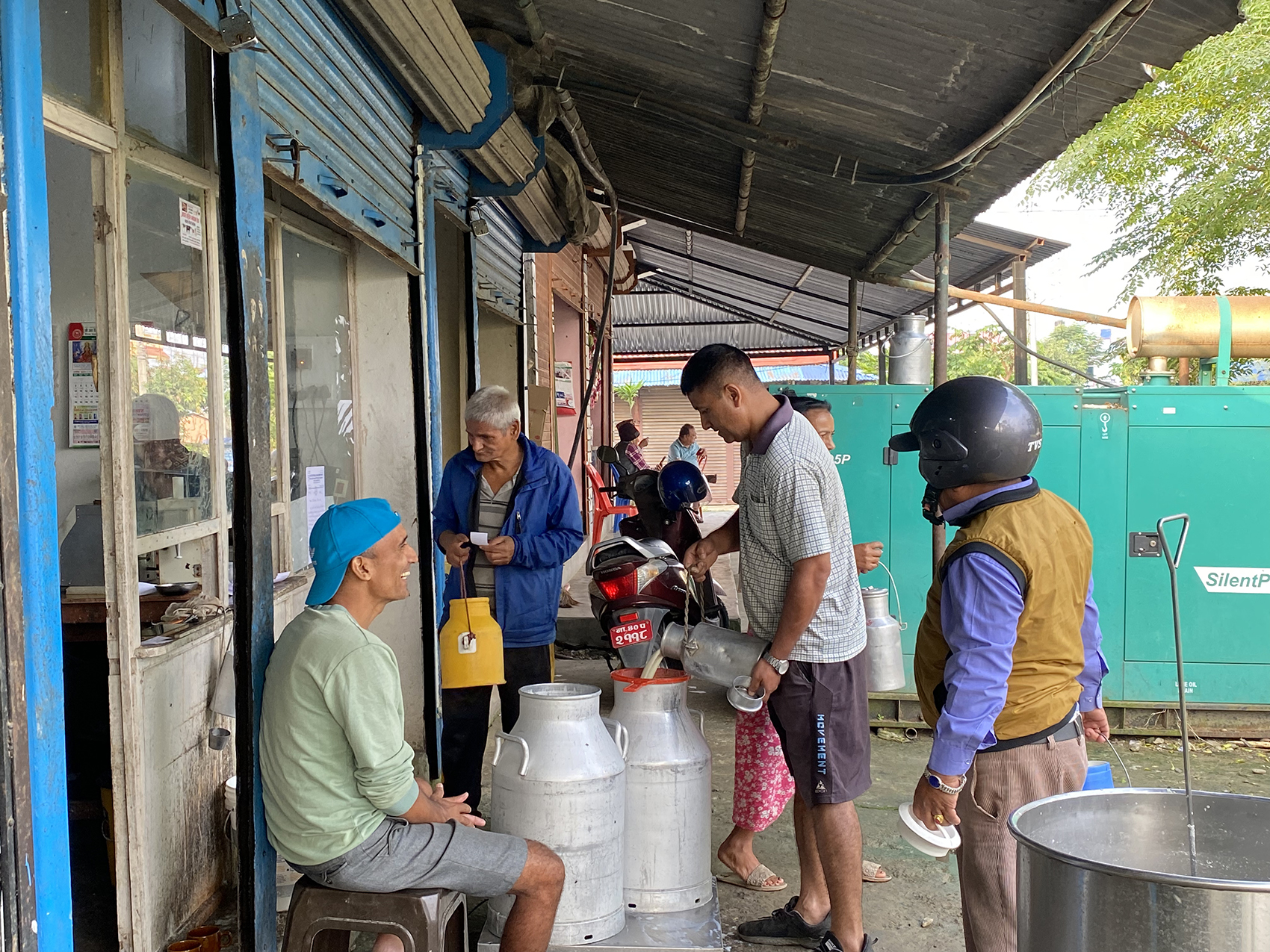
By the time she arrives at the Jaya Shiva Ganesh Dairy Producers Cooperative in Gopalganj village, others are already there, their bicycles parked on the roadside. The farmers are all holding on to their blue milk cans, and are chatting away.
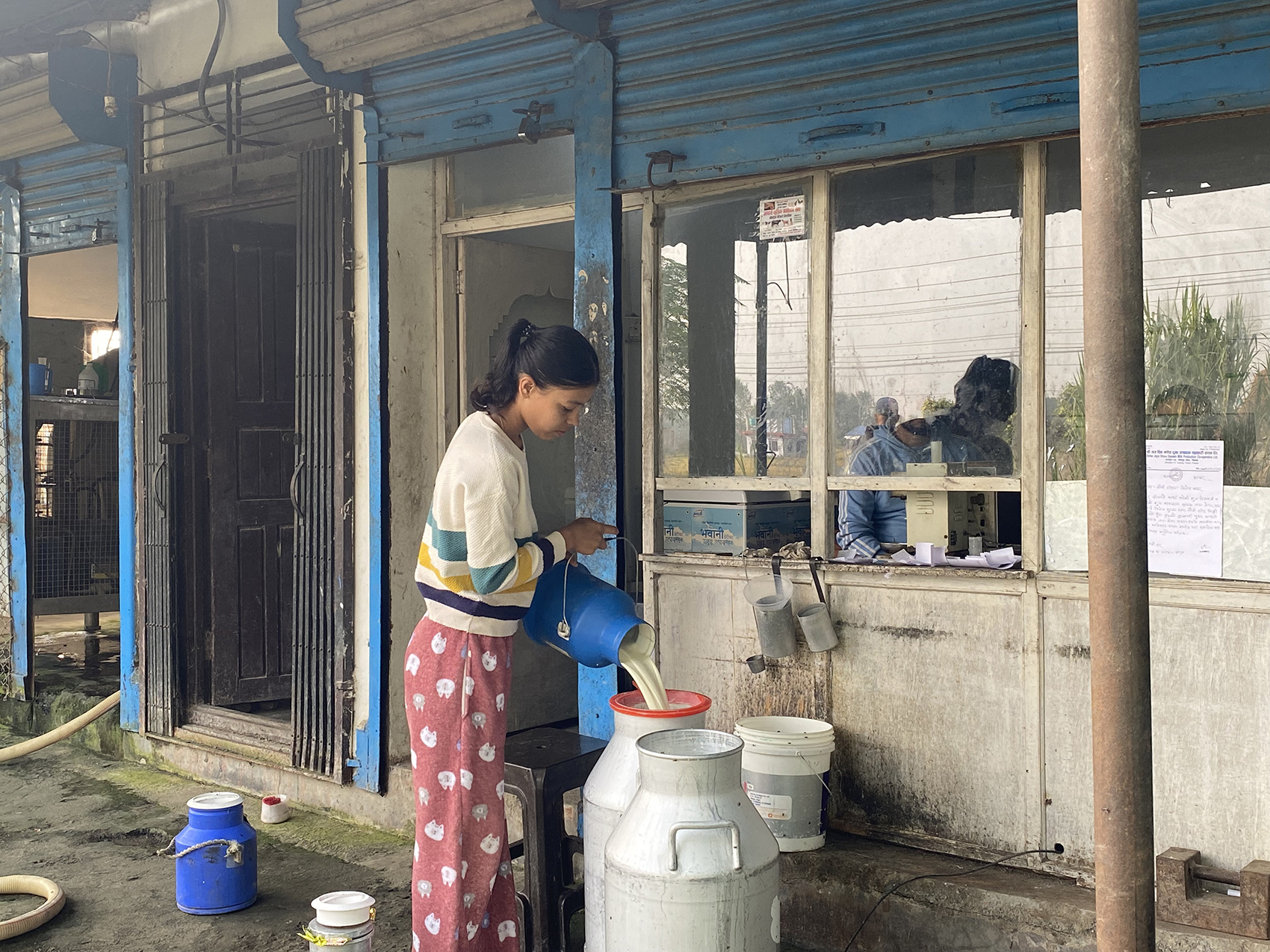
“We keep what is needed for the family, and sell whatever remains here at the cooperative,” says B K, as the volume, fat and non-fat solid content of her milk is measured. It is then poured into a bigger vat to be mixed with milk from other farmers. B K collects her receipt with the value of her milk, and prepares to head home. The farmers are reimbursed on a quarterly basis.
Read also: A family that works together stays together, Sahina Shrestha
“Everyone around here has at least a cow or buffalo to provide milk for the family, the cowdung is used for fertiliser, and we can bring whatever is left over to the cooperative,” says B K who, like the others, brings her milk by bicycle twice a day, once in the morning and again in the evening.
All this may seem like nothing special, just an ordinary farmer selling her milk. But it has to be seen in the context of dairy farmers overcoming subsistence and increasing household income. Nearly 200,000 dairy farmers from over 1,200 cooperatives have not been paid by the government-run DDC for their milk for a year or more.
The DDC has fixed a quota for buying milk from cooperatives that limits production even during the peak winter months. Farmers in Chitwan are so fed up, they have staged demonstrations in Kathmandu and even poured milk on the East-West Highway in protest.
Punam B K’s milk ends up in Bhawani Dairy, a milk processing plant in Chitwan that buys milk from various cooperatives in the district. It was established six years ago by three entrepreneur cousins Devrath Baral, Drishya Baral and Subash Paudel and is now being supported by the Commercial Agriculture for Smallholders and Agribusiness (CASA) project.
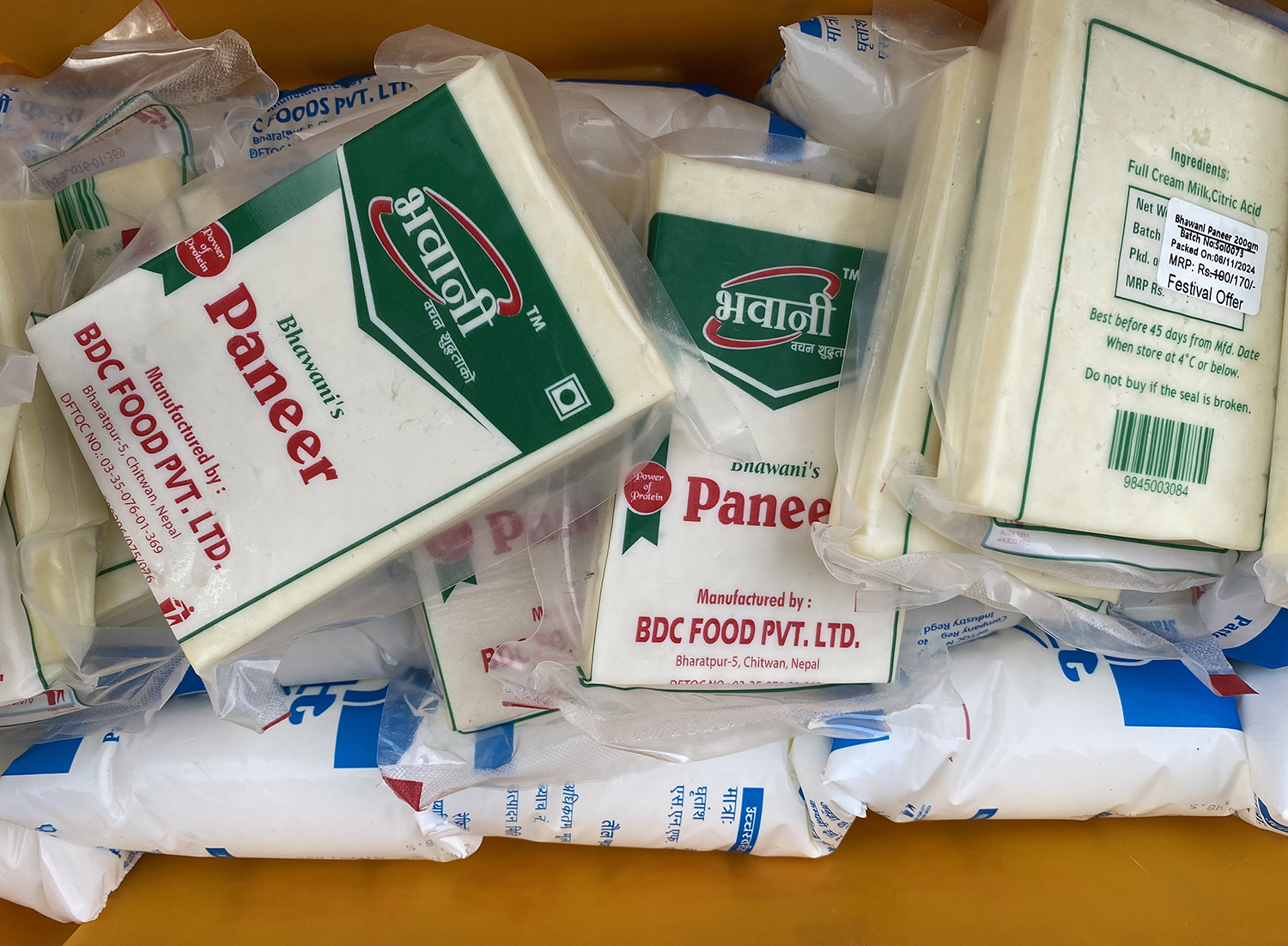
This UK-funded project implemented by Swisscontact in Nepal has been supporting agro-businesses in 23 countries in Asia and Africa. They focus on improving the capacity of private dairy and vegetable farmers to find markets and build a sustainable supply chain for their produce. It helps dairies like the one in Chitwan with branding and marketing, as well to track business through a Dairy Management System (DMS) digital database.
Bhawani Dairy also got support to conduct orientation for cooperative farmers to learn about new ways to boost productivity with breeding, cowshed management and hygiene maintenance. Many commercial farmers in Chitwan, some with up to 60 cows and buffaloes, have benefited.
B K says she only has six cows, so not everything she hears at the orientation about increasing cowshed area is applicable. “We are just happy our milk is not wasted, and we can earn some cash from the surplus,” she says.