
Nepal’s tourism industry has lurched from one crisis to another: the ten-year Maoist conflict, years of political instability and road closures, the 2015 earthquake and blockade, the Covid lockdown. And it has just started recovering from the violent GenZ upheaval last year when videos of the deadly 26 August flood made headlines globally.
But after every disaster, Nepal has bounced back because the country’s attraction as an adventure destination, its people, and unique culture means that the country has a strong brand.
“Nepal’s tourism industry has demonstrated remarkable resilience in the face of earthquakes, pandemics, natural disasters, and other crises,” says Deepak Joshi of Nepal Tourism Board (NTB). “Previous disasters have shown that Nepal can recover quickly.”
But since Nepal has always recovered quickly after past disasters, there is an expectation that the impact on visitor numbers will recover. Says Joshi: “The eventual impact will depend largely on how quickly infrastructure is restored and how effectively we communicate with international markets.”
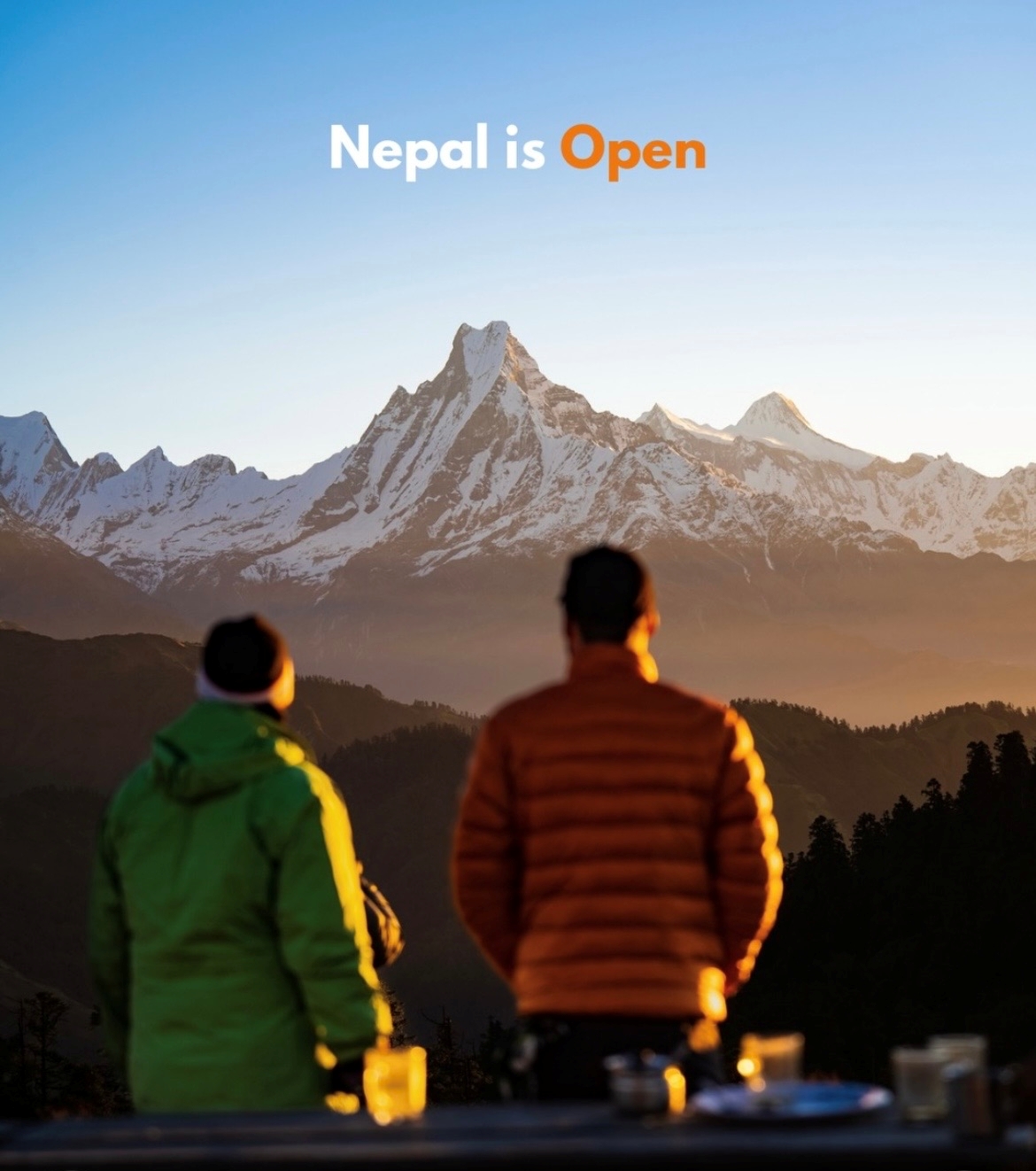
At NTB, there is a concerted effort to do damage control through social media with the message: ‘Your Visit Matters’. An NTB post on Instagram shows Australian trekkers Aaron and Lydia saying: “The lower part of Langtang has been affected, but all the other trekking areas are all safe to travel, so please come visit … and support the local communities and the country for their rebuilding efforts,” they say.
Even so, the fact that so many foreign pilgrims and tourists were affected on a river corridor that is the main route to Tibet and Langtang has led to some cancellations by trekking and other tour groups.
Some 142 lodges, 57 restaurants, 141 tourist vehicles were destroyed or damaged. The highway to the China border has been swept away, as has the roadhead to the Langtang trek.
“The impact is not limited to physical infrastructure; visitor confidence and bookings have also been affected,” NTB’s Joshi told Nepali Times, estimating that the industry that contributes nearly 7% to the GDP has suffered at least Rs50 billion in losses.
Arrivals in the first week of August have already declined by 3.56%, and hoteliers report that about 20% of September bookings have been cancelled. Ramchandra Sedai of Trekking Agencies Association of Nepal says that 5% to 10% of bookings for hiking tours in the Himalaya have been cancelled.
“Perhaps the biggest challenge is the perception of Nepal internationally,” says Joshi. “Much of the international media coverage of the floods refers to the disaster as the ‘Nepal flood’, creating the misconception that the entire country is affected, and therefore unsafe.”
The timing is particularly challenging because Nepal’s main autumn trekking season runs from mid-September to mid-December, and plays a pivotal role in supporting the rural economy, directly employing more than 1 million people. Most people living in the trekking areas schedule and plan their businesses around the trekking season, and their livelihoods depend on it.
Although the Langtang region may see a drastic drop in trekker traffic because the access road has been swept away, there have been cancellations for other parts of the country by trekking groups spooked by the headlines.
Sedai says the sensationalism and negative portrayal of Nepal after the floods have affected bookings of treks in other regions too. When tourists cancel their trip, flights and hotel bookings are cancelled, and drivers, porters, tour guides, and lodge owners also face great losses. “The autumn trekking season is especially important. Impact in this season affects the entire tourism ecosystem,” he says.
If negative perceptions of Nepal and cancellations among foreign tourists continue, Nepal might face a 10% to 15% reduction in arrivals and tourism receipts compared with expected levels. In this scenario, the cost to local businesses will be severe. Hotels, transport operators, restaurants, guides, and other tourism-related businesses and workers will face significant losses of income and employment opportunities. Many may be forced to migrate to seek work abroad.
Officials say a rapid recovery strategy, combined with strong and targeted destination communication, can significantly reduce the potential impact of the floods and restore visitor confidence. Connectivity should be given high priority since much of the search, rescue and rehabilitation also needs roads to be urgently repaired.
Trekking and tour agencies have maintained full transparency on the safety status of destinations and routes, and emphasise that it is only the Trisuli corridor that has been affected. The landslide on the Prithvi Highway to Pokhara and Chitwan is being repaired and should be back in operation in a few days.
There is also a climate-related argument for visiting. It should be well known by now that the impacts of climate change are disproportionate, and Nepal is among the countries facing the brunt of it. Thus, travelers may have concerns that going to Nepal may add to their carbon footprints.
But the reality is that visiting Nepal is a climate-conscious choice. Nepal contributes only 0.5 tonnes per capita per year of carbon emissions – among the lowest in the world. So for many travelers, a two-week stay in Nepal would actually reduce their overall emissions had they stayed home.
There is also a deeper value: seeing the firsthand effects of climate change– glacial lakes, erratic weather patterns, fragile ecosystems– can turn trekkers into global advocates for climate action.
The money spent matters more than ever. Tourism in Nepal is a deeply local economy. The fee a trekker pays for a night at a lodge, a tip for a porter, all go directly into the hands of families that have few other sources of income. Every visitor who returns brings hope for sustaining the local economy at a precarious time when every tourist dollar matters.
The recovery of Nepal’s tourism sector will depend less on the scale of the damage than on how quickly the world is reminded of what Nepal offers, and how much it needs visitors right now. The mountains are still as majestic as ever, and Nepalis are their usual generous and hospitable selves.