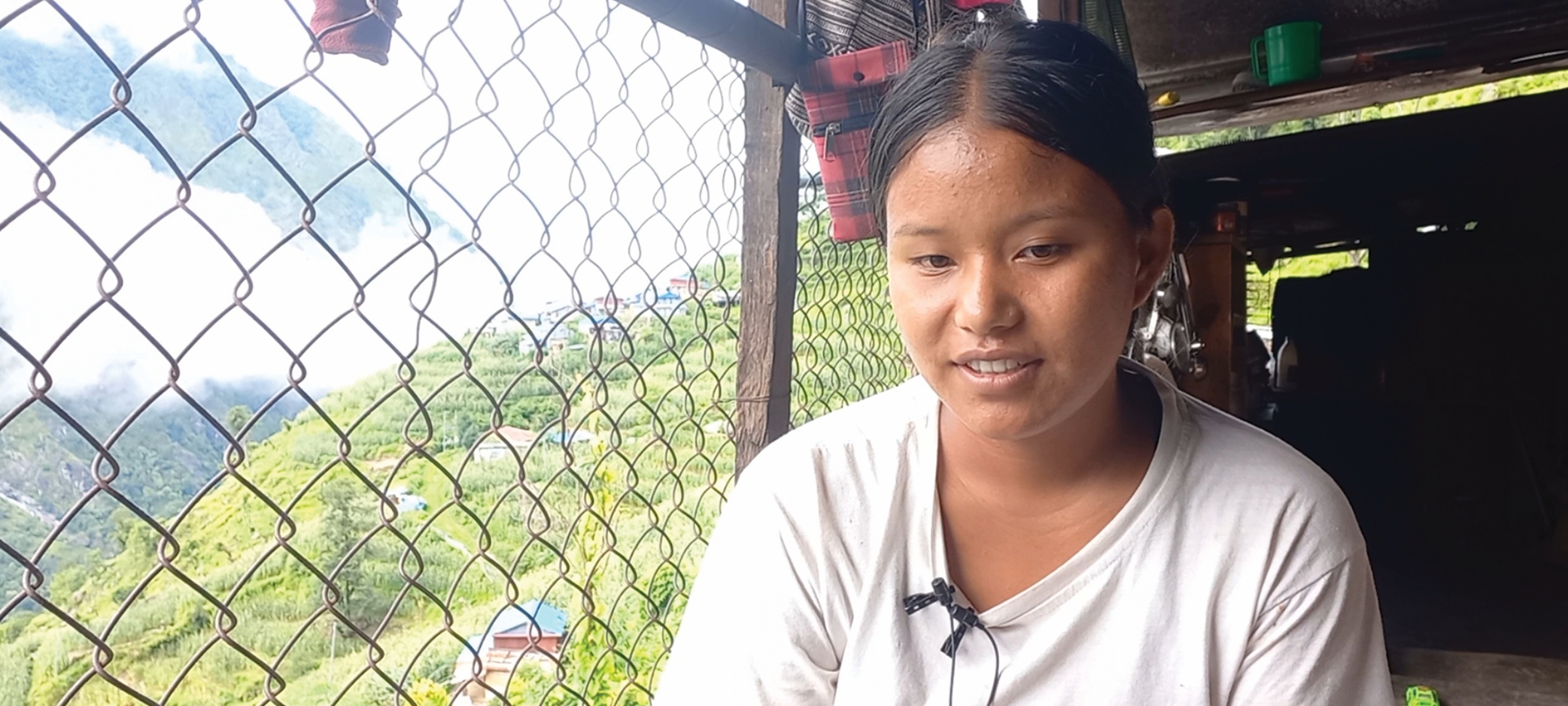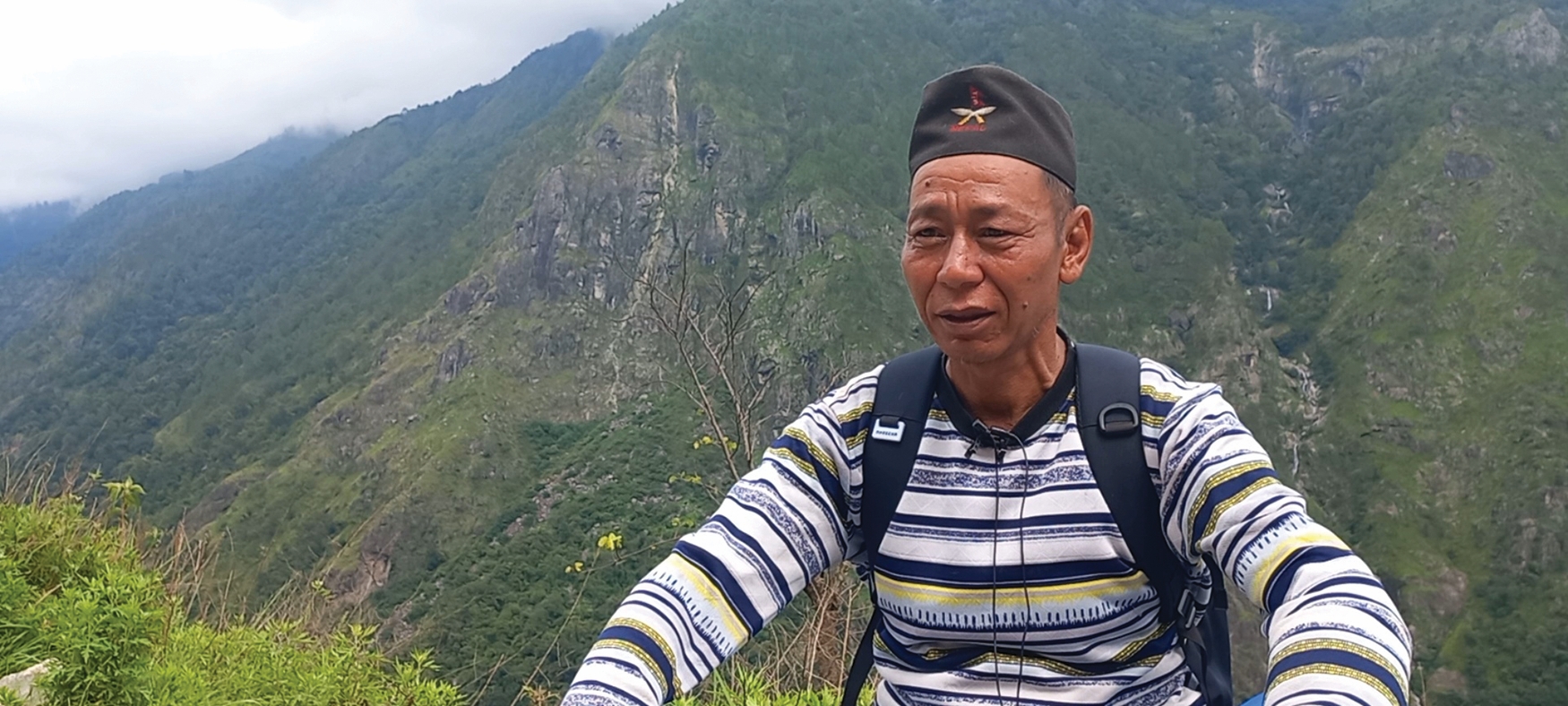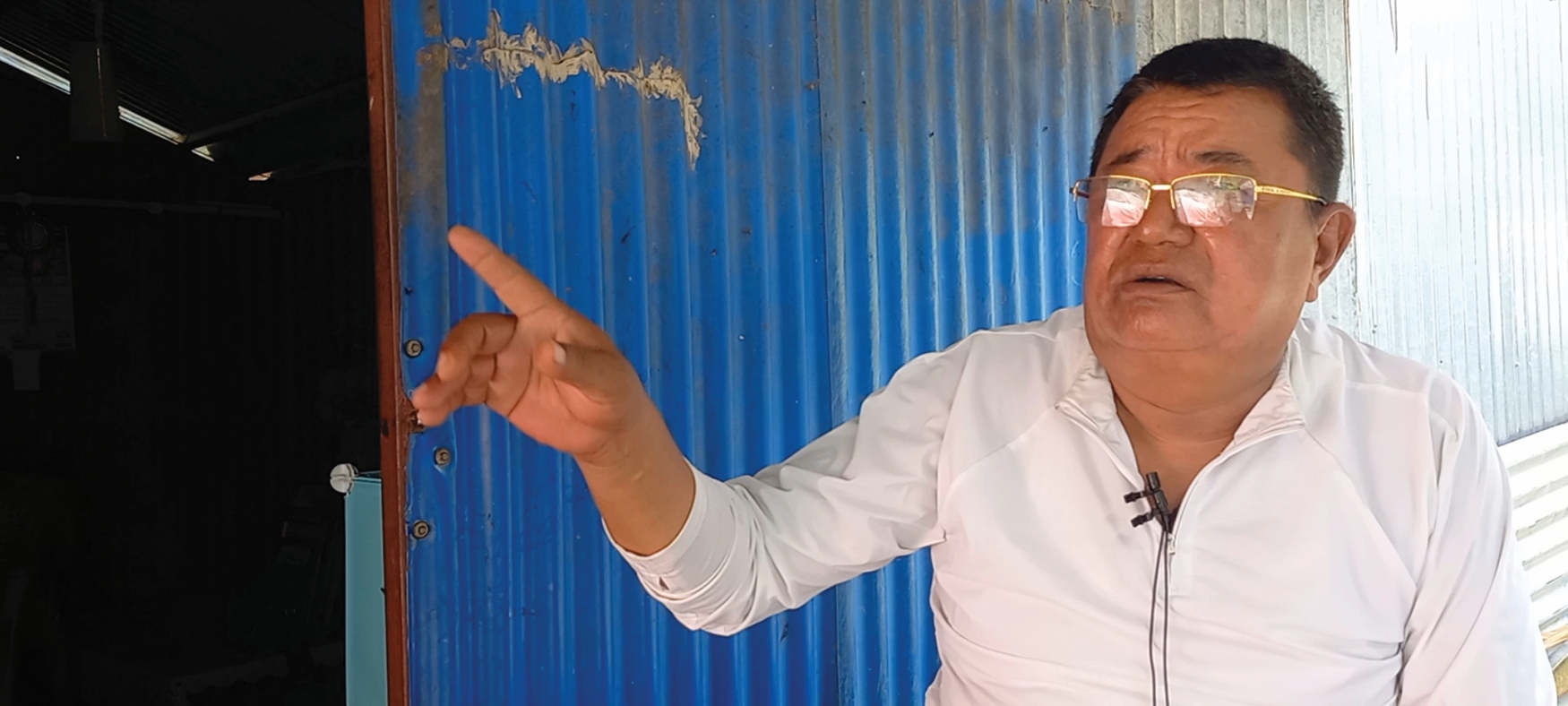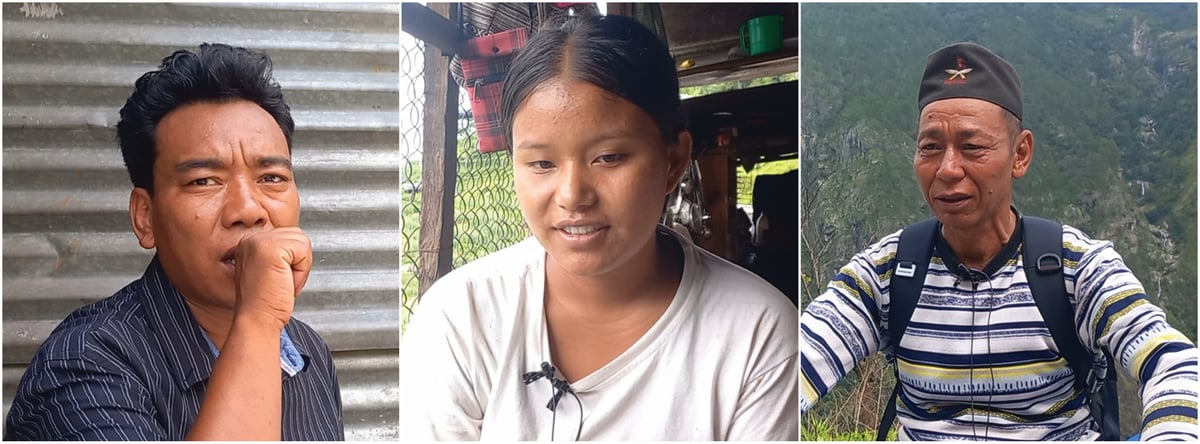
After losing their homes and loved ones in the 2015 earthquake, residents of Mailung, Tiru and Gogane villages in Rasuwa were resettled in Khalte, on the banks of the Trisuli River.
Eleven years later, the river swept through their settlement, killing many of those who had survived the earthquake.
CHEKKU LAMA
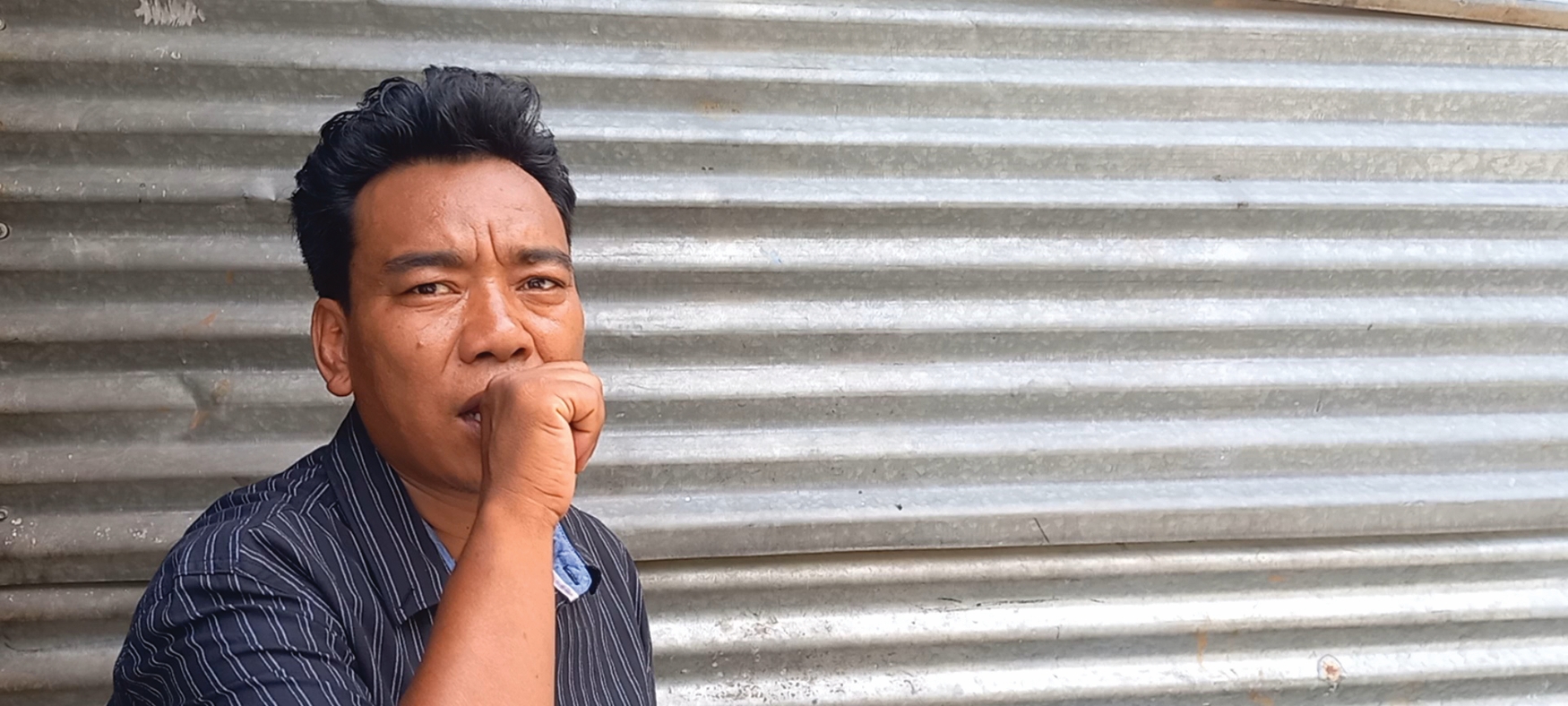
On the morning of 26 August, 41-year-old Chekku Lama was having tea by the river when his phone rang. The call was from a relative in Tiru. “Run! Run! Mailung has been wiped out, the Bhote Kosi has gone mad.”
Lama knew what this meant. He thought it was a glacial lake collapse in China like the one last year when the Chinese alerted the district administration in Rasuwa. This time there was no warning.
There was barely time to think. Lama got on his motorcycle, and headed towards his home in Khalte, shouting at people along the way to get out of their houses. Many were working in the fields.
“By then, the flood was already upon us,” Lama recalled, sitting in a shelter. He abandoned his motorcycle and clambered up the rocky slope above the settlement. He watched in horror as his family was swept away.
“My mother, father, brother, sister, nephew and brother-in-law, the flood took them all away,” said Lama, who plans to go down to Chitwan as soon as the landslide along the highway is cleared to search for their bodies. His wife and children survived as they had gone for a tutorial class.
The wall of mud and boulders tore through the Khalte settlement of earthquake survivors, drowning homes, fields and an entire community. A place that had been home to more than 1,100 people was reduced to mud, sand and boulders. At least 383 of them are dead or missing.
“As far as I can estimate, only 10% of the people who were in Khalte at the time survived,” he said. “We are still collecting data.”
For the people of Khalte, the tragedy began long before the flood. The 7.8 magnitude earthquake on 25 April 2015 with its epicentre 50km to the west in Gorkha shook the region. Many in Mailung, Tiru and Gogane were crushed by buildings and landslides.
Survivors lived in temporary shelters for years, there were failed relocation efforts, until they were finally resettled in what was supposed to be a safe area near the Trisuli River.
Lama says he never trusted the location, and feared monsoon floods. Last July’s flash flood from a glacial collapse in China confirmed his worst fears, but there was no alternative.
Monsoon floods are an annual ordeal. Whenever they received SMS warnings about rising river level, they would move up the slope. Sometimes, the river carried away their tin-roof sheds.
But they always returned to their temporary homes. This time, the angry river rose to levels no one had ever seen before, and there is nowhere to return to. Many who were weeding their paddy fields had no time to run for safety and were swept away.
The geography of Khalte offered little protection. The settlement sat in a narrow section of the Trisuli, with the river close to homes and cliffs above. The mountains are vulnerable to earthquakes and landslides, the river banks are threatened by floods. They were trapped, and nowhere was safe.
For Chekku Lama, the disaster has become a question of accountability. "This is not just a natural disaster, this is state-sponsored slaughter,” he said angrily. It was only luck that that spared his life, but took away so many from his community.
After the quake, families initially took temporary refuge in Satbise, where they stayed for about five months on land provided by the municipality. Some moved to Naubise, where they rented land for Rs27,000 a month. After seven months, the landowner asked them to leave.