The tableau is all too famliar. You walk out into the streets at the end of the day, no longer marvelling at the incongruousness of a city of pedestrians on the move. You see the occasional bicycles, and then a motorbike, which signals to everyone that the day of enforced unproductivity is coming to an end. Still, a mother admonishes her rubbernecking son at the Kupondole junction, where a cluster of useless riot police still remain, watched by a mixture of criminals and innocents: 'Don't look at them!'
Across the river and left onto Tripureswor, I am sure some fragmented profundity can be gleaned from the group of squatting men commenting on a group of squatting monkeys. But in truth I am not interested today in the affairs of either my sapien or simian relatives. I'm headed to the ghats around the Kalmochan and Tripureshwor Mahadev temples.
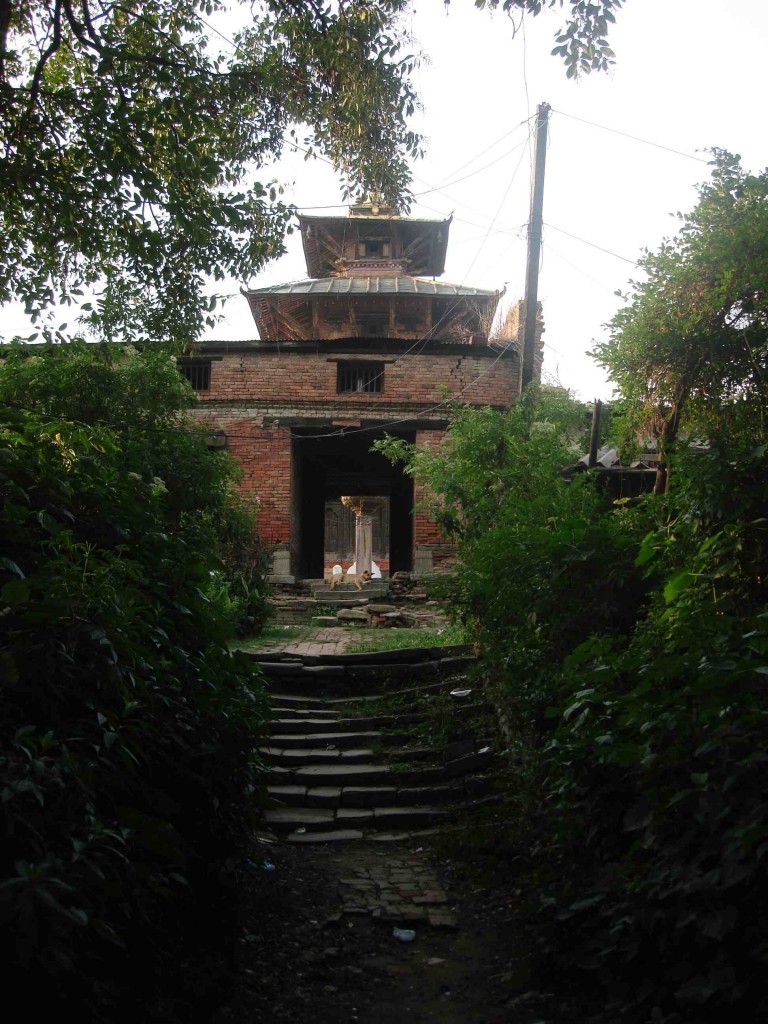
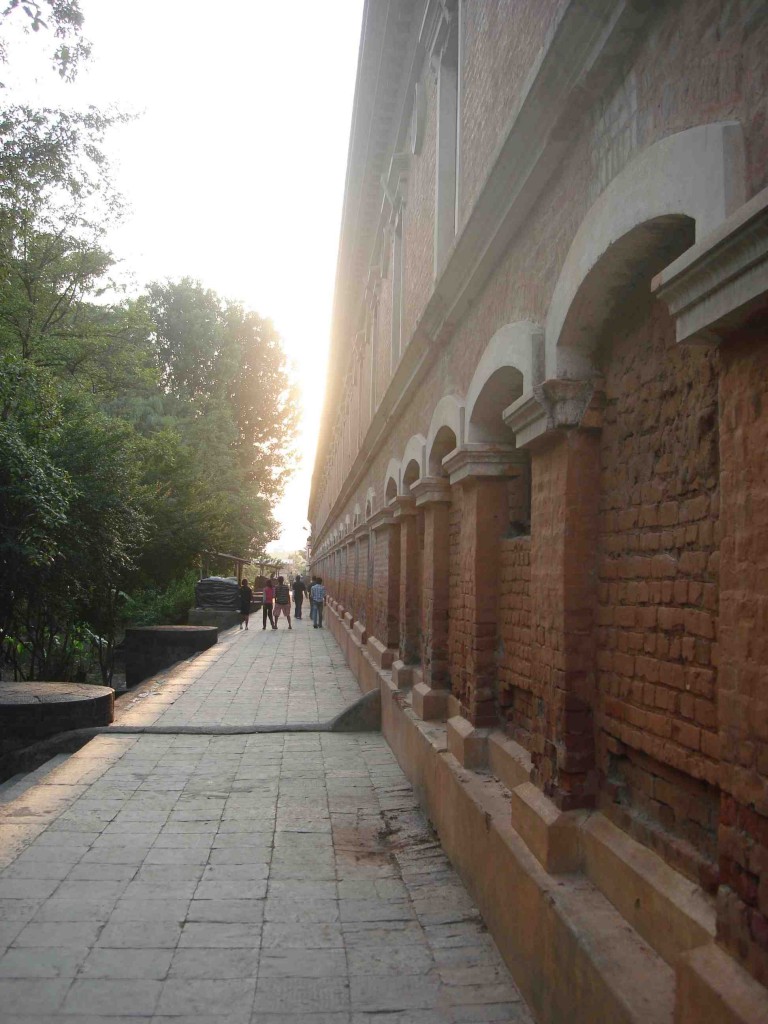
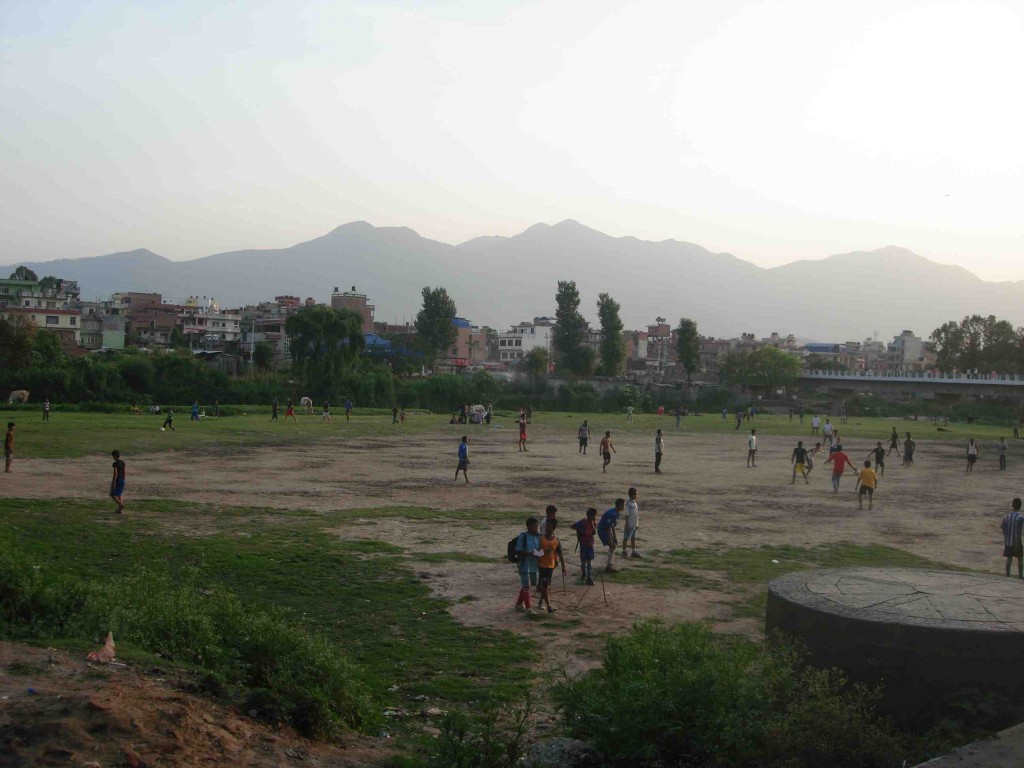
Being native to the Kathmandu Valley is by no means equivalent to knowing all its neighbourhoods, old and new and somewhere in between, and I’ve been making up for a northern bias ever since I moved south of the river. It’s relatively recently that I’ve explored the 19th-century temples of Kalmochan and Tripureshwor Mahadev and the ghats that line the Bagmati River. When better to open up new parts of the city than on a bandh day?
The Kalmochan temple, commissioned by the powerful Prime Minister Bhimsen Thapa shortly before his downfall, and completed by his eventual successor, Jung Bahadur Rana, isn’t really frequented by devotees. This has much to do with its inauspicious beginnings. Not only did Bhimsen Thapa commit suicide in prison (unable to bear the shame resulting if, as threatened, his wife was paraded naked through the city), the temple is rumoured to be where Jung Bahadur cremated the nobles whose massacre he’d orchestrated at Kot. The structure itself, in a domed Mughal style, is only remarkable for the massive, ferocious brass griffons that adorn its four corners. Monkeys bound around the site, as do street cricketers making use of the flagstoned open space around the restored temple.