
Despite the distractions of Jazzmandu, I made my way to Patan Durbar Square before Tihar to catch the first evening of the Planet Nepal dhamaka, simply because there seemed to be a lot going on in this city of not much going on most of the time. Music, installations, films, roundtables, and all for a worthy cause. Scrolling through the website, I made a mental list of what-what warranted a closer look.
There was a lot going on that evening...rather too much. In the heaving crowds packing the templed thoroughfares, lighted by lurid coloured bulbs, one got the vibe of any other street fest in Kathmandu. Yes, people were having fun, jiving to Kutumba, but the installations seemed as lost as that friend I was supposed to meet by the side of Krishna Mandir, and the Patan Museum's exhibitions were, after a point, closed off, even from one of the artists involved. It all seemed a little too chaotic to hang around trying to make sense of.
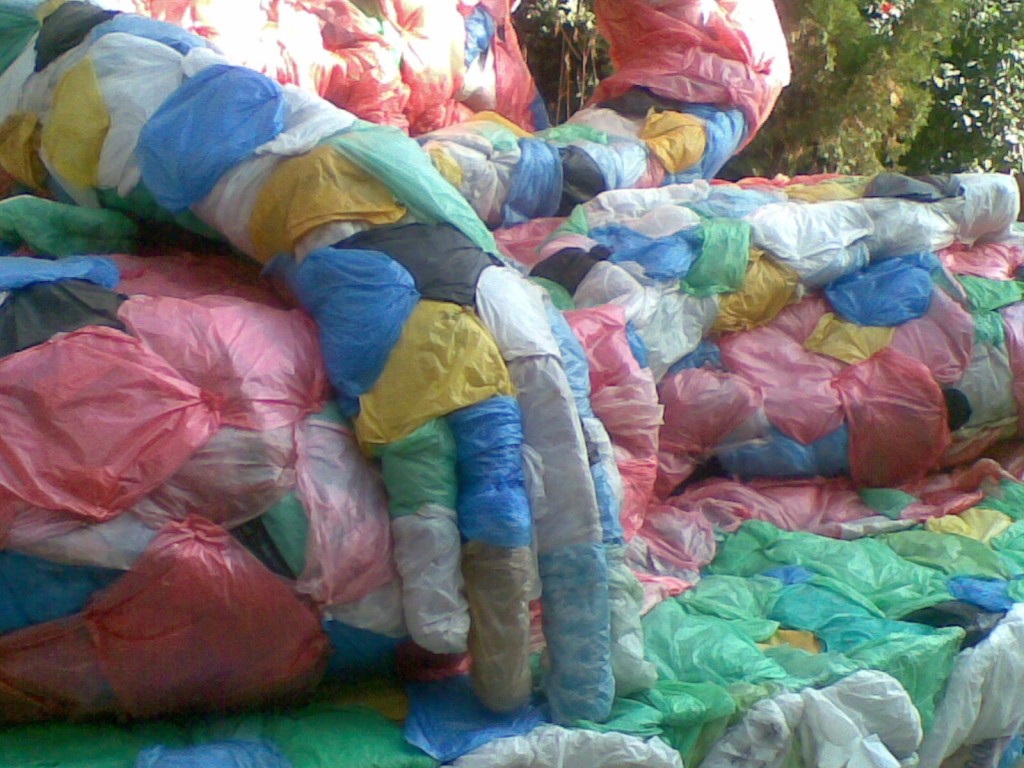
So I dropped by the Kathmandu Contemporary Arts Centre to catch the Planet Nepal exhibition the week after. It was worth the visit, if only to be able to examine all the works in peace, at ease, and give them their thoughtful due. What triggered the mood, of course, was the four-metre 'Recycled Buddha' upfront, remarkable in conception and execution. Artist Karl Knapp draws parallels between cyclical human existence as conceived in Buddhism and the re-used bags that make up his Buddha. For me, seeing the form of the Buddha covered in plastic bags triggered more unpleasant associations. Those references were to be seen in the video playing inside the cleanly designed exhibition hall that lamented the loss of rivers such as the Bishnumati, choked with effluent and plastic bags.
The rest of the space was very well laid out, with Ashmina Ranjit's intriguing organic creations at one end, and Om Khatri's contribution to the Rickshaw Project at the other. Just outside, a helpful young man operated Sujan Chitrakar's Biscope (slide viewer), installed on the back of a bright yellow rickshaw structure. More depressing images of pollution in Kathmandu, the mood of which was echoed by the third rickshaw on display, Sajana Joshi's insectile vehicle made of black tyre rubber.
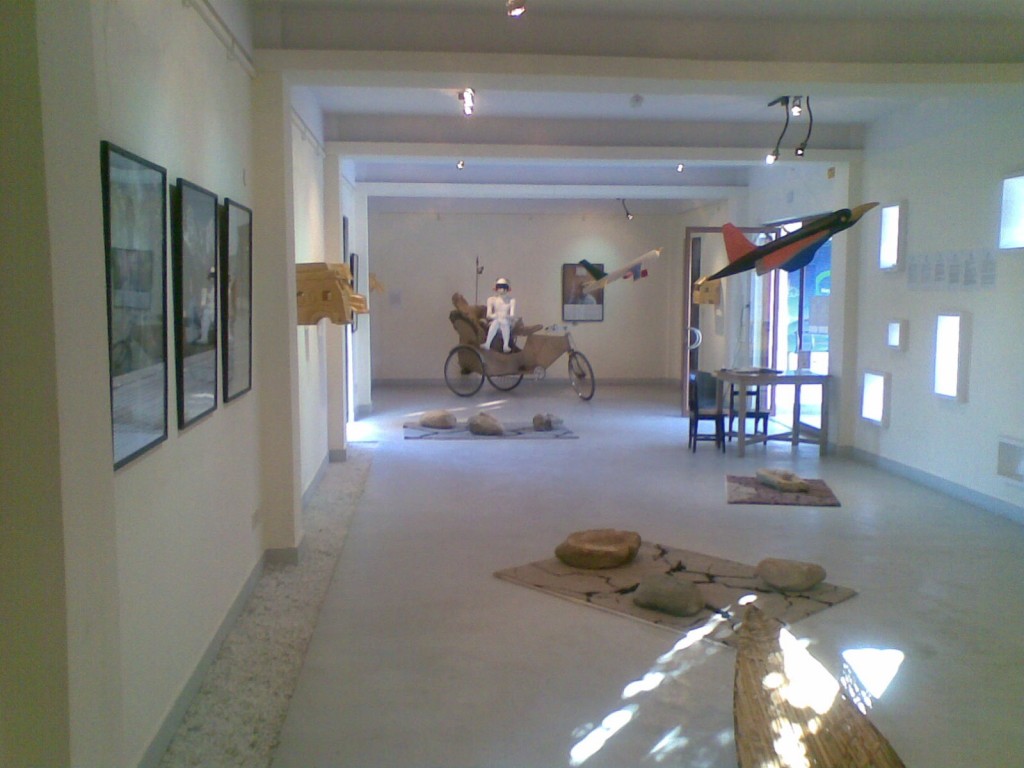
If it's rare to wholeheartedly appreciate one-man shows in the galleries in Kathmandu, perhaps such a composite exhibition is the way forward...I look forward to more such from KCAC's excellent gallery.