
Bhattis & Restobars
Nepali men have always sought relief from the humdrum of the household hearth in bhattis, high and low. Here, they talk politics and crack jokes over a whole range of alcoholic beverages, from chyaang and raksi to Signature whisky and Tuborg Beer. While the neighbourhood bhattis screened by a muddy hariyo parda (green curtain) are largely off-limits to the fairer sexes, female and foreign, your average restobar-with-a-garden is welcoming of all comers. Gone are the days when it was taboo for girls to be seen down the pub. Why should men have all the fun?
Chicken chilli, sekuwa and sukuti
Whatever their conceit, restobars in Nepal will have (apart from the ubiquitous momos) chicken chilli, sekuwa and sukuti. Meat, glorious meat, in all possible configurations. After all, you wouldn’t want to get totally trashed, would you? Yes, Nepalis will order a plate of aloo sadheko (or its duller modern counterpart, ‘finger chips’), but this is mostly for form. What they want is the succulent sekuwa, the fiery sukuti, and the predictable satisfaction of a chunk of chicken.
Dal bhat
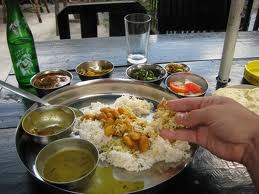 Most dining establishments in Nepal are compelled to serve up endless appetisers and aperitifs. As their customers dissolve into sozzlehood, it becomes clear they will never order dinner. Is it because they’re counting calories? Hardly. It’s because dinner awaits – at home. Kids are forgiven by parents, husbands by wives, as long as they come back home and tuck in to bhat before bed.
But the importance of dal bhat to many Nepalis goes far beyond good home cooking. For the flag-waving Nepali, dal bhat is soul food. The pure white of the rice, the comforting yellow (or black) of the dal, supplemented with verdant, crunchy sag, spiced fried aloo, rich chicken gravy, fresh golbheda ko achar…without some combo of dal and bhat, life seems somewhat unfulfilled, unsated. Is it physiological? Is it psychological? There may be plenty of roti and dhedo and aloo connoisseurs in our diverse land, but bhat is on the ascendancy, if the popularity of WFP shipments is anything to go by. It’s no coincidence that Nepalis greet each with ‘Bhat khayo?’, and ‘Khana’ is a widely synonymous with ‘Bhat’.
Wearing Maxis
Hands on hips, the queen of the house faces her errant husband and gossiping neighbours, dressed elegantly…in a maxi. The long, shapeless housegown so beloved of the Nepali housewife has spread like a plague across the length and breadth of Nepal in the last couple of decades. The more humble cotton dhotis have been displaced by maxis as stay-home fare, and who can blame the ladies? They take so much trouble over saris at weddings, the men can hardly complain if the women don patterned sacks and head to market. They must also be easier to wash than 20 feet of cloth.