
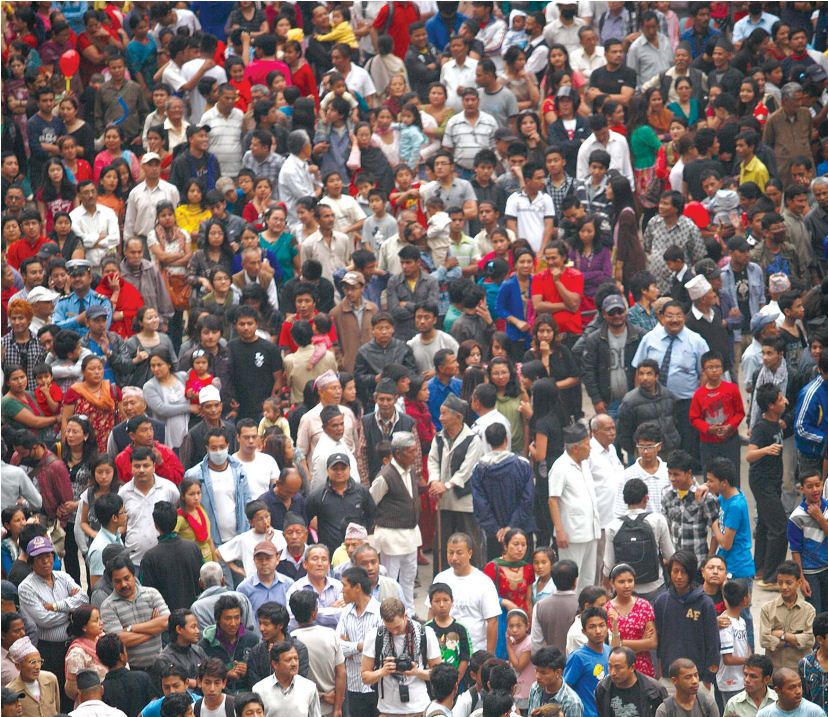
Nepal’s first federalism-era census, slated for mid-2021, promises to usher in a new age of data analytics for national development through its revamped methods, techniques and approach.
Under the slogan ‘My Census, My Participation’, the National Population and Household Census 2021 will provide the blueprint for the work in the coming decade for all three tiers of government.
The government hopes that the new census data will ease the transition into the federal system a much more accurate data base that will go beyond just a headcount but also show if and how citizens are enjoying their fundamental rights, privileges and facilities guaranteed to them by law and the constitution.
Resource allocation by these three tiers of government will be dependent on data from the census, and how it is interpreted.
Even by early next year, the impact of the Covid-19 crisis will still be present when enumerators fan out across the country for the once-a-decade exercise. Planners from the Central Bureau of Statistics (CBS) and National Planning Commission (NPC) have said that they will be using state of the art information technology for the census. Plans for a ‘virtual census’ have been set in case the pandemic continues to be a threat into next year.
At present the census is set for 9 May to 22 June 2021, and will be divided into two phases. The preliminary phase from 9 to 28 May will consist of supervisors filling listing forms for numbers of family members per household. The second phase, from 8-22 June, will see the central questionnaires for demographic and financial data being used.
The census will replace outdated pre-federalism data which are not in line with the new government structure. Local governments and agencies have been designated based on the 2011 data, which are mostly outdated and inaccurate. Nepal’s population will have expanded from 26.6 million in that census to more than 30 million by next year.
Pre-federalism Nepal was divided into five development zones and 265 constituencies. During the first general elections under the federal constitution in 2017, there were seven provinces and 165 constituencies, the nearly 3,915 VDCs were replaced with 293 urban and 460 rural municipalities.
To better suit the federalism model, ward-level and community-level questionnaires are being used for the first time. This will allow authorities to address issues such as women, child and dalit rights, social security, and residence particular to each community.
With its new community-centric approach, the census will bridge gaps between local, provincial and federal government so that specific plans can be made to address them.