
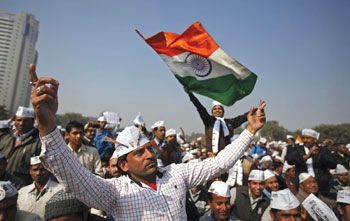
But the downfall of the Indian National Congress began in 2010 after the corruption scandal surrounding the Commonwealth Games. The AAP took this opportunity to rally opinion against institutionalised graft in the public service sector. But what truly turned the tide in favour of Kejriwal and his team was their commitment to financial transparency. AAP said it would accept donations from Indians as well as NRIs and then publish the accounts online. It even promised to return money obtained through illegal means. When a businessman in Birganj tried to donate to the AAP, he was told that they did not accept donations from foreigners.
This change of guard in Indian politics has, unsurprisingly, spawned a ripple effect across the border and politicians and analysts are busy pondering over the consequences. Ram Sharan Mahat from the Nepali Congress took to social media and tweeted: “Political parties are like relics and the public is frustrated with state services. It is easy to stage protests, but the future of AAP will be decided by what it does when it is in power.” Fellow NC leader and CA member Gagan Thapa believes that the very people who took to the streets to overthrow the monarchy in 2006, propelled the Maoists into power and then voted them out this year, will come out once again to transform the country’s politics in a similar manner as AAP cadre. “I knew the citizens of Delhi would support the AAP because they knew that all the older parties in India were the same,” says Thapa.