
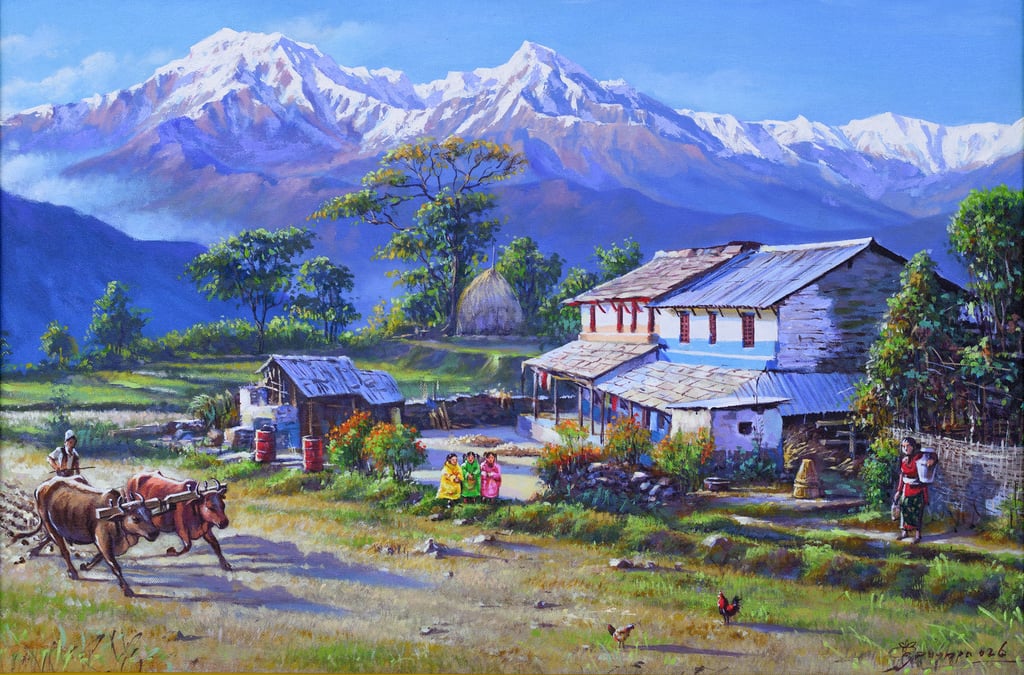
When disaster strikes, artists often respond in the language they know best: through their work.
Journalists bring information in news photographs, videos, and reportage. Artists add an important emotional element to raise collective consciousness and spur action.
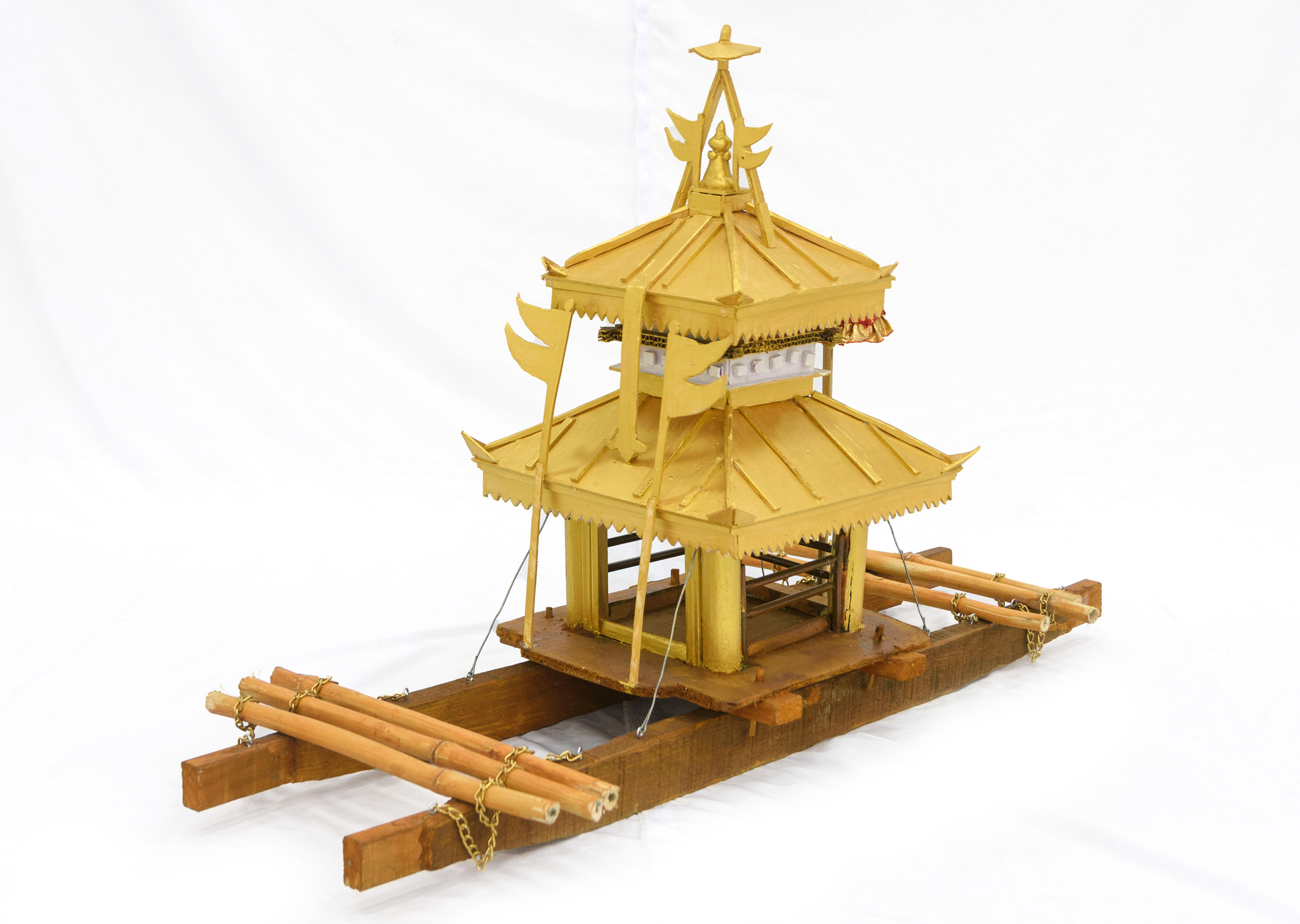
Nepal Academy of Fine Arts (NAFA) is organising a fundraising exhibition, Arts for Humanity, of paintings, photographs, and sculptures. Proceeds go to relief efforts for communities affected by last month’s Bhote Kosi-Trisuli flood.
Taking part in this unique initiative are Nepal’s established masters and emerging talent, with works by prominent artists including Thakur Prasad Mainali, Sharada Chitrakar, Mukti Simha Thapa, Vatsa Gopal Vaidya, alongside promising younger artists like Ishan Pariyar, Krishna Lama, Suman Thapa, Prakash Mijar, and others.
What makes the exhibition particularly remarkable is that the organisers at NAFA have put a price cap of Rs20,000 on every artwork on display. In many cases, art pieces whose market value would ordinarily run into hundreds of thousands of rupees will be available at a fraction of their usual price.
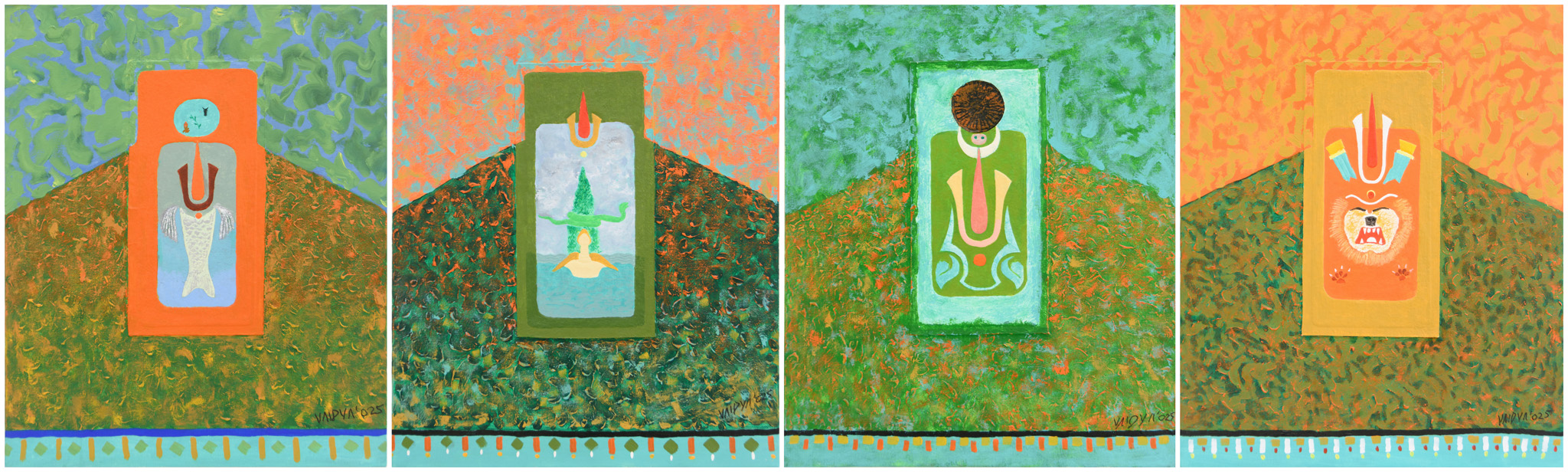
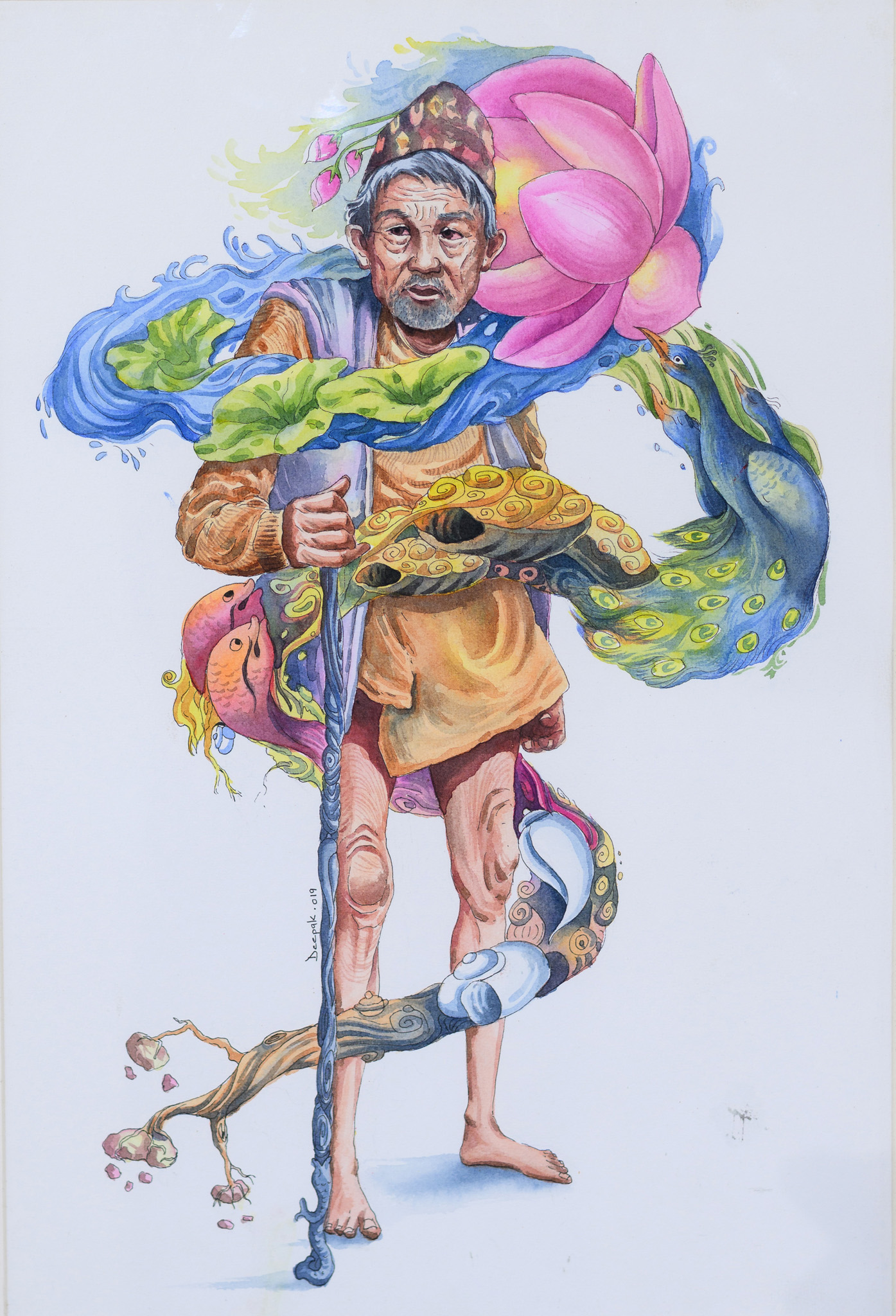
For collectors and first-time buyers alike, the exhibition presents a rare opportunity to acquire original works from some of Nepal’s most respected artists while contributing directly to a humanitarian cause.
“This is perhaps one of those rare moments when art collecting and social responsibility come together so meaningfully,” says NAFA’s Erina Tamrakar. “Buyers will be not only be taking home a piece of art, they will be helping families rebuild their lives.”
Under the exhibition’s fundraising model, 70% of the proceeds from each sale will go directly to the Prime Minister’s Disaster Relief Fund, 10% will go to NAFA artists’ welfare fund, and 20% is allocated to the participating artist. However, many artists have voluntarily chosen to donate their entire share, ensuring that 100% of the sale value of their work supports relief efforts and the artists’ welfare fund.
The initiative highlights the long-standing role of Nepal’s artistic community in responding to national crises. Beyond their aesthetic value, the works on display become expressions of solidarity with communities facing loss and uncertainty.
Visitors can see a diverse range of artistic styles and mediums, from contemporary paintings and documentary photography to sculpture and mixed-media works. They reflect both the richness of Nepal’s creative landscape and the willingness of artists to contribute beyond the studio.
Rebuilding will necessarily begin with practical necessities like shelter, food, and infrastructure. Yet the exhibition conveys the message that recovery depends on solidarity.
Arts for Humanity
5-15 October
Nepal Academy of Fine Arts (ललितकला प्रज्ञा प्रतिष्ठान), Naxal