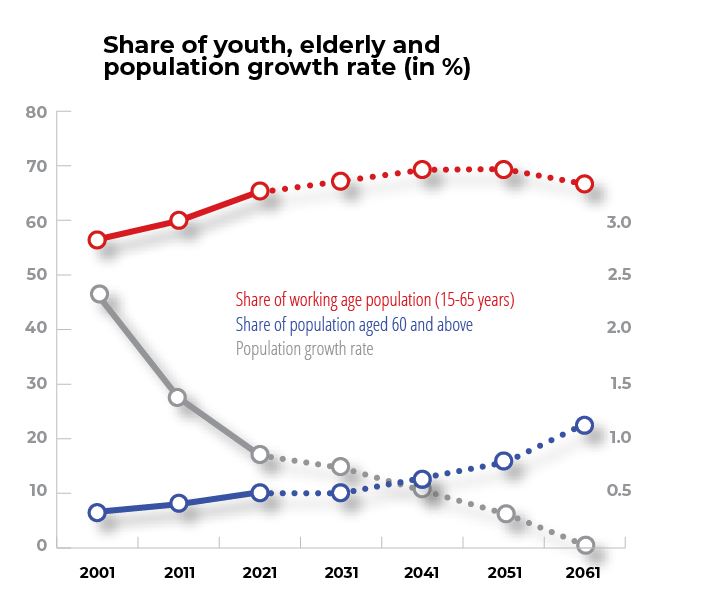
The working-age group in Nepal makes up two-thirds of the total population, the highest it has ever been. However, most young people are abroad, reducing the country’s productivity and slowing its growth.
While about 20% of the population is between 15-24 years old, there are now nearly 3 million Nepalis above age 60, 10% of the population.
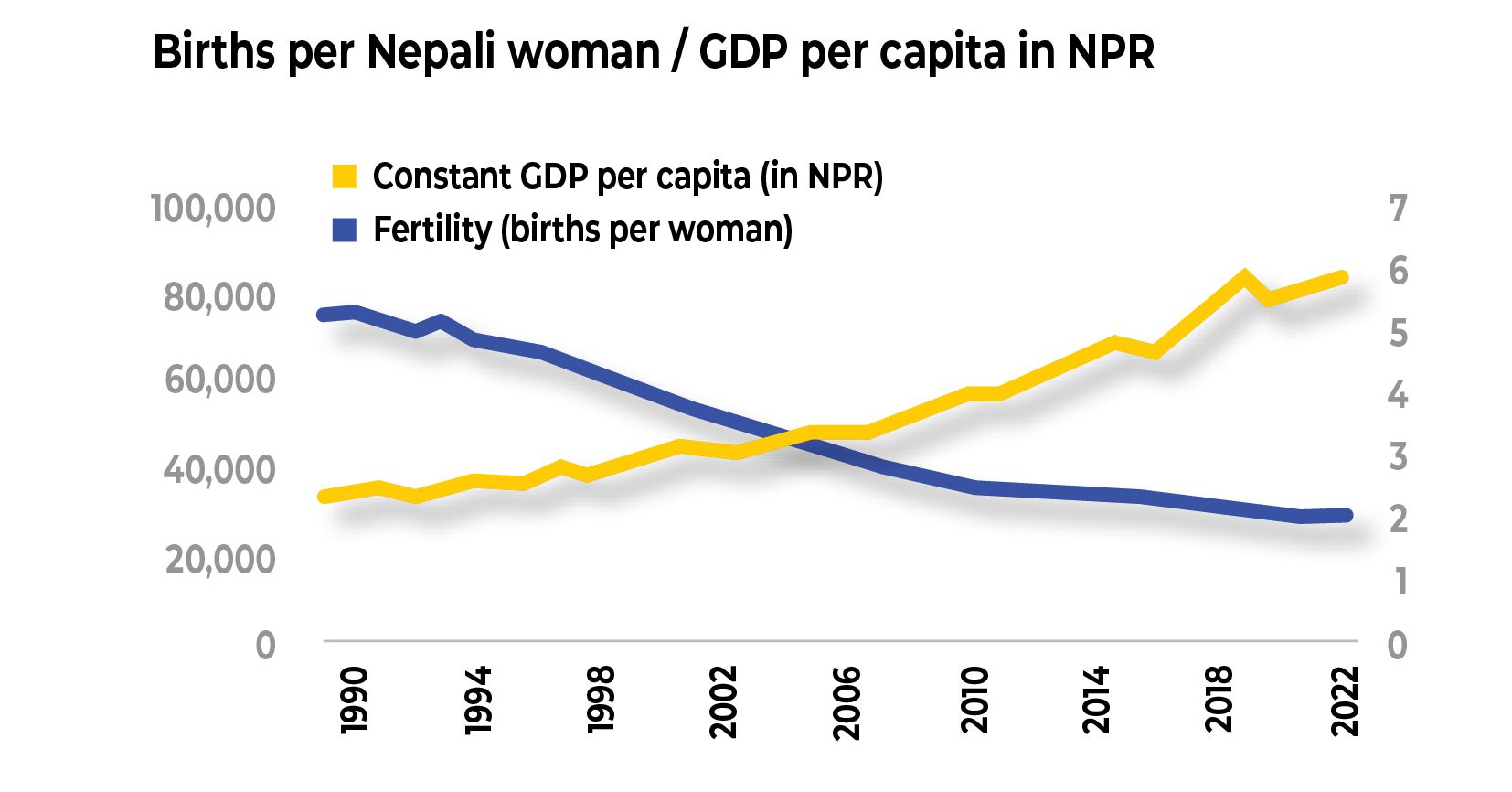
The average life expectancy of Nepalis has risen to 71.3 years, the total fertility rate is 2.1, near replacement level. However, there are gender and geographical discrepancies.
“Advances in healthcare and increased literacy means our infant mortality rate has dropped, this is a consolidated indicator for any country’s socio-economic status,” explains demographer Yogendra B Gurung. “As child survival increases, the fertility rate automatically goes down, which is why we have the new age structure.”
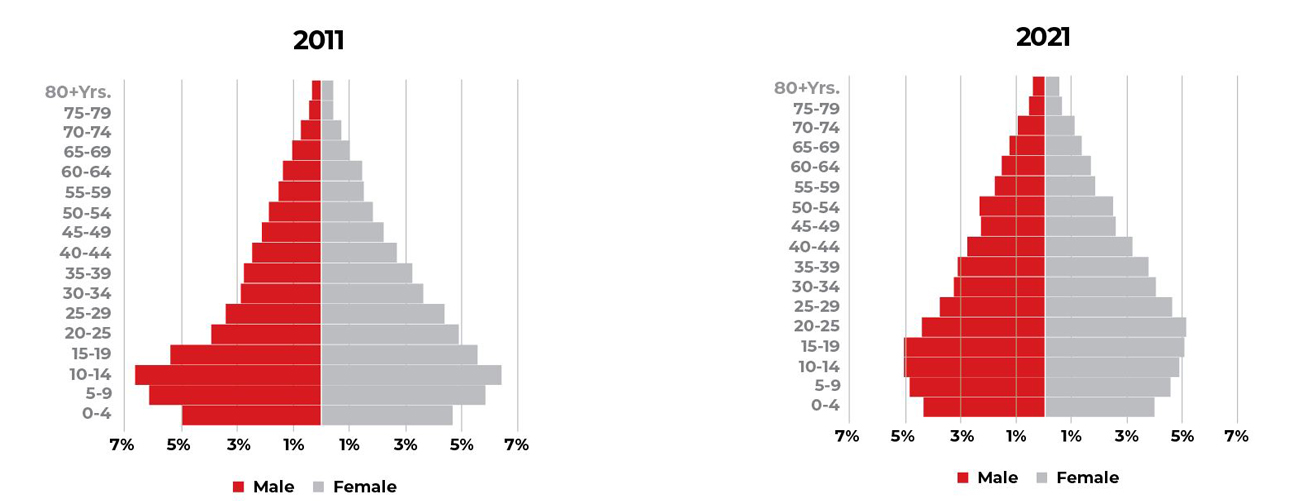
These are global trends, but countries like Nepal have a wide youth bulge giving the country a demographic dividend, a window of opportunity to achieve high economic growth before the young population also starts ageing and the ratio of dependent population also rises.
Won Young Hong, Country Director of the United Nations Population Fund (UNFPA), says Nepal must learn from the mistakes of many East Asian countries including her native South Korea.
“Policies that only focus on the reproductive function of women is an antiquated view. It is not only about giving birth anymore but how we are to respond and be prepared for the future, and this needs more socioeconomic discussions to take place,” says Hong.
Nepal has a narrow window to make full use of the large number of working-age people below 30. Experts say we have 30 years before we are faced with another demographic transition and become an ageing society. As today’s young grow older, one in five Nepalis will be elderly by 2061.
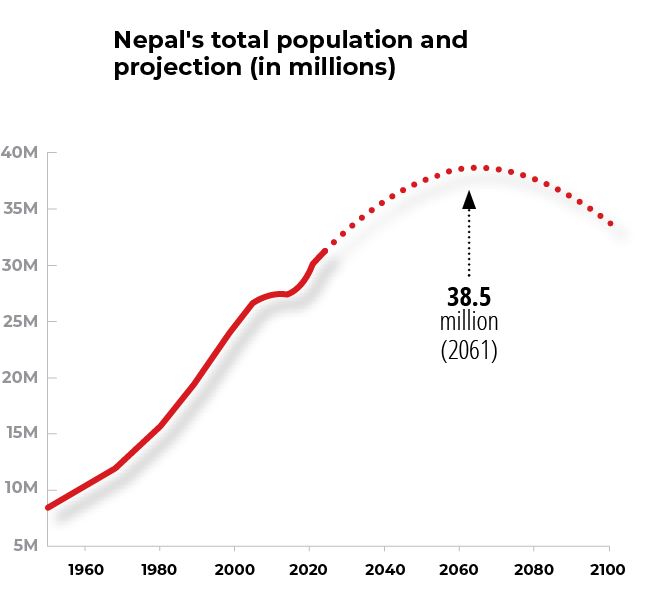
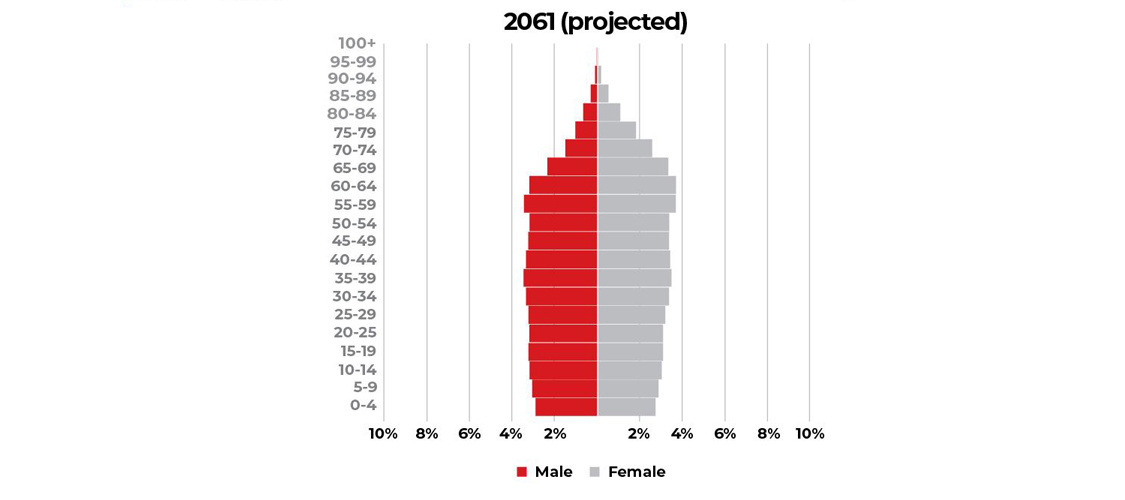
But Gurung, who also heads the Central Department of Population Studies at Tribhuvan University, thinks Nepal may have more time than previously thought to prepare for the time when its dependent elderly population crosses 60%.
“Regardless of how many years we’ve left, it won't make any difference if our politics and the bureaucracy continue the way they do, we need a radical shift to make the most of our youth bulge by training and educating them, prime businesses to use their skills and not hinder them with red tape, invest in health and infrastructure,” cautions Gurung.
A major roadblock to mobilising the youth for Nepal’s economic growth is that most young people are away. There are at least 2 million Nepalis in West Asia and an estimated 3 million in India. Just last year, nearly 900,000 Nepalis left the country.
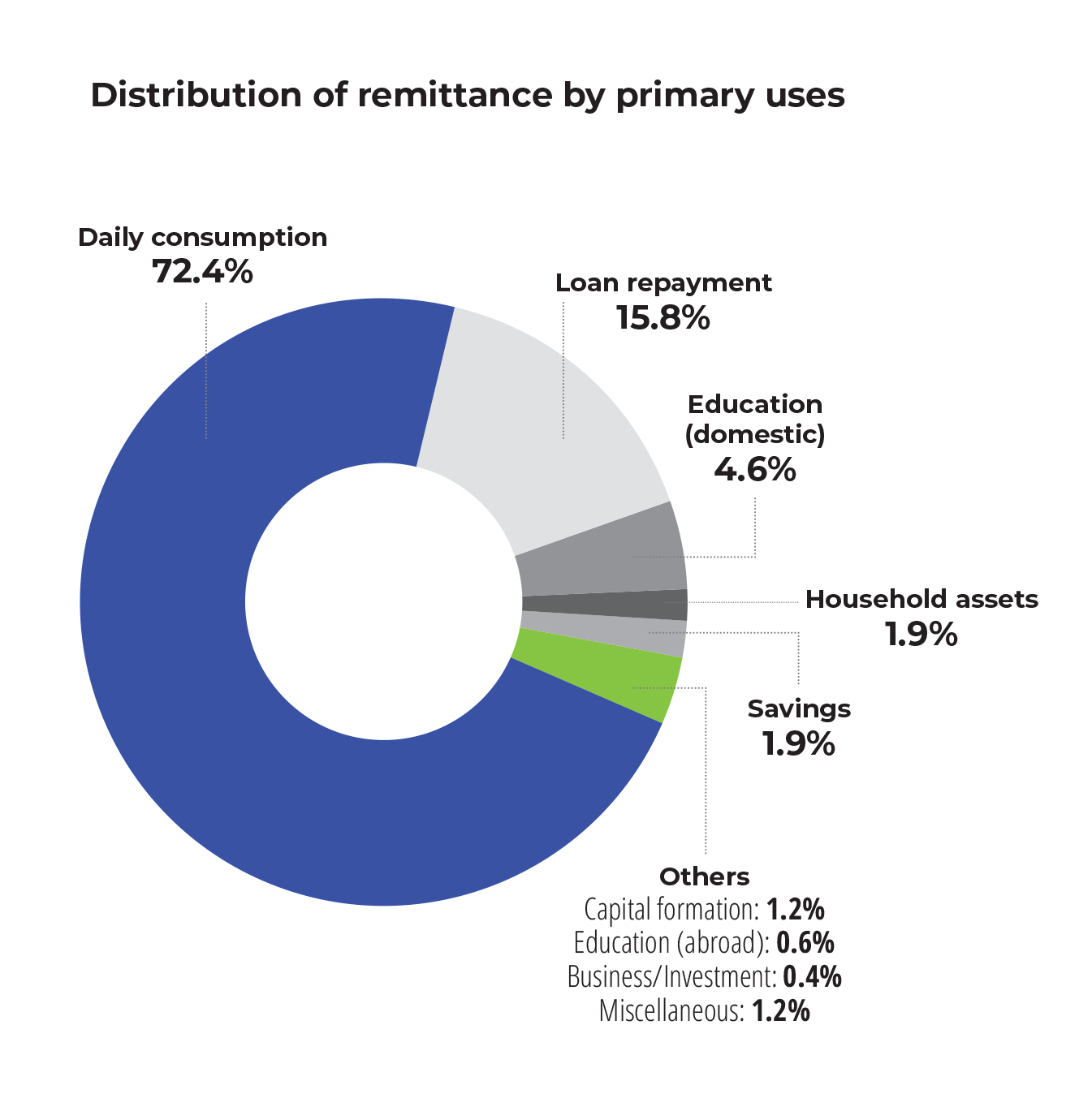
While the money they send back is the main factor in the sharp fall in the poverty rate in the past 30 years, remittances account for 24% of Nepal’s GDP, higher than most other migrant labour-dependent economies. Most remittance money is spent on household expenses, and not invested in creating jobs.
Nepal’s labour migration pattern is also changing: while the first generation went to the Gulf and Malaysia and returned, their children seek to study in Australia, Canada, the US, or Europe, and migrate permanently. This will eventually reduce remittance, and seriously impact the economy.