
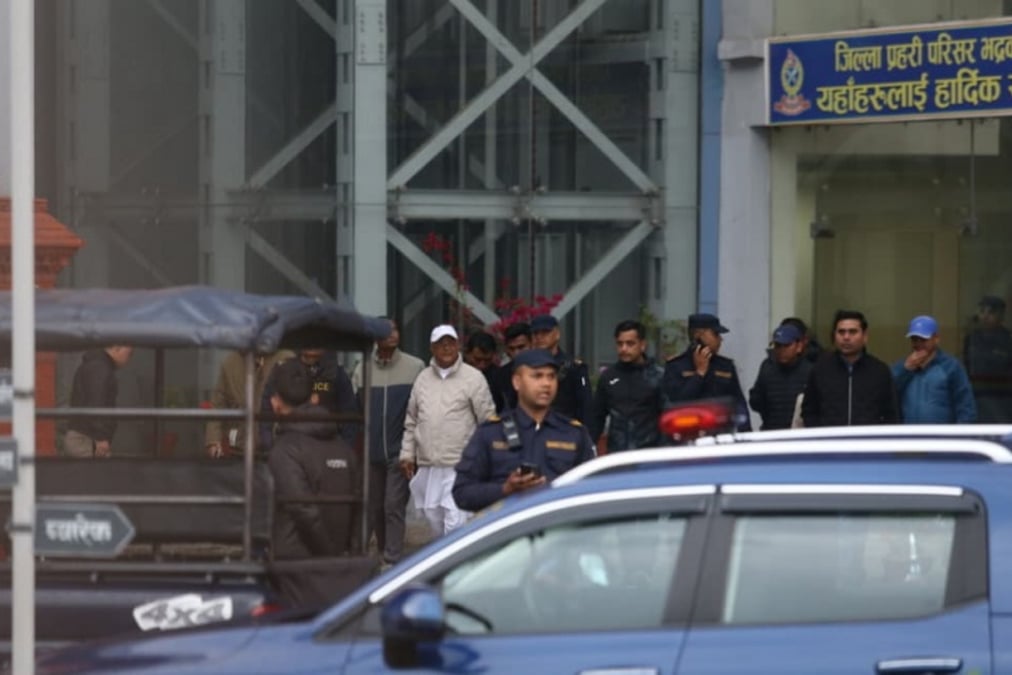
Nepal’s new government hit the ground running with the arrests of former Prime Minister K P Oli and home Minister Ramesh Lekhak early Saturday morning.
Their dramatic detentions followed an inquiry commission report recommending that Lekhak, Oli, and former Police chief Chandra Kuber Khapung be investigated and prosecuted for negligence in failing to stop the killing of 19 young protesters by security forces during the protests on 8 September.
Interim PM Sushila Karki’s government faced considerable criticism from GenZ activists at the end of her 7-month tenure for failing to release the report and hold the previous UML-NC coalition to account.
Karki had left any decision on the report’s findings to new RSP government, but her government released it after the content was leaked earlier this week, a day before Nepal’s newly elected lawmakers took their oath of office.
By making the arrests of Oli and Lekhak as its first order of business, the new government, and especially Home Minister Sudan Gurung and Prime Minister Balendra Shah, have tried to show that they are decisive and mean business.
It has been hailed by many as signalling that Nepal’s new and young leadership will back up its pledges with action. However, others including the UML and some constitutional experts, say that the arrests have not followed legal procedures. The UML has mobilised its affiliated groups to start nationwide street protests.
The main divide seems to be over the perception that the new government is only interested in justice for the perpetrators of the 8 September Parliament massacre, and not against those who organised arson and vandalism of government buildings, homes of politicians, businesses and the media the next day.
While some celebrate what they see as the beginning of justice for the victims and survivors of the September violence, political analysts and legal experts express alarm over a lack of adherence to the rule of law.
K P Oli has a lot of experience being behind bars. He was jailed a dozen times in 1970s by the Panchayat regime for his extreme left activism and then spent 14 years in prison between 1974-1988.
Critics argue that the former leaders were denied due process and label their arrest a “political vendetta."
RSP supporters had made similar arguments in October 2024 and April 2025 that the arrest of party chair Rabi Lamichhane over misappropriation of funds from numerous cooperatives were politically motivated.
‘What is happening is unacceptable,’ wrote former minister and diplomat Nilamber Acharya wrote on Saturday morning. ‘Such acts of revenge and crackdowns do not bode well.’