
|
|
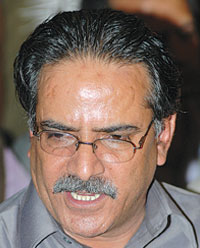
There are so many reasons why the parties and people feel skeptical about the Maoists: Prachanda's often insulting remarks against other political leaders, his utter arrogance unsuitable for a senior leader like him, his clever attempts to opt out seven parties from decision making process, and the continued violence, abduction and extortions at the hands of his cadres, abductions and lack of guilt about the past mistakes.
Many questions are being raised about the intentions of the Maoists: are they really serious about giving up their one-party stance and joining the multiparty system or is it just their political diplomacy to win the hearts of the mass? Is their alliance with the seven parties genuine or merely a way to use them? The Maoists had not organised any political struggle during the Panchayat regime. They took up arms only when the communist party formed a government following general elections and had started to undertake new progressive activities. There would have been a lot of progress if all the leftist parties had formed a majority in the government. But it seems very clear now that there were very close relations between the Maoist leadership and King Birendra. During that time, efforts were being made through Gyanendra and Dhirendra to unite with the Maoists and destroy the leading parties like Nepali Congress and UML. Soon after the royal massacre, Prachanda and Baburam had praised kings from Prithbi Narayan Shah to Birendra. They started the extortions and killings of hundreds of leaders, workers, teachers, journalists and many police and army personnel while during off duty and visiting their families. After this, the Maoists took refuge in India and mobilised their militia and then came to the country to start destruction of public and private properties.