
|
|
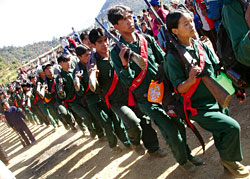
Certification of guerrillas and their weapons is a cornerstone of the peace process. This is what the success and credibility of the cantonment and ‘arms management’ hinges on. But certification is exactly what the 12-page long peace agreement leaves vague. The best the seven parties and the Maoists could come up with after six days of discussion was an agreement to “solve the issue of certification at the suggestion of the UN.”
The deal does agree that ‘People’s Liberation Army’ soldiers under18, and those recruited after 26 May this year will not be in the camps. Which seems fair enough, until it becomes apparent that there is no mechanism to determine how minors and new recruits are to be identified.
Human rights watchdog Insec estimates that the Maoists’ 8-21 November recruitment drive right before the peace deal was signed added almost 5,000 people to their army. Insec cautions that this figure does not include new cadres recruited in remote areas. 
In Palpa, for example, five of 150 students taken away returned to the district headquarters and testified that they were undergoing military training and had been told to say that they’d already spent two years in the PLA. In Ilam, a 13-year-old new recruit accidentally killed another teenager while learning to handle a .303 rifle.
Padam Pun reports from Rukum that the Maoists opened a temporary recruitment office and promised young people who signed up positions in the national army commensurate with their educational qualifications. Right now in Rukum students from grade five to college levels are receiving military training from the PLA.
Establishing who is a minor is difficult in the first place because not everyone has citizenship, educational and birth registration certificates. When people do have them, the paperwork often sports arbitrary birthdates. The Maoists are also likely to argue that their fighters have been unable to get citizenship certificates because of the conflict.
