|
|
At the end of a recent 11-day trek and tour around Rolpa, Pyuthan, Dang, Chitwan, and Gorkha, one thing was clear. The questions about what motivated the Maoists' dramatic transition can only be answered over time. Did they realise the People's War was going nowhere, and that they could beat the bungling parties at their own game?
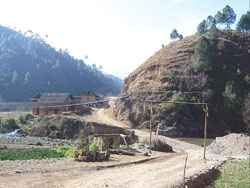
The Maoist heartland of Rolpa doesn't tell much about their mood. The villages are safe and quiet, sparsely populated with mostly women and children like before. The victory gates are rundown (above) and the fighters interned in depressing makeshift camps in Dahaban and Tila. Even the graffiti is dated and conspicuous for its lack of revolutionary fervour. The scare tactics are not subtle: fighters in Dahaban leave their camps to buy toothpaste from nearby shops, but they still carry guns. Onlookers whisper: even the fiercest fighters need to brush their teeth, but how do guns help hygiene?
When my local travelling companion wanted to introduce me to his acquaintances in the former 'people's government', all were said to be away in the capital. In Pyuthan-a district with no blacktopped road-a four-wheel drive parked in the premises that used to belong to the Jhimruk hydroelectricity project now belongs to district level Maoist leaders. Newspapers had better keep an eye on the spending habits, and the already discussed sartorial tastes of the Maoist top brass.
In and around the cantonments, there are fighters who look like children. UN staff quip that "there is not a single 17-year-old in the camps"-all those awaiting verification have been instructed to say they are at least 18-the UN's credibility is at stake if their screening of combatants is not rigorous.
The need to save face, a consistent theme during the peace negotiations, will guide how free and fair the constituent assembly election will be. The Maoists are under tremendous pressure to match their large negotiated share in the interim parliament with an equally impressive electoral performance.