
|
|
It is nine in the morning and Soma Tamang, 26, is busy attending to a patient. Her small clinic consists of two rooms: one with medical cabinets and a waiting bench for patients and another with a bed where she carries out her medical check-ups.
Soma is a trained Auxillary Nurse Midwife (ANM) and has been running a clinic in her hometown of Kusadevi for three years now. She also works with a local micro-credit institute and has a group of 15 women members to whom she provides small loans up to Rs 5,000 for animal husbandry and education.
The problem in Nepal has always been the retention of health workers like Soma in rural areas. Now, a unique Rotary project aims to augment ANM income through microcredit so the healthcare workers stay where they are needed most.
Soma was training as an ANM in the Kabhre Health Training Institute (KHTI) when she came to know about the project on safe motherhood. Half of her educational expenses would be reimbursed if she signed a five-year contract to establish a mini-clinic and work in her own village, so she jumped at the chance.
Despite the initial struggle to sustain herself on what she earned, she is now economically independent and earns about Rs 500-1,500 every day. She manages to meet all her costs from her own income. She has asked for a loan from Nepal Youth Business Foundation and has plans to privatise her clinic.
|
|
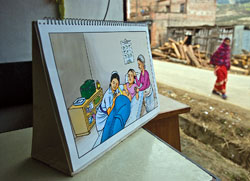
| COMPETENCE IN THE COMMUNITY: Soma Tamang at her clinic in Kusadevi. Calendars promoting maternal health (left) are a common sight in the mini clinics promoted by Rotary. |
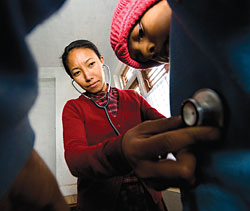
Soma specialises in family planning and caters to mothers and children, but she has also established herself as a reliable medical adviser. "I go and examine people in the villages. When I see how much people trust me, I feel really satisfied. My ultimate dream is to establish a nursing home here. I know it won't be easy but I have the foundation and I am ready to work hard to achieve it," she says with conviction.