
 AHMAD ISKANDAR |
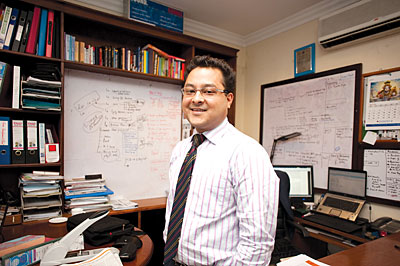
Twenty-eight-year-old Shivanth B Pande is head of the Research & Development department at Nepal Investment Bank. Nepali Times spoke to him about the financial sector and R&D in Nepal last week.
What sort of research do you do?
One type of research we do is financial analysis, focusing on issues that management is interested in. We generally go through Nepal Rastra Bank's periodical papers, their surveys about the macroeconomic situation, and compilation of data in the banking sector. We analyse this to help our clients and the people in our bank who make decisions.
Any current projects?
Right now we're creating a summary of the first six months of macroeconomic analysis of data published by Nepal Rastra Bank (NRB), so it will be easier to read and offer a point of view rather than just dry facts. We just went through the inflation report last month. A problem is that the data is old and lags three to four months behind current events.
This is a relatively new field in Nepal. What role do you think it could play in maintaining the health of the financial sector?
Research helps in decision making. With more timely, accurate data, better decision making can happen. Also, research prevents you from moving in a herd mentality as you can be better informed than the rest of the pack. In terms of business development and innovation, without adequate research into the latest trends, thoughts and practices, you will be left far behind.
What caused the liquidity crunch?
This problem has been brewing for the past four years, and has many sources. We can summarise the main issues:
l too many financial institutions and cooperatives concentrated in the same places, bidding up deposit rates that are transmitted to loan rates l low public confidence in the viability of some banks
* people keeping money at home and in bank lockers rather than in deposits
* unnecessary speculation about the viability of our exchange rate system
* sudden acceleration and sudden slowdown of remittance growth, which hits the economy
* sudden anti-money laundering tightening and tight regulation on sources of funds
* real estate speculation and share market speculation on excessive credit
* capital flight from Nepal
* excessive exposure of parties to credit and the subsequent unwinding of built-up leverage
* poor political outlook and lack of unity and a constitution, drastically lowering business and investor confidence in the economy
* lack of security
* lack of coordinated policy between government agencies and ministries