
 KIRAN PANDAY |
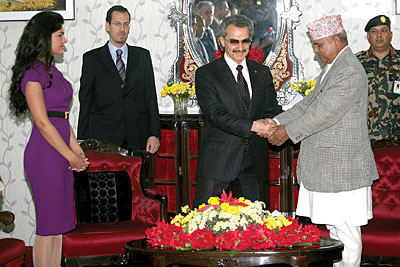
If newspaper reports are any guide, the recent visit of Saudi Prince Al-Waleed bin Talal could have been titled Prince in Wonderland. Caught unawares by the multi-billionaire in their midst, unsure about what to ask of him, government ministers ended up falling over themselves to request everything from opening a training centre for migrant Nepali workers in Riyadh to investing in the usual mainstays of heritage sites, tourism and airlines.
The Prince's late-night stroll, which he used to quiz shopkeepers, made headlines for how the police forces had a hard time keeping up with his treadmill-honed steps. In the end, it turned out that merely being in Nepal was a good enough investment for the Prince. In return for his first-ever three-day private visit, he was promised this country's highest medal for foreigners.
Now that the commotion of the visit has died down, it's time to ask: just what should Nepal do when investors show interest? More precisely, how should Nepal market itself as an investment destinations to investors with deep pockets?
Start with who we have: There are already a number of foreign investors in Nepal. Most of them readily admit that they are here not so much to grow their business at scale, but to earn a livelihood so that they can live in this country, which they have come to have affection for.
Still, talk to any one of them, and the list of business-related grievances â€" unclear tax procedures, nightmares at customs offices, corruption in the bureaucracy, political interference, weak legal enforcement, big disagreements with local partners over minor issues etc â€" just gets longer and longer.
Given the problems faced by existing investors, it's prudent for the government to start finding solutions, which can then be publicised to attract the attention of more investors. The idea of going out of our way to find newer investors when the ones we already have are unhappy and may start packing their bags does not make sense.