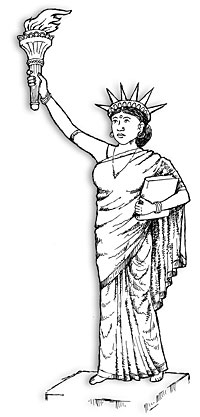
 Feeling at home? Upendra Mahato chills out away from home. |
"What time is it in Nepal?" the passenger in front of me asked the flight attendant an hour before we began our descent to Kathmandu. She wanted to confirm that the entertainment portal in front of her hadn't gone haywire. GMT+5:45 didn't make sense.
Nepal's integration with the global economy is as remote as the ability of the average tourist to comprehend Nepal's unique time zone. Of late, I have been wondering whether my decision to return, after living in the US for 16 years, was a wise decision.
Sixteen years ago, I was a rebellious
17-year-old student in search of opportunities and freedom away from the confines of Nepal. Sixteen years later, I was living the American dream: a good career, a house in the American suburbs, and the rest of the pieces slowly falling into place. The one thing I knew was that I had to work hard and pay my taxes, and the promise of America was there for the taking. So why did I return?
Most Nepalis of my generation in the US are preoccupied by a conflict that involves a tug of war between two cultures. It's a constant pull between the conveniences presented by the affluence of America, and a longing desire to come back home to contribute to our own country. Each step towards assimilation into the American culture, it seems, means losing a bit of our identity as a Nepali. We are equally part of both cultures, but truly belong in neither.
We compare every convenience in the US – responsible public policies, transparent bureaucracy, home deliveries, well-paved roads, good hospitals, courteous customer service, and clean public toilets – to the innocent memories of home: the smell of morning fog, the gossiping over tea, the taste of momos, the cows on the streets, the gallis in which we sweated over makeshift cricket matches. It is always a dream that we will one day return. But for most of us, this powerful longing remains simply that, because it is not easy to uproot ourselves from careers and mortgages, and because of kids who are American by birth, and for whom Nepal is as alien as Haiti.
But I took the plunge. Not only because I wanted to contribute to Nepal, but also because I wanted my children to admire Nepal's heritage. I wanted them to know what Dasain and Tihar mean, and I wanted them to build a perspective on third world hardships that is real rather than viewed on TV. These are things that cannot be purchased in the US.