
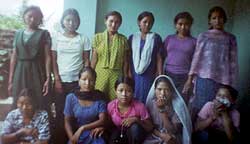
 Increasingly desperate Nepali women are fleeing conflict and hardship at home to work as domestics in the Gulf even though they know about the abuse and exploitation they are likely to face.
There are many levels of mistreatment: daughters pressured to leave homes to earn money, the low status of women in the family and the community, the pimps who dupe them, the border guards who need to be paid off and finally the employers in the Gulf who overwork, beat or rape them.
Three years ago, when Kani Sherpa came home in a casket from Kuwait, her suffering and death was reported widely in the Nepali media. Kani was employed as a domestic in Kuwait. She was raped and beaten almost every day, and when she finally attempted to go to the police, her employer pushed her off a balcony. The Kuwaiti man was never tried.
Kamala Rai was also working for a family in Kuwait. She suffered multiple rapes from her employer and his friends. She fled the house and was finally sent home, traumatised and sick. 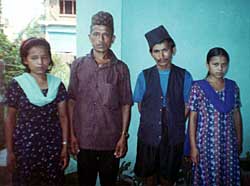 To be sure, not all Nepali women who go to the Gulf to work are abused, and conditions in Hong Kong are better (see box). The work is difficult and they are often homesick but they manage to send money home to their families. This is why activists lobbied three years ago to lift a ban on female migrant workers.
But as more and more women go abroad, cases of abuse have become increasingly common. Most women are aware that they may be exploited by middlemen or abused by employers, but their desperation is such that they go anyway.
"I have already spent a lot on my daughter's passport, visa and citizenship. If I don't send her now, how I will repay my debt?" asks Lal Bahadur Tamang from Sindhupalchok whose daughter Israni was caught near Gorakhpur by volunteers with the anti-trafficking group, Maiti Nepal. This was the second time Israni was stopped on the Indian border, but Lal Bahadur is still determined to send his daughter to Kuwait.
Although it is now legal for Nepali women to work in the Gulf, they face such harassment at immigration in Kathmandu airport that most prefer to fly from India. But travelling overland to New Delhi or Mumbai exposes them to risks of being sold to brothels en route.
Many agents are actually pimps and have no intention of taking the girls to the Gulf, and sell them off in brothels in Mumbai instead. Dipa KC from Pokhara and Barsha Rai from Dharan were recently rescued by an Indian activist group in Mumbai. They had been sold to a brothel owner by their Nepali recruiters, Narayan Shrestha and Gokarna Thapa.
"They think they are going to the Gulf, but most get trafficked in India," says a Nepali police officer at the Sunauli border. The police and Maiti Nepal are working to warn the girls, and send those they suspect are being duped, home to their families. But parents of the girls are so burdened with debt that many want their daughters to try again.
Maiti stopped some 700 girls at the border this year alone, but many others are getting through. One New Delhi-based agent, Agni Thapa, says he has already taken 200 girls to the Gulf in the past three years. He charges up to Rs 20,000 for each girl's travel documents and another Rs 70,000 in fees for a placement office in the Gulf to find them jobs.
The recruitment and dispatch of Nepali girls is organised by a network of middlemen. Village-based recruiters do the 'marketing' and get a cut for every girl they send to Kathmandu, promising them easy work and huge salaries. Interviews with rescued girls reveal that agents even organise passports for underage girls by paying off officials. The girls are then sent to Gyaltzen Lama and Agni Thapa in New Delhi, who put them on a plane to Kuwait where the girls contact Iswori Rai, Pemba Lama and Rupa Gyawali to find them jobs.
Some women who have worked as domestics abroad return to Nepal and become agents themselves. Usha Neupane from Rupendehi worked in Oman for a few years and is now running a racket promising to take Nepali girls to the Gulf. Most get stuck in India.

 Traffickers are getting smarter, and have found ways to get around increased vigilance at the border. Girls travel with their parents so they can't be stopped. "All we want is to ensure they are not cheated. We can't stop girls seeking employment abroad of their own free will," says Prabha Khanal of Maiti Nepal in Bhairawa.
 A few months after Anita from Palpa reached Kuwait to work as a maid, she sent home a tape with her voice and a letter (right). When her family listened to the tape, they started weeping with worry. The neighbours came over to listen and they cried, too. Excerpts from the tape: