
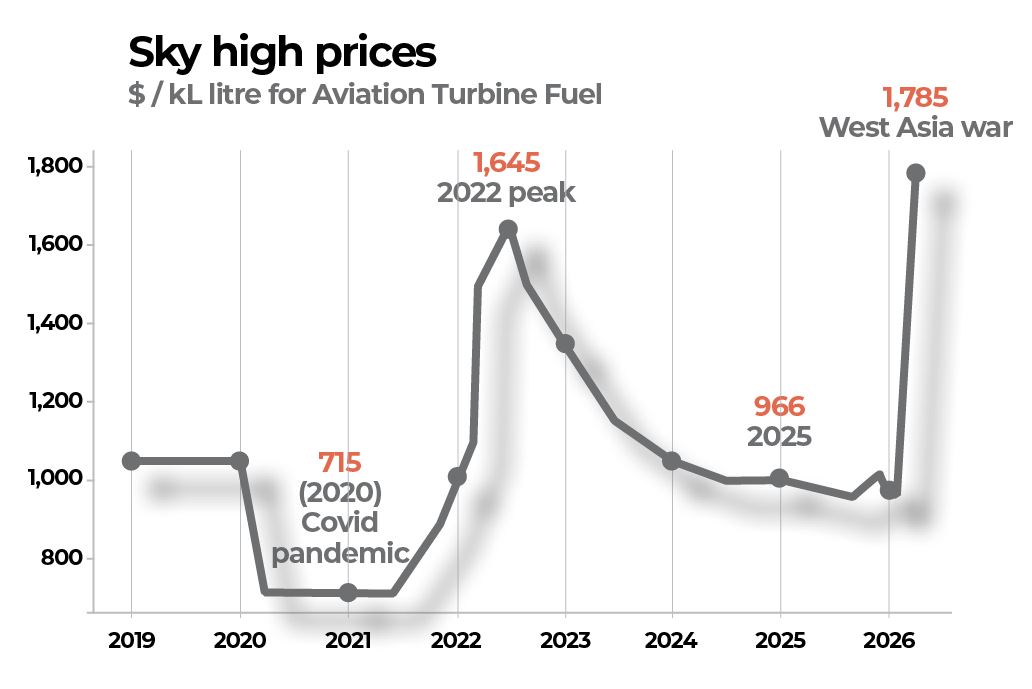
As a direct fallout of the Israel-American war on Iran, Nepal on Monday nearly doubled the price of aviation fuel in a move that is going to impact during the spring peak tourism season.
The steep price hike of jet fuel appears to have been made to cushion the impact on the general public. The price of petrol, diesel and cooking gas were also hiked for the third time in a month on Thursday.
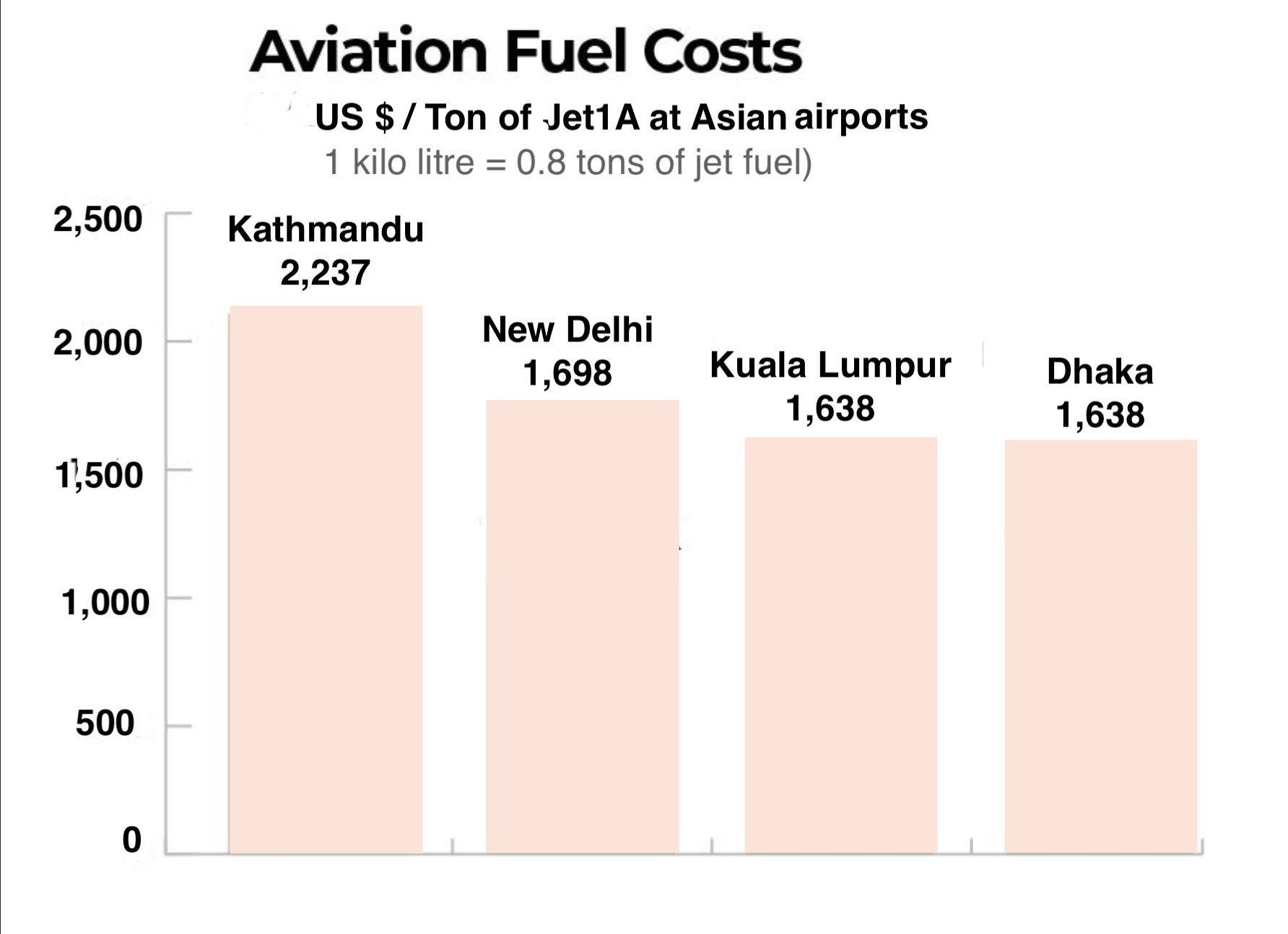
Aviation turbine fuel (ATF) will now cost $2,237/ton up from $1,207. The cost of ATF in Kathmandu was already one of the highest among Asian airports, and this price hike will affect mostly long-haul flights to Istanbul, Seoul and Narita for airlines that need to refuel in Kathmandu.
Domestic airlines, which paid Rs127 per litre, will now have to pay Rs251 for their turboprop planes. “We have no recourse but to pass this on to passengers as a fuel surcharge,” said one executive of a domestic airline in Nepal.
As it is, Nepal Oil Corporation levied a hefty tax on petrol and ATF in order to subsidise diesel and cooking gas. Many analysts were expecting a fuel price hike, but the near-doubling of the price of ATF means the new Nepal government is trying to protect ordinary citizens from raising the price of diesel and LPG even more than it has so far.
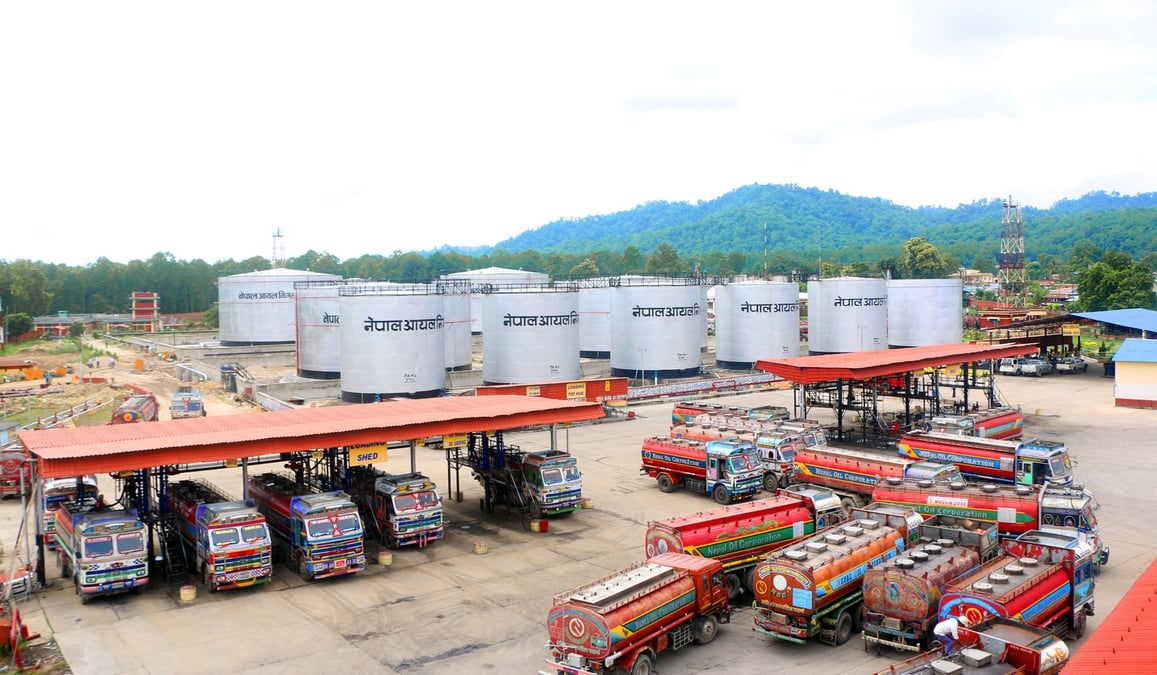
Aviation fuel in Nepal is trucked in on tankers from Indian refineries and its price is highest in Kathmandu, and less in Bhairawa and Pokhara — transportation costs being higher depending on distance. But even in Bhairawa, ATF prices have doubled for the only international airline that serves it, Thai AirAsia.
Most airlines flying Kathmandu from nearer airports in India, the Gulf and Southeast Asia will be less impacted because they can fly in on full tanks and need minimum refuelling in Kathmandu. But carriers like Turkish Airlines, Cathay Pacific, Korean Air, and Nepal Airlines which fly wide body aircraft on long-distance routes will be hit hardest.
However, ATF costs have also been raised in regional airports like Hong Kong, India and Singapore. Aviation fuel at New Delhi airport has risen to $1,698/ton. Korean Air is adopting emergency measures to reduce expenses to make up for rising fuel costs. South Korea gets nearly all its fuel from the Gulf, and the blocking of the Strait of Hormuz has been especially damaging for the country.
Fuel makes up more than a third of the operating cost of airlines, and even a small increase in ATF prices can make a big difference. Crude oil prices have increased 50% since the West Asia war began on 28 February, and global ATF prices have doubled.
Airlines in Asia, including Nepal, face a double shock. The first is the higher fuel cost, and the second is that fewer people are travelling. Nepal’s tourism arrivals fell in March compared to February. India has added up to 20% fuel surcharge on domestic flights, and has reduced flights by 12%.
Chinese airlines have also been affected, with China Eastern preparing for a significant impact of the Gulf war. It has added fuel surcharges to new tickets, as have Cathay Pacific, Thai International and Air Asia. Vietnam has drastically cut the number of domestic flights, and the Philippines will ration ATF.
Australia imports 90% of its ATF mainly from China which has stopped export to ensure domestic supply to its own airlines. Carriers like Qantas have curtailed flights, changing aircraft type on long-haul routes, and a fuel surcharge of up to 20% have been added to tickets.
Most Asian airlines are adding fuel charges only to new tickets, and the increase will not affect the price of pre-sold tickets issued for April and May.