
|
|
Women sip tea outside their homes while children play badminton and cricket on the streets of Beni. It's Democracy Day and everyone gets to enjoy the public holiday, except the men.
Up to 80 percent of them in Myagdi have gone abroad to work: the highest proportion in any district in Nepal. They are in the British or Indian armies or in Singapore or Brunei. Others are in Qatar or Malaysia.
Those who go to the Gulf send home about Rs 10,000 a month, in Japan it may be as high as Rs 50,000. If a young man decides to stay home, he may earn only Rs 5,000 a month as a bus driver or shopkeeper. The temptation and social pressure to go abroad to work is immense.
And even if they wanted to stay home, there just aren't enough jobs here in the hills of central Nepal. The conflict took its toll, and besides existing businesses closing down, infrastructure like highways and hydropower projects were scrapped or delayed. For example, if it hadn't been for the war, the highway to Jomsom would be completed by now and Beni would have benefited as a transit point.
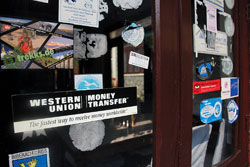
"Our economy is fully dependent on remittances," says Surya Margani, vice-chairman of the Chamber of Commerce in Beni. He says Myagdi alone gets Rs 40 million worth of money from abroad through official channels. Adding hundi and private transfers, the total may be double that.
The effect of the remittance economy can be seen everywhere. More than ten banks have sprung up since the 1990s and there are a surprising number of jewelry shops as families of migrant workers invest in gold.
A family here that receives money from abroad save up to Rs 4,000. Most of the money is invested into land to build houses or hotels, with wealthier families going on to buy land in Pokhara and Kathmandu, sometimes migrating to these cities for better prospects.