
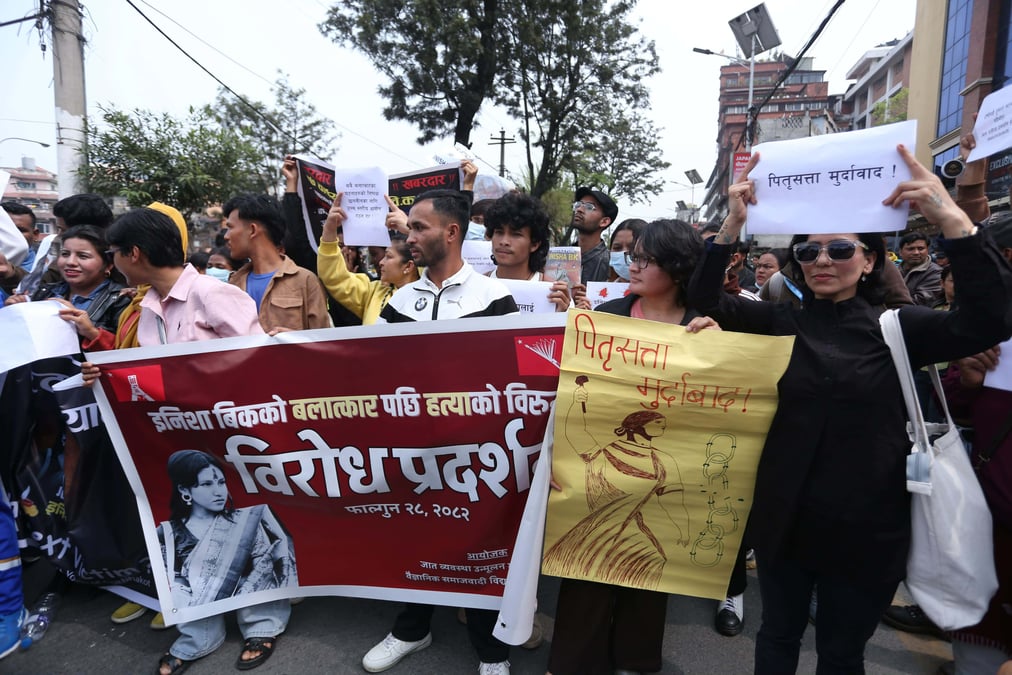
The rape and murder of Inisha BK in Surkhet earlier this month has become yet another case of the abuse and violence that women and girls continue to face — and pay for with their lives.
In Kalikot, police arrested a man in his 50s after he was found to have repeatedly sexually assaulted his 13-year-old relative. In Kathmandu's Maitighar, a seven-year-old has been demanding justice for her mother, who was raped and murdered in Khotang eight months ago.
These crimes have once again cast a harsh spotlight on how Nepal’s state apparatus has repeatedly failed victims and survivors of sexual violence. This has fostered a sense of impunity that encourages more abuse.
Four teenage boys, one of them reportedly in a romantic relationship with Inisha, have been arrested for her brutal assault and murder. In the days since, Nepalis across the country have come together, as they have before after the same sort of crimes, to demand justice and accountability not just for Inisha but for countless other women and girls who are made to suffer.
Nepal Police records show an average of 2,400 cases of rape over the last five fiscal years, with 2,253 complaints filed in the past year. There are as many as 7 rape cases registered every day, while more are never reported to the police. Yet, even as there are resounding calls for accountability now for Inisha, there is the sense that law enforcement and the judicial system is not to be trusted to ensure safety and justice for women.
The 2018 rape and murder of 18-year-old Nirmala Panta has not been solved due to police mishandling of the investigation. That crime is etched on the national psyche. Thousands of survivors of wartime rape during the insurgency remain unaddressed by the state. Law enforcement shows apathy and loathing towards trans people, particularly sex workers, when they try to register complaints of sexual harassment and assault. Police are routinely reluctant to record complaints of marital rape.
And even if cases of sexual violence are registered, the state allows perpetrators to get away with fumbled investigations, a lack of sufficient evidence or statutes of limitation.
Adult men get away with grooming and assaulting minor survivors because both parties ‘have consented’ to being in a relationship. Survivors and families are often made to sign a मिलापत्र by police so they do not have to investigate and prosecute.