
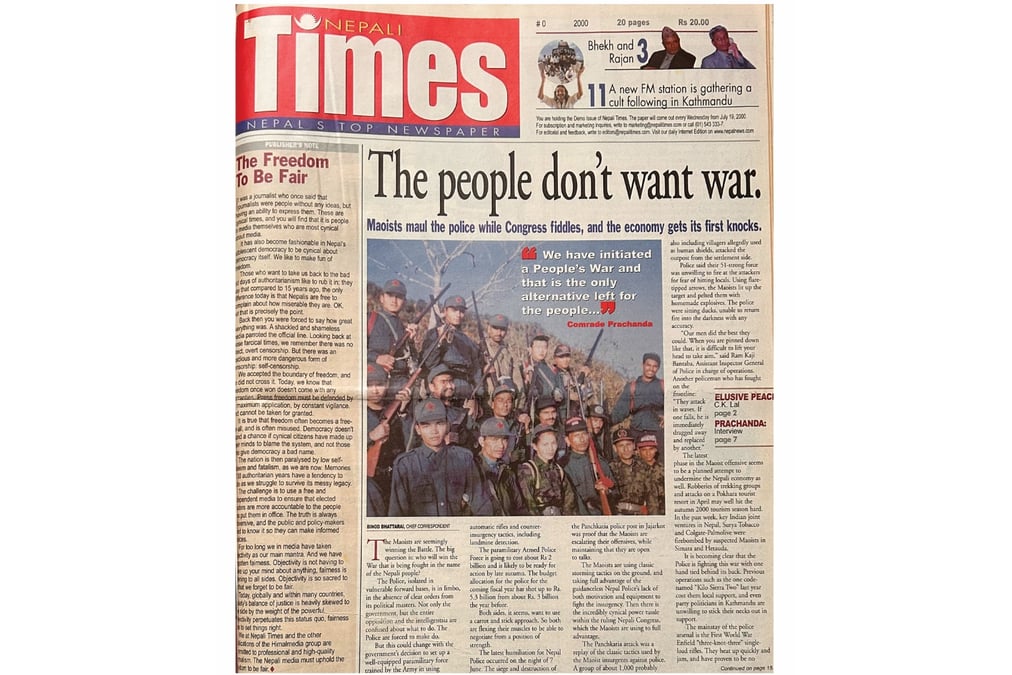
2026 marks the 20th anniversary of the Comprehensive Peace Accord that ended the Maoist conflict, and 30 years since the rebels launched their armed struggle.
Yet, two decades after it ended, there is almost no collective national memorialisation of a conflict that ended up killing 17,000 Nepalis. More than 1,330 people are still listed as missing. The perpetrators of heinous war crimes walk free in broad daylight — some have even served as ministers in government.
The transitional justice process, which was a part of the 2006 peace accord, is in limbo. History text books do not mention the war, an entire generation has grown up with no recollection or knowledge of the violence.
The goals for which so many lives were lost are now covered in the dust of history. It is a long list of promises not kept, pledges not honoured, sacrifices forgotten. The 2015 federal republican Constitution was the war’s end-point. The monarchy was abolished, political devolution from Kathmandu to the seven provinces, and an inclusive, just society was promised.
But then it was Animal Farm all over again. Napoleon, Snowball and Squealer started resembling Farmer Jones until no one could tell them apart. Today, some ex-guerrillas still believe in the revolution, many have migrated to the Gulf or Malaysia, child soldiers now have children of their own, survivors and families of the victims struggle with their loss, but memories are fading. International support for human rights organisations to pursue justice is drying up.
Yet, many of the objective conditions for revolution are still present in Nepali society. Politics and party structures are more centralised than ever. Federalism did not replace feudalism. The Constitution stipulated quotas for women and marginalised groups, but parties found ways around them to favour relatives and cronies. Socio-economic inequities are wider than 30 years ago. Corruption became a given.
None of the promised revolutions since 1950 attained their ultimate aims, as Sudiksha Tuladhar’s analysis in this edition (page 9) concludes. The Shahs were not that much better than the Ranas, and acceded to popular demands for change only to dismantle democracy. Young Nepalis took to the streets in 1980, 1990 and 2006 in pro-democracy movements, but rulers regressed and perpetuated the status quo.