
|
|
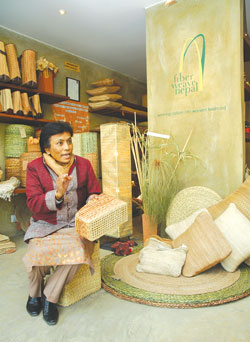
Shyam Badan Shrestha is not afraid of working hard or of taking chances. She's been doing both since she was a child.
After Shrestha lost her father and most male relatives, she and her mother made the decision, unconventional 50 years ago, to live by themselves in Patan.
Shrestha would spend the day at school and, because she was good with her hands and money was tight, sew clothes for the neighbours at night. "Sometimes I'd work till two in the morning," Shrestha remembers. "I had no books, no time to do my homework, I don't know how I managed to do okay in school."
Shrestha breezed through school and college and in 1972, won a scholarship to study in the UK. She returned a year later to teach at a Kathmandu school. On the side, she devoured the craft books at her school library. "I read everything I could find on handicraft, knot work, macram?, crochet," Shrestha says.
In the early eighties, the handicraft business barely existed in Kathmandu. Shrestha taught herself and, in 1984, started Nepal Knotcraft Centre with two young women she had trained. "When I started the showroom, my intention was to teach, encourage, and give employment to women. I wanted them to learn skills they could use to support themselves," Shrestha explains. Eighty-four people, for the most part women, are employed at Nepal Knotcraft Centre's factory in Patan Industrial Estate.