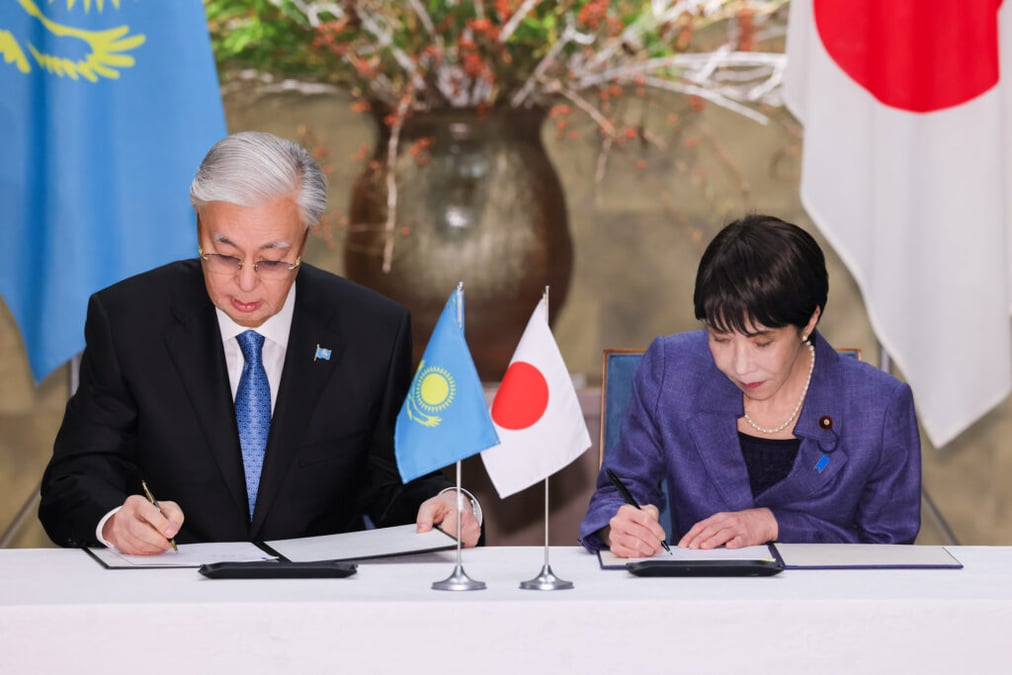
Kazakhstan President Kassym-Jomart Tokayev during an official visit to Japan this weekend met Prime Minister Takaichi and President Tokayev and issued a joint statement on a ‘future-oriented expanded strategic partnership’.
The statement reaffirmed a rules-based international order grounded in the principles of the UN Charter. At the United Nations University in Tokyo, Tokayev delivered a lecture warning that ‘nuclear risks are rising again’.
He referred not only to the atomic bombings of Hiroshima and Nagasaki but also to Kazakhstan’s Semipalatinsk nuclear test site, where the former Soviet Union conducted more than 450 nuclear tests, arguing that both Japan and Kazakhstan are countries that know the devastating consequences wrought by nuclear weapons.
He said practical steps must be steadily accumulated to advance nuclear disarmament and reduce nuclear risk. Tokayev also cited Kazakhstan’s decision to relinquish the nuclear weapons left on its territory after the Soviet collapse, suggesting that security should not depend solely on nuclear deterrence.
Kazakhstan has hosted meetings in Astana on 29 August, the date the Semipalatinsk test site was closed and which has been designated the International Day against Nuclear Tests to draw attention to the inhumane impacts of nuclear weapons and call for strengthening norms underpinning the Central Asian Nuclear-Weapon-Free Zone.
These gatherings have included participation by civil society groups such as the International Campaign to Abolish Nuclear Weapons (ICAN) and Soka Gakkai International (SGI).
The two leaders also welcomed plans to launch regular direct flights in 2026 and agreed to begin intergovernmental negotiations toward the conclusion of a bilateral air services agreement. In addition, the joint statement expressed an intent to exchange information and explore potential avenues of cooperation with the UN Regional Centre for the SDGs for Central Asia and Afghanistan, which was established in Almaty.
As major powers step up engagement across the region, Central Asia’s weight as a stage for diplomacy and trade has been growing. Leaders of Japan and the five Central Asian states met in Tokyo this weekend for a new Central Asia + Japan Dialogue (CA+JAD).
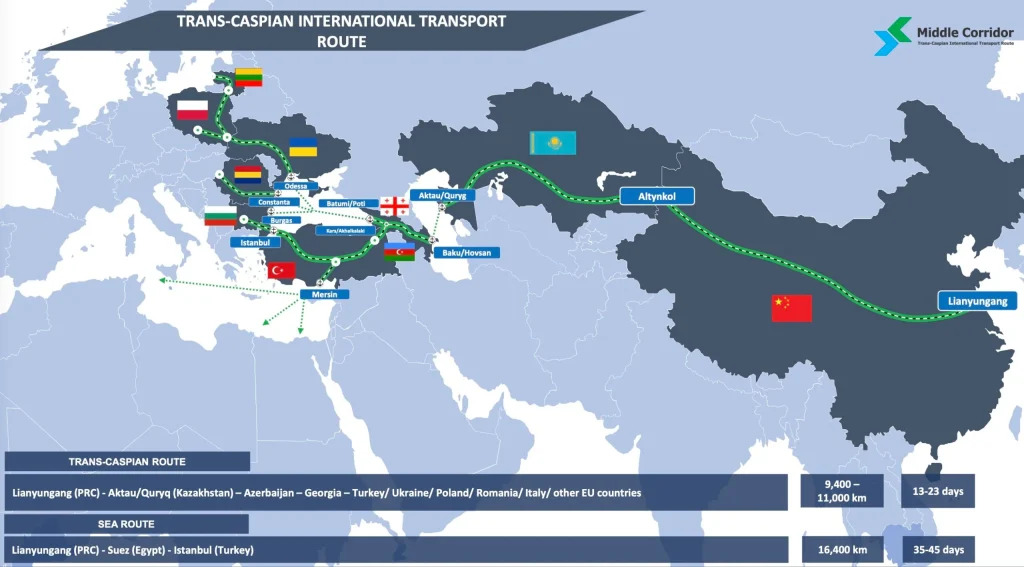
They adopted the 'Tokyo Declaration,' which places as its core two priorities: strengthening the supply-chain for critical minerals, and supporting the Trans-Caspian Corridor which links Central Asia with Europe without transiting Russia.
Japanese Prime Minister Takaichi said the meeting reflected Central Asia’s strategic importance as a Eurasian crossroad and a region with mineral resources essential for decarbonisation and advanced industries.