
One day about two years ago, I woke with my face covered in itchy blisters. I had gotten the chicken pox, which usually affects children but is much worse in adults. As I recovered, my mother shared a lore—when the bumps appeared on my feet, she said, that meant it was time for the infection to leave my body, because feet are the exit points.
Even though I had seen the doctor and was on medication, my mother’s tale soothed my mind. As I healed, I thought about how myths, folk wisdom, and deities are woven into Nepal’s sociocultural fabric and everyday life.
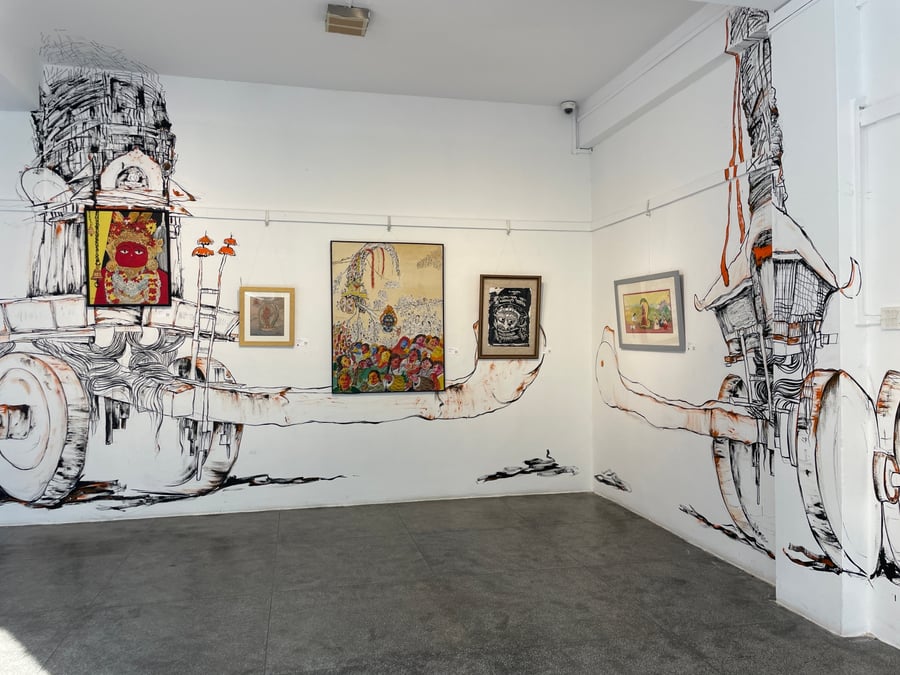
This month, as I wondered from artwork to artwork, at the third edition of Nepal Art Council’s flagship exhibition Deities of Nepal III, I remembered my mother’s words. I wondered if the gods had descended onto earth from an eternal paradise in the cosmos or if they have always walked among us — as stories and lores, rituals and practices, or physical manifestations in idols and artefacts.
The exhibit, which ran from 17 September to 10 October featured 285 artworks from 157 emerging and veteran artists, spanning styles, mediums, and forms. Notably, this edition also featured sections based on specific lores and legends— the stories, practices, rituals and traditions that reside in our collective memory and offer ways to understand ourselves and each other.
The venue had turned into an abode of the gods. The exhibition began on the first floor with the paintings of Ganesh, who is worshipped first in Hindu rituals. The same floor then expanded to include Shiva, Bhairab, Uma Maheshwar and other gods in the pantheon. The art displayed on the second floor went deeper into the thematic representation of Nepal’s myths and legends.
At the section dedicated for Bunga Dyah, Kathmandu Valley’s rain god. Kabir Kayastha’s Bun- Dyo: Arrives in the Valley told the story of how the deity was brought into Kathmandu after a prolonged drought.
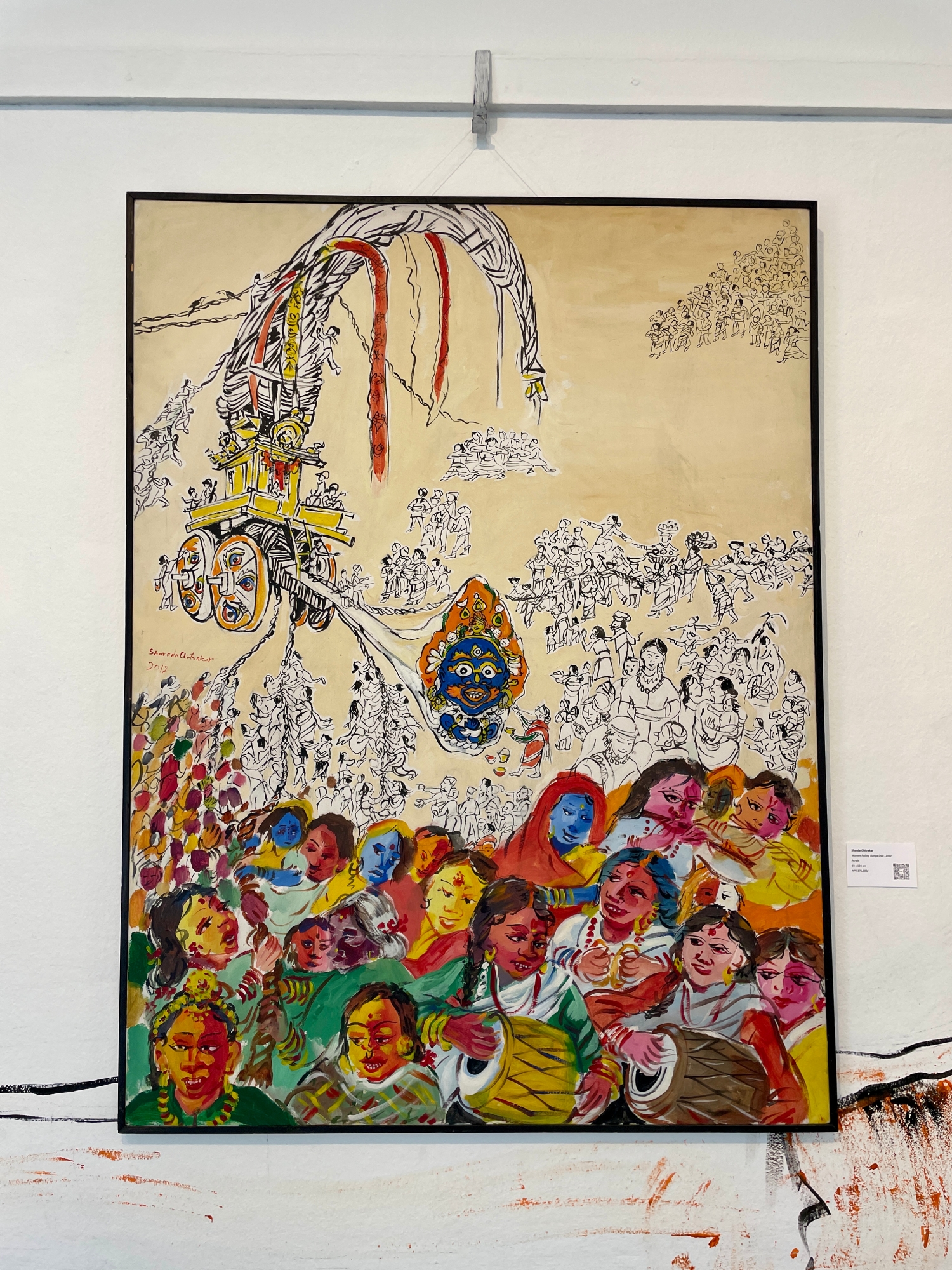
Meanwhile, Sharda Chitrakar’s acrylic painting Women Pulling Bunga Dyo: held a mirror to society—showing how women reclaim public spaces and jatras that are mostly male-dominated while at the same time, echoing Chitrakar’s own journey of reclaiming the mail-dominated art society. An opinion piece from 2016 in The Kathmandu Post mentions how the Chitrakar community did not give their daughters the same ‘family art education that they bequeathed’ to their ‘male progenies’. This social and cultural context makes Chitrakar’s quest that much more important.
Another section was dedicated for the story of Manjushri and and the formation of the Kathmandu Valley. Artist Kalu Kumale’s statue of Manjushri carrying his mighty sword Chandrahasa stood at the centre, with virtual projection of water to its left and right in a reimagination of the valley that was once a lake, eventually drained by the deity when he cut the Chobhar ridge in half.
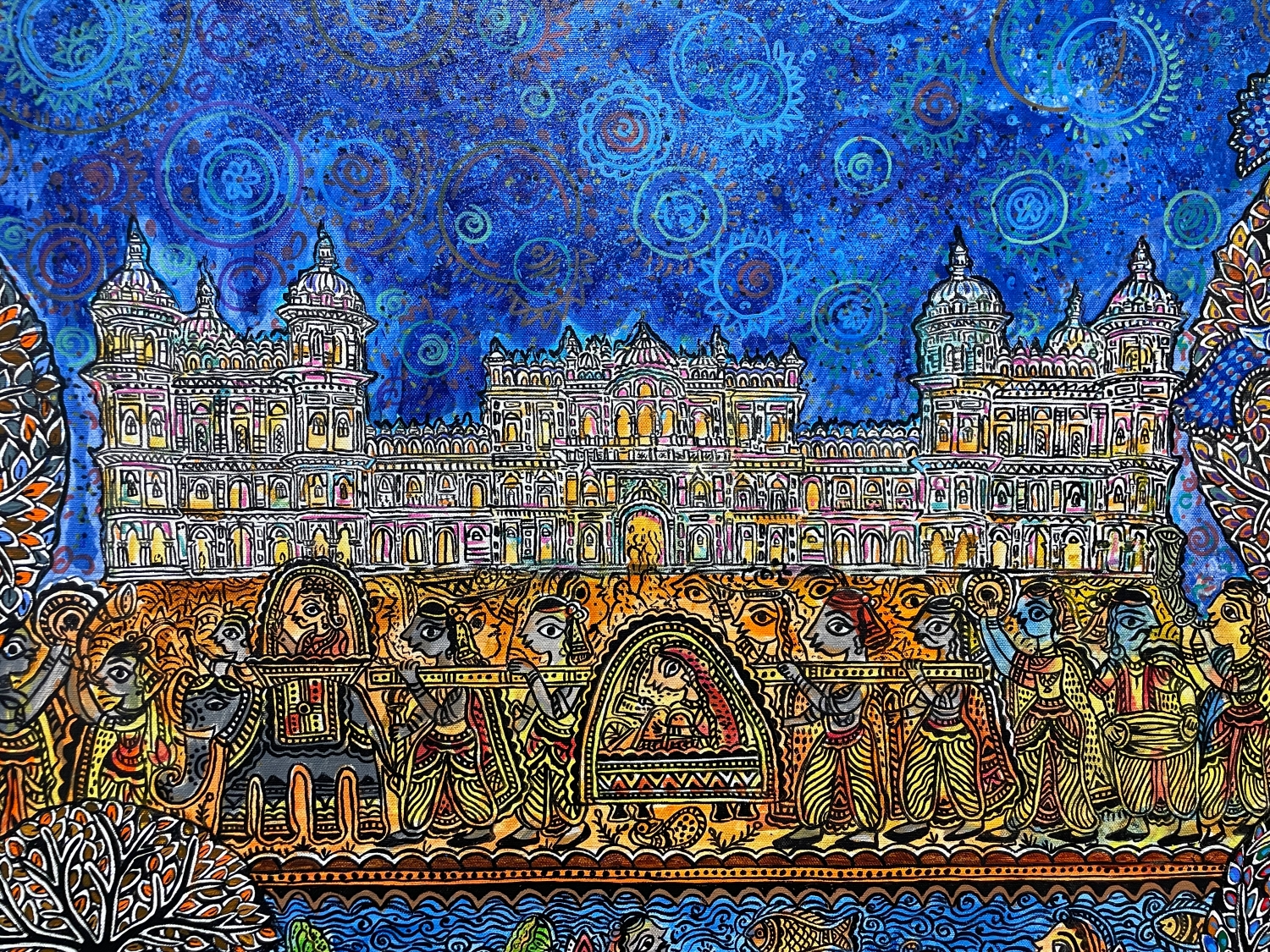
On the same floor, S C Suman’s Marriage of Sita and Ram invited visitors to the grandeur of Mithila art and Mithila history. The deep blue background over which the Janaki temple emerges like a jewel from an ocean was stunning to look at.
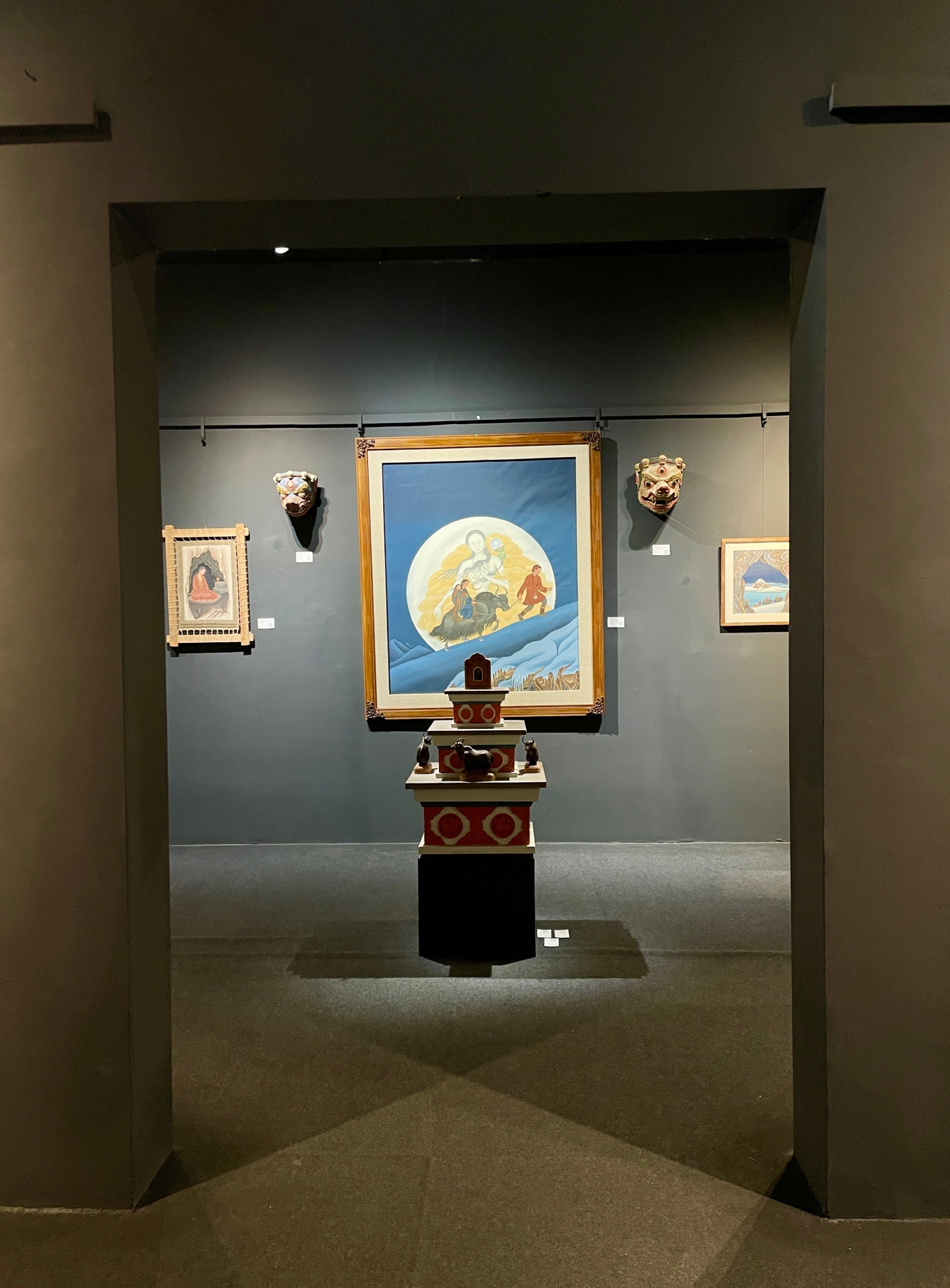
One of my personal favorite sections was Tenzin Norbu’s The Story of Milarepa and other tales from Dolpo. Norbu’s painting style drew the audience into an ancient story through a modern portal, making the entire series feel like a graphic novel that the audience could step into.
It was refreshing to see new stories and perspectives of deities that came from outside Kathmandu. Another aspect that the exhibition could expand into for future editions would be to bring in more diverse communities, voices, and practices into the fold.
One of the key features of this edition of the exhibition was how it imagined artists as custodians of lore. “Instead of looking at our deities as fixed characters tied to monolithic religious identities, we have chosen to consider the ways they grant meaning and allow for the creation of new imaginaries,” said co-curator Pranab Man Singh.
Yuvak Tuladhar’s Om Tare Tu Tare Mantra, which placed fragments of the Tara mantra in the language of the binary code, represented the theme. The codes appear throughout the painting alongside the image of Tara, making the viewer wonder about the relationship between ancient traditions and modern technologies.
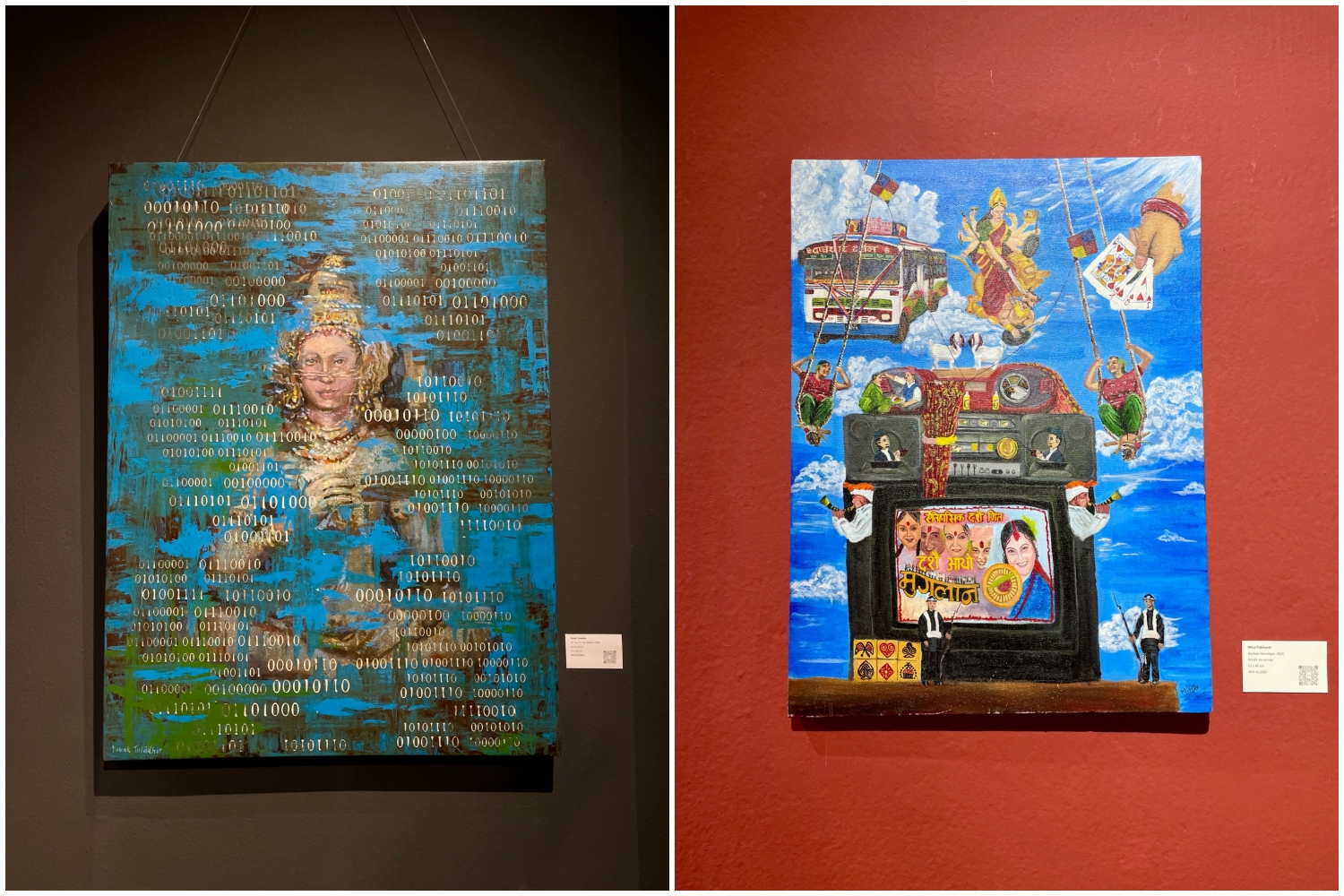
Elsewhere, Mica Pokharel’s Dashain Nostalgia builds on contemporary lores that we have come to relate Dashain with—playing cards, travel buses, Langur Burja among others.
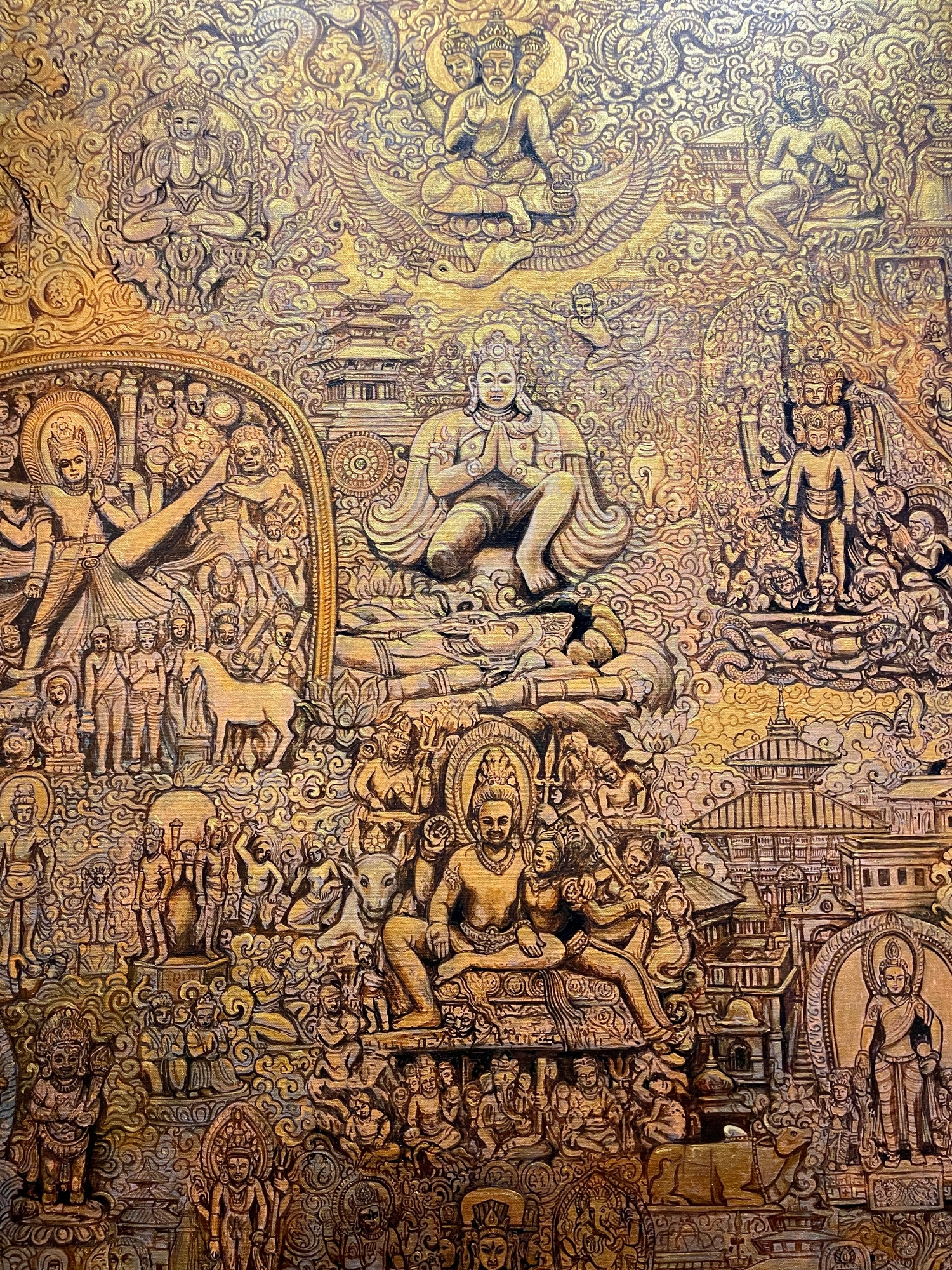
“Everybody lives in myth,” writes Devdutt Pattanaik in Myth = Mithya. And Ishan Pariyar’s Infinite Divinity might capture what living in a myth can feel like.“Influenced particularly by Hindu and Buddhist philosophies, the artwork was created based on the powerful concept of depicting all deities together in a single composition,” Pariyar said.
If artists are lore keepers, then it becomes paramount to keep the tradition of art alive by bringing in new artists who can continue this odyssey of imagining and reimagining. For Binu Shrestha, second year student at Lalit Kala Campus, Deities of Nepal was her first ever public exhibition. She recalled her selection for the exhibition as a “nerve-wracking” and “heart-thumping” experience.
The three-week exhibition run included multiple guided tours and artist sessions that offered nuanced and layered engagement for the public. My first visit to the exhibition had left me a fumbling a bit, searching for some exhibition text that could tie together the artworks, especially those placed in specific sections. The guided tour with heritage scholar and writer Rishi Amatya that I could attend helped put many of the stories in perspective.
Lead curator Swosti Rajbhandari Kayastha having to leave for her higher education right before the opening dates and needing to co-ordinate with the team remotely was another challenge the exhibition faced this year. But a reliable and prepared team ensured that the exhibition gave many first time visitors and long-time audiences unique opportunities to savor in and reflect on culture and arts.
As it stands, the exhibition also gave visitors an opportunity to make personal memories out of myths, which is where the DIY experience came in. Visitors could try their hand at the now disappearing tradition of wood block printing for Rs10 each, to their own print that included images of Ganesh, Lakshmi, lotus, naga, and more.
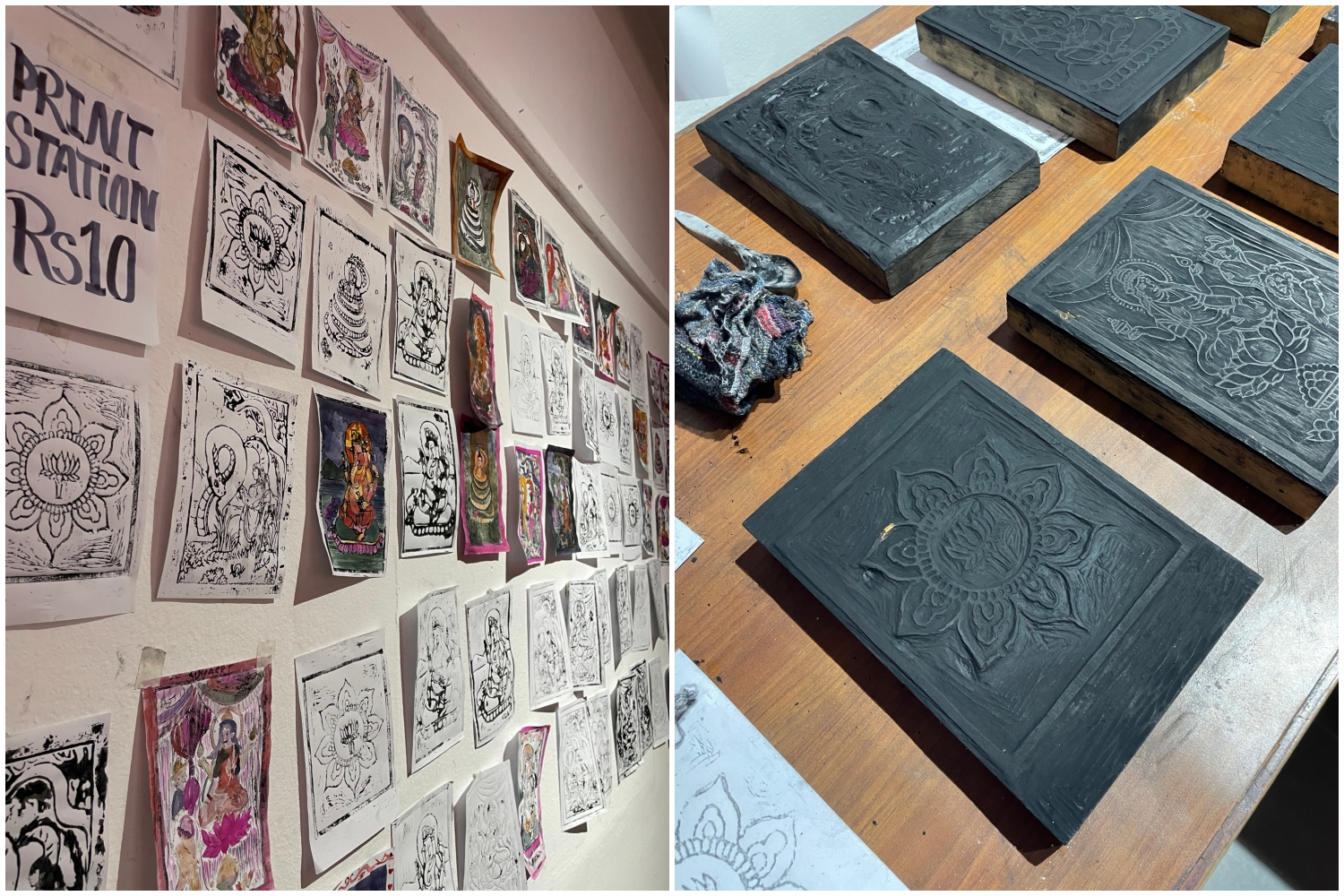
At a time when AI has taken over art, the act of pressing the paper over the wood block and seeing the pigment bleed through — an evidence of having made something by hand—was a call to embrace the slow and mindful process of making art.
The exhibition was a reminder of how myths and legends continue to seep into our everyday existence, colouring it with stories. At the same time, we continue to recreate, reimagine, and relive these lores, infusing them with our contemporary experiences, memories, and reflections. Perhaps that is how our collective lore, made of countless individual realities— live on.
Alfa M Shakya is a writer, researcher, and educator. She runs an art podcast, How’d You Create That?, about the creative process, and is the Editor-at-Large for Nepal for Asymptote.