The history of Kathmandu Valley’s architecture is the history of living, adapting and reconstructing between frequent earthquakes. This cyclical renewal is at the core of our building culture. The energy for each successive renewal process, however, comes from the strength of our intangible heritage: festivals, jatras, nakhas and pyakhas. These are social bonds that have gelled the Valley’s society over the centuries.
For the indigenous population of the valley, these traditional practices continue to hold deep meaning. Otherwise, why would the golden window in the Patan Museum be open during the recital of the Narsingh Avatar? Every year only for this recital, the golden window is flung open to honour King Siddhi Narsingh Malla. It remains closed the rest of the year.
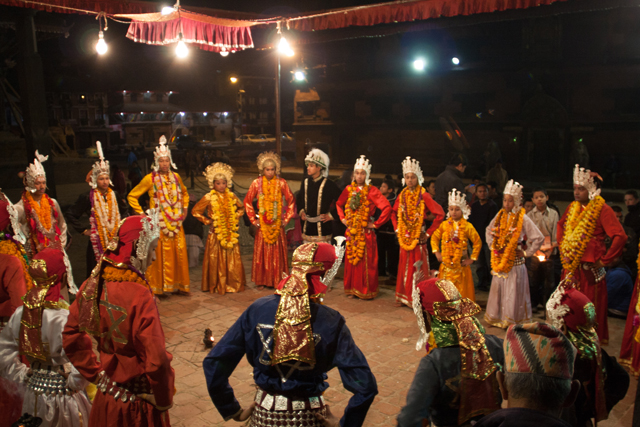
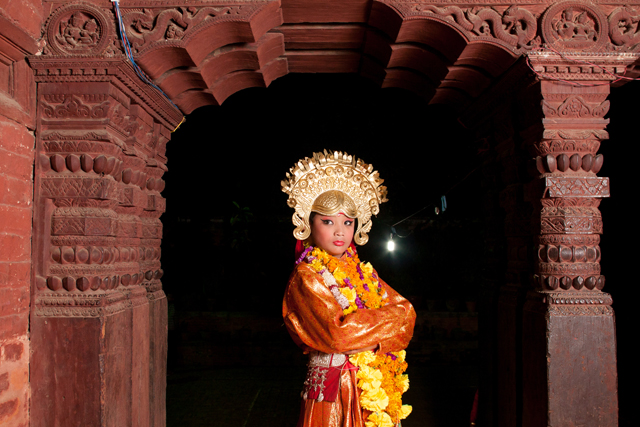
Kartik Nach is one of the oldest and consistently staged dance drama (pyakha) traditions in Patan. It takes its name from the lunar month of Kartik, the month which held special importance to the king who was a devout Krishna worshipper. The eleventh day of Kartik is Haribodhini Ekadasi and considered one of the holiest days in the year when Vishnu wakes up from his slumber and presides over the universe.
Siddhi Narsingh Malla first staged this performance in Kartik in the mid -17th century. It went on for a week, and his son, Srinivas Malla, and his grandson Yog Narendra Malla, added plays and comical skits, extending it to a month. This year, the dance is performed for 12 days from 3 November till 14 November.
A lot has changed since. Though the dance drama tradition still retains its religious values, it has taken a far more significant meaning. After centuries worth of yearly recitals, it has evolved from its roots as not just a socio-religious play but also as a part of Patan’s cultural identity.
Residents of the town have absorbed this tradition in their cultural calendar. The elevated platform where it is staged is now known as Kartik Dabu, and this annual tradition with such high historical and cultural importance runs on a shoestring budget.