

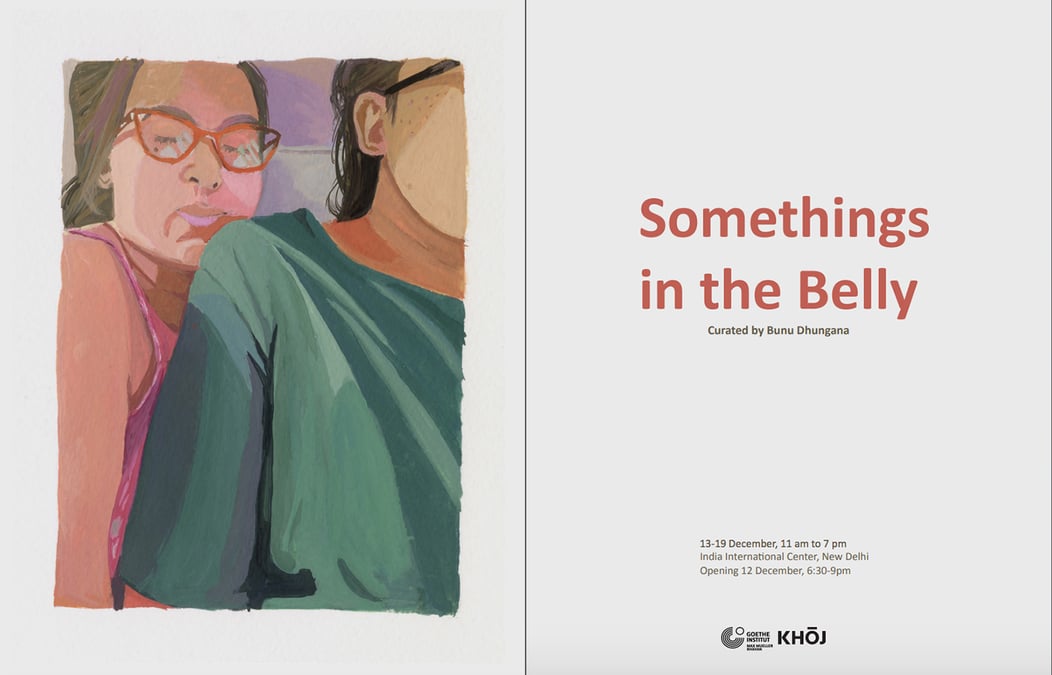
“Someone said curation is a generous act, and I said, no it’s a selfish act. I took so much from all of you!” Bunu Dhungana tells me over the phone while sipping her coffee at a borrowing bookstore in Delhi.
When Bunu, who I’ve only known from a distance as an artist, reached out to me in August asking me to write something for her exhibit, I greeted her with surprise. No one had asked me before to be part of a collective. So, there was me who had never written for an exhibit before and there was Bunu who had never curated solo before.
“Curation is an extension of my work,” Bunu explains. For her exhibition, she left the word “Mother” with a group of artists she had chosen, to see what they would come up with. During my two-month deadline, we embraced silence while thoughts simmered.
As an artist herself, Bunu was highly interested in the process. And for me, who has never really had a tangible writing process, I didn’t have much to show her as the process, besides some images of my mother and brief notes on my phone. The process of creating is varied and subjective. Some days, it feels like the whole process is a slow-drawn retch-- a purgation of sorts.
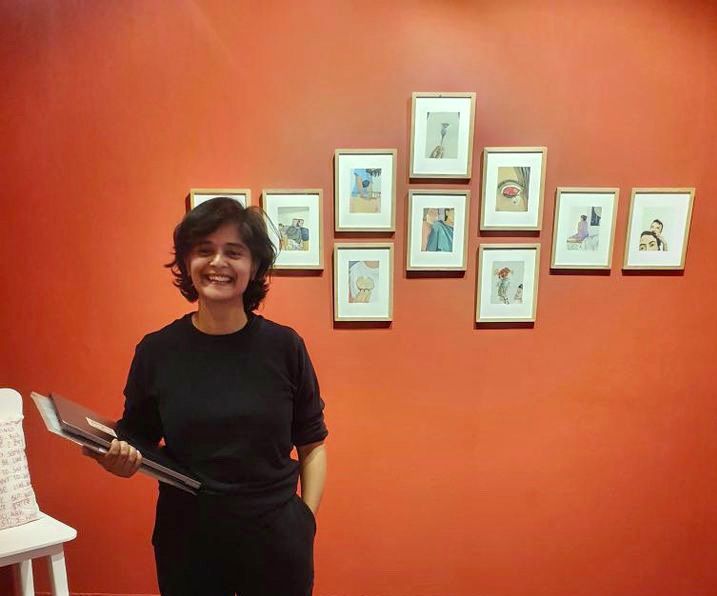
In retrospect, the procedure for this piece was just Bunu waiting patiently and quietly, while I thought. Even as an insular writer, I have always sought an audience. And Bunu was creating that for me and all the other artists she was working with.
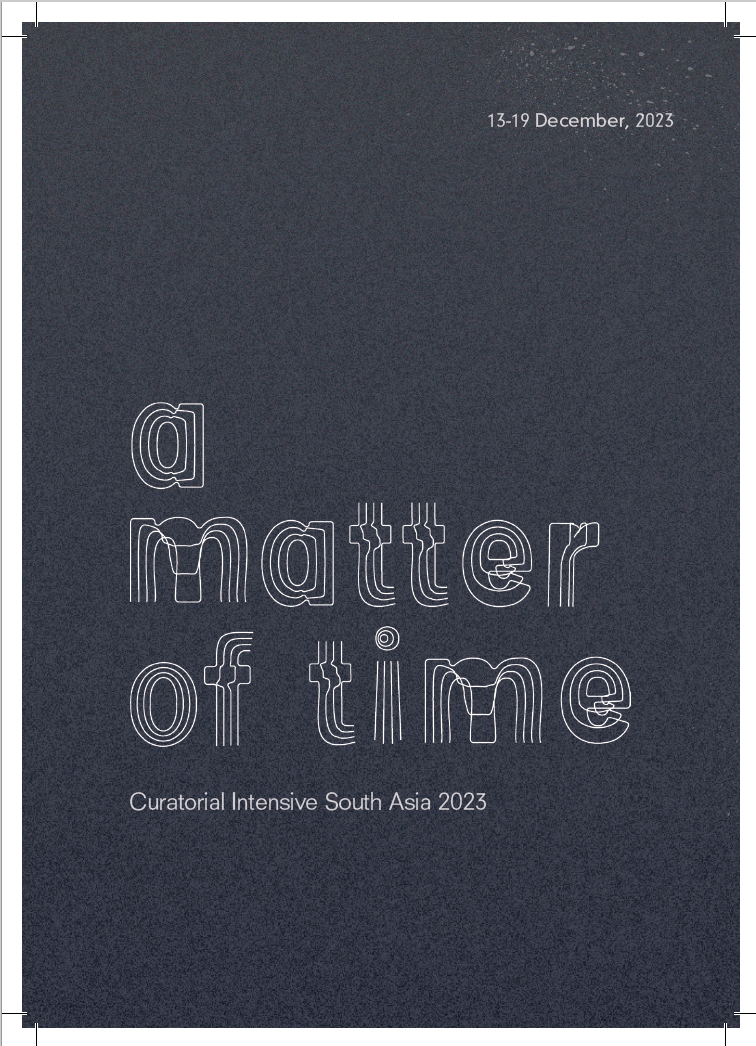
The larger exhibition, A matter of time, with Bunu’s curation titled Somethings in the Belly, brought together works by Asmita Badi, Ayushma Regmi, Irina Giri, Shradha Devkota, Tripty Tamang Pakhrin, Shristi Shrestha, Ujjwala Maharjan and yours truly.
“I have done work on mother-daughter relationships before. And one night it came to me-- why don’t I ask people to respond to the word?” And so Bunu churned a cauldron of the term “Mother” for the bunch of us, so we would cast spells over ourselves to awaken memories related to our origin, sifting through the trappings of time.
Somethings in the Belly brings together a set of different mediums in the form of poems, short stories, letters, paintings, sounds and images. La.Lit’s These fine lines anthology of poetry was part of the curation guide for Bunu, so some of us in the collective had already appeared together before.
Juxtaposed in the form of mixed genres of work, each strand in Somethings in the Belly reminds us about our existence, as it takes us back to the womb where we took form. The gestation is always ugly and often painful and so is the process of thinking about our mothers-- we inherit her suffering.
Ayushma articulates the sentiment in one of her letters: 'So far we have perpetuated the suffering inherited from I don’t know how many generations of mothers who always kept every trauma locked in their wombs, only to birth them out in the form of their own children.'