
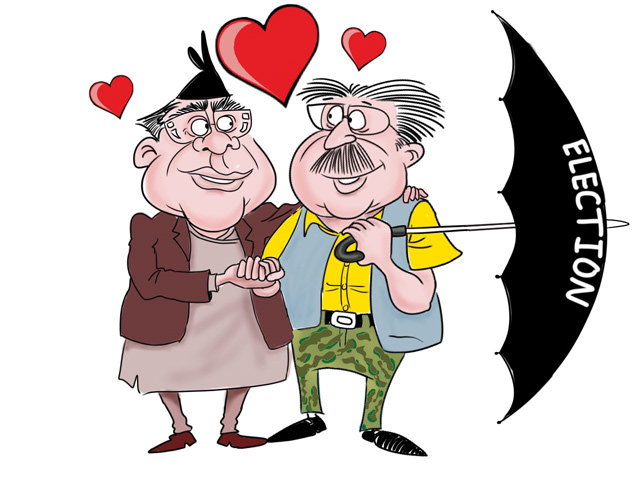
Nepal has been ruled by a three-party syndicate after the end of the conflict in 2006, and throughout the decade-long transition after that. The main men in the major parties made all important decisions on power-sharing from behind closed doors, bypassing Parliament and even their own central committees.
Well, it looks like nothing has changed. The same men from the same parties are still playing parlour games. This week, two months after the election results became clear, the lameduck prime minister finally stepped down and the two communist alpha males have decided to co-chair their united party, and rotate the prime ministership. There is no precedent and no such provision: they just decided secretively to go ahead with it in a meeting at a private contractor’s home in Man Bhawan on Tuesday, while the country was on a Shivaratri holiday.
The announcement of a Left Alliance between the UML and the Maoists just before elections last year was a political masterstroke. It ensured a near two-thirds majority for the combined parties in Parliament. The other part of their agreement was to formally unite the parties, and that has turned out to be much more difficult. The unity was supposed to happen before government formation, but now looks like it is going to be pushed back.
The NC which lost the election was in no hurry to hand over power to the winners. In fact, the NC-led coalition used the lengthy interregnum to spend lavishly and make illicit appointments to official positions. What was even more surprising is that the UML-Maoists were not in any particular hurry either to assume office.
There were many reasons for this: the Election Commission not formally announcing the final tally of the National Assembly elections till this week. This gave the three-party cartel all the justification it needed to indulge in its favourite pastime of playing political musical chairs.
For their part, the UML’s prime minister-in-waiting KP Oli and the MC’s Pushpa Kamal Dahal anyway needed more time to haggle over the composition of the new government as well as the terms and conditions for party unity. This, in turn, provided the caretaker NC-led coalition the opportunity to cling on to power and make non-caretakerish decisions on spending and appointments. (Even as it prepared to leave office, the Cabinet awarded Rs5 million of taxpayers’ cash to a well-to-do outgoing minister for medical treatment.)