
At the first General Convention of the Rastriya Swatantra Party (RSP) in Chitwan this week, Nepali Congress President Gagan Thapa made an impassioned plea to the ruling party: “We made the mistake of turning our leaders into gods. Learn from us before it is too late.”
Whether the RSP faithful absorbed the message is unclear; they are certainly not showing it yet. That caution was intended not just for the RSP, but for Nepalis everywhere regarding the inherent dangers of a personality cult.
The Convention pushed for scrapping Provincial Assemblies, a move that would effectively dismantle federalism. It backed a directly elected chief executive, but for all intents and purposes, we are already witnessing strongman rule.
After decades of cronyism, corruption, and impunity, Nepalis were desperate for change. The RSP cashed in, sweeping the March election. Many of its decisions in the last three months were clearly intended to address the frustrations of the past, punish those responsible, and put new structures in place.
These moves may be well-intentioned, and we all want genuine government reforms to succeed, as the alternative is unimaginable. But many of the decisions from the past three months demonstrate impatience, impulsiveness, high-handedness, and a disregard for the rule of law.
The RSP’s moves have a legitimate rationale — cleaning up the government — but the problem lies in the execution. There is a tendency to resort to gimmicks rather than gumption. It is performance, not process. प्रक्रिया not परिणाम.
Just because elected leaders in the past undermined the electoral process, it does not mean we should throw the baby out with the bathwater. Authoritarianism is not the answer to a mishandled democracy. As Churchill once said: “Democracy is the worst form of government, except for all those other forms that have been tried…”
The RSP’s decisions over the past 100 days have been driven by an urgency to show it is action-oriented, yet many moves are hasty and undercooked. Immature handling of diplomacy has jeopardised Nepal’s relations with its neighbours and the international community.
The government’s most consequential decision to date has been the eviction of thousands living in squatter settlements. Identifying the truly landless and arranging alternative housing should have preceded the bulldozers. Now, evicted families face yet another displacement from temporary shelters as the monsoon arrives.
The appointment of a new Chief Justice moved the goalposts via ordinance, but was cloaked as the selection of a politically untainted judge. It ended up looking like yet another political appointment designed to do the PM’s bidding.
The RSP claims to be making a clean break from the past to push meritocracy. In some cases, such as the appointment of the CAAN DG that holds true, elsewhere, however, the past is repeating itself as a farce. While the removal of 1,500 bureaucrats might make sense in theory, the blanket approach has discarded competent civil servants, such as the NEA chief.
Not everything old is bad, nor is everything new inherently good. Some past political appointees possessed experience and integrity, while many of the new ones are untested and lack exposure. The government’s initial disdain for consultation even on matters outside its domain of expertise was puzzling. Now, it looks like arrogance and recklessness.
While the Convention attempted to patch up internal rifts, the RSP continues to face clashes of personality, ideology, and ambition at the very top.
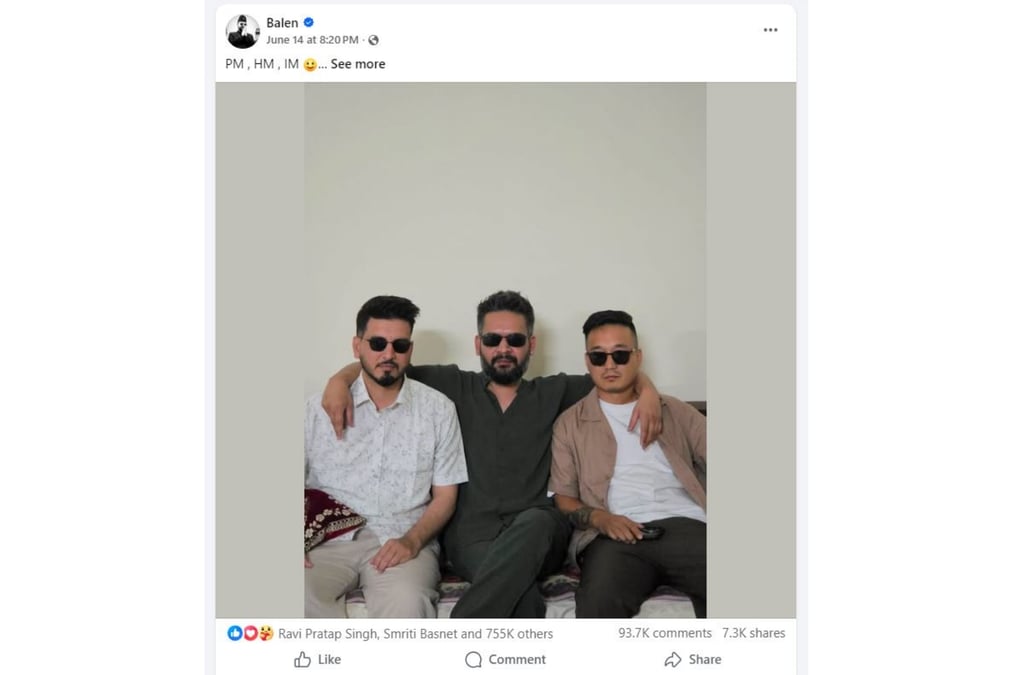
The Prime Minister is buoyed by vast social media support, but a government cannot run on Facebook likes and shares indefinitely without tangible delivery. An analysis of the comment sections on the PM’s own posts already reveals a decline in sycophancy.
Most of the flak the government receives is self-inflicted. Its moves are often counterproductive, backfiring in the real world even if that is not yet apparent in the virtual space.
Prime Minister Balendra Shah told his party faithful in Chitwan: “We are on an expressway; we will apply the brakes only when we reach the destination.” It is an indication of his polarising persona that many applauded his infrastructure analogy, while others saw it as a sign of everything reckless and dangerous about the man.
Nepal does not just need expressways, it needs equitable and sustainable development, which is only possible through genuine participatory democracy, inclusion, the rule of law, and accountability. That spirit of the Gen-Z movement is fast fading.
Sonia Awale