
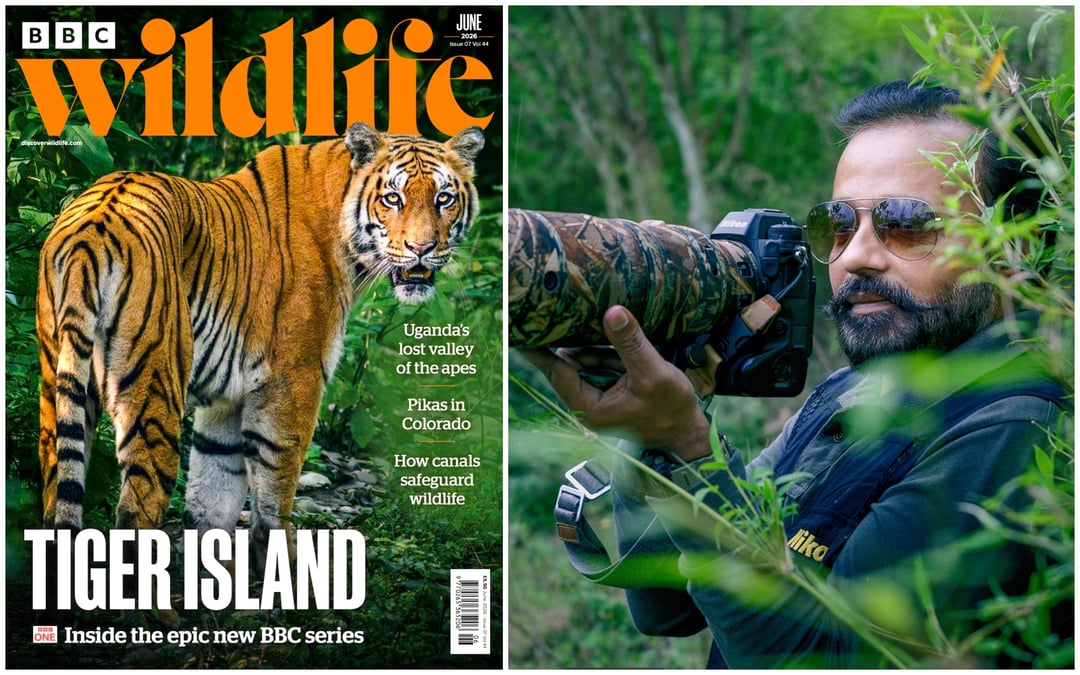
Noted Nepali conservation photographer Om Prakash Yadav's dramatic portrait of a tiger looking directly at the camera has been selected for the cover of the June 2026 edition of BBC Wildlife Magazine in the UK.
Yadav is a wildlife and conservation photographer whose work focuses on endangered species, natural habitats, and the relationship between people and the environment. Over the years, he has documented wildlife across Nepal’s national parks, wetlands, grasslands, forests and mountain landscapes, working at the intersection of photography, conservation, education, and storytelling.
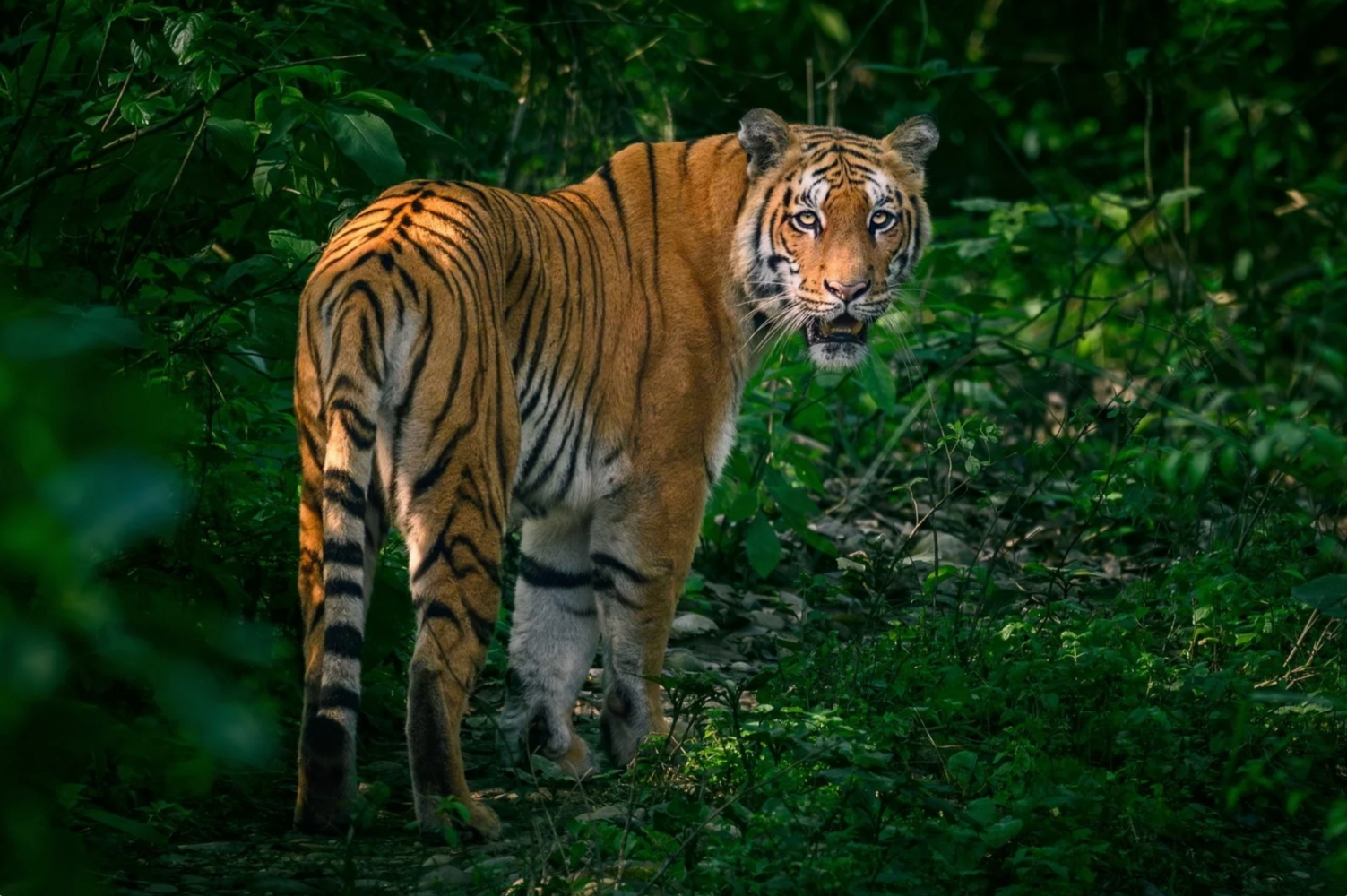
The photograph of the Royal Bengal Tiger was taken in Meghauli just outside Chitwan National Park in November last year and was selected for ‘the tiger’s direct eye contact, strong detail, and natural forest setting’.
“Tigers are difficult to spot, but I came upon this one during an unexpected forest encounter in the buffer zone,” Yadav recalls. “It appeared quietly and briefly, creating only a short window to photograph the animal before it disappeared back into the undergrowth. ”
He added: “The moment was not a dramatic chase or planned shoot, but a reminder of how unpredictable and humbling wildlife photography can be. Meaningful nature photographs come from patience, field knowledge, and respect for the natural rhythm of the forest rather than aggressive pursuit.”
The June 2026 issue of BBC Wildlife Magazine features the BBC series Tiger Island, and the editorial team selected Yadav’s image for the cover after reviewing a curated selection of tiger photographs from Nepal.
Yadav sees the cover slection as more than just a personal milestone, but an opportunity for Nepal’s wildlife and protected areas to receive wider international attention through photography.
Interestingly, Yadav’s career started out neither as a conservationist nor a photographer. He originally worked in information technology, graphic design, and digital media, but he took photographs as a hobby that he pursued during his travels or free time.
Over time, repeated visits to Nepal’s national parks and natural landscapes gradually shifted his focus to specialise in wildlife and conservation photography. Encounters with birds, mammals, reptiles, and forest ecosystems led him to spend more time in the field documenting species, and observing animal behaviour rather than simply photographing landscapes or travel scenes.
“For me photography became a way to communicate environmental stories and create awareness about conservation issues in Nepal,” Yadav told us from Manang last week, while photographing Himalayan birds. Eventually, he moved into biodiversity education outreach, conducting workshops, and conservation-oriented visual storytelling.
“Wildlife photography is built far more on patience, observation, and understanding animal behaviour than on equipment and technique alone,” said Yadav, pointing out that wild tigers ware notoriously difficult to photograph because it requires long hours in the field, repeated visits to the same habitats, and acceptance that many days may pass without any meaningful encounters.
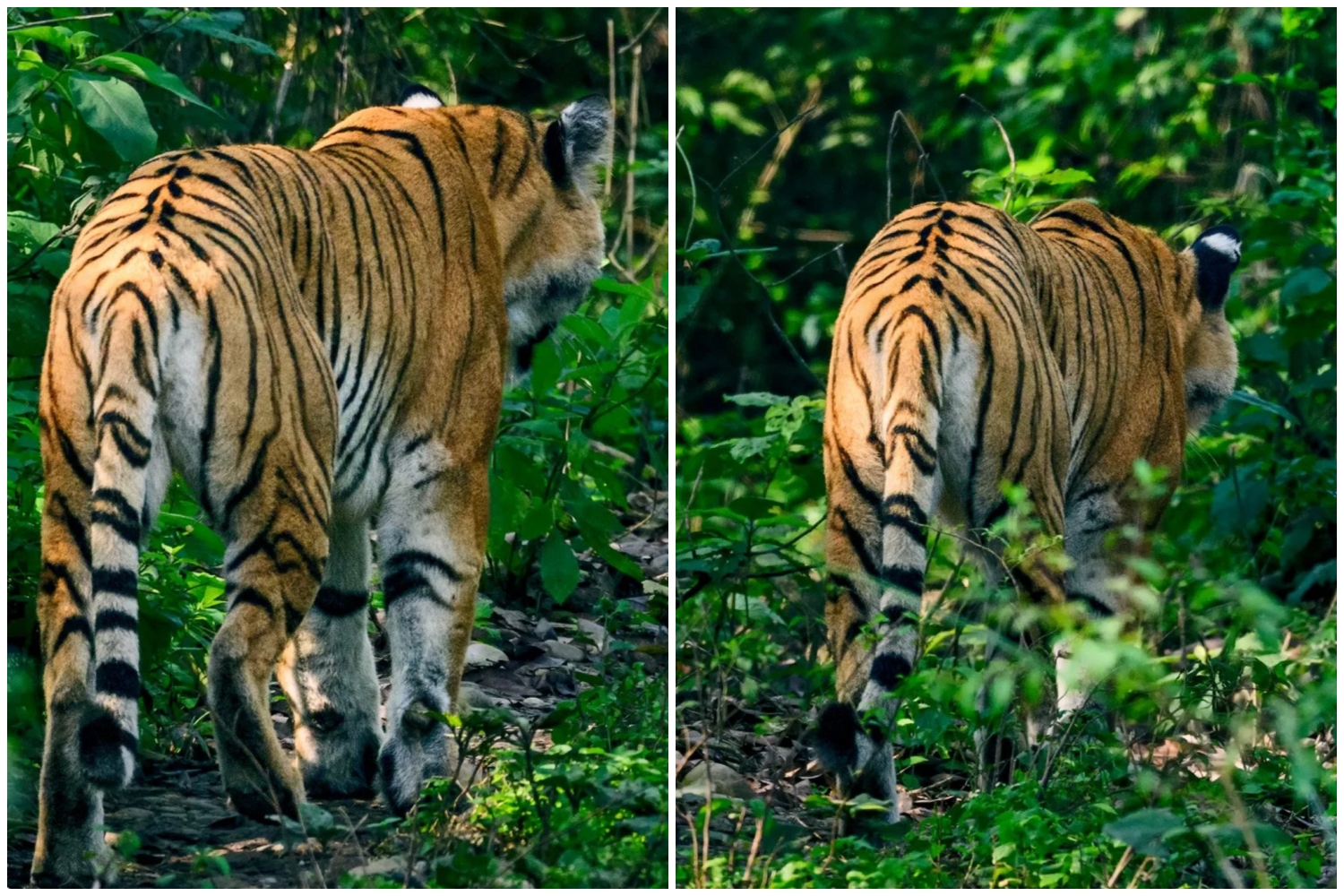
“Weather, light, terrain, and the movement patterns of animals all influence the outcome, and often the most important part of wildlife photography is learning when not to disturb the environment,” he said.
Tiger photography in particular demands discipline and respect for the animal and knowledge of its behaviour, and most encounters are brief and unpredictable. Photographers may spend weeks searching forests and riverbeds for signs such as pugmarks, alarm calls, or scent markings, only to have a few seconds to react when a tiger finally appears.
For Om Prakash Yadav, ethical practice is equally important. Maintaining distance, avoiding disturbance, and prioritising the welfare of the animal always come before getting a photograph. Besides tigers, Yadav has photographed many of Nepal’s lesser-known wildlife species, including birds, reptiles, wetland animals, and mammals from the country’s diverse ecosystems.
In 2010, 12 tiger range countries met in St Petersburg, pledging to double their tiger populations in ten years. Nepal did not just double its numbers, but more than tripled them by 2026 — the only country to do so.
He added: “Nepal holds enormous potential for wildlife storytelling and conservation communication at an international level. It is not just about saving iconic species for the future but also to the wider ecosystems that support them. This encourages people to protect nature and this in turn ensures human livelihoods.”
Equipment Om Yadav uses:
Nikon Z9 Nikon D810
For wildlife
Nikkor 180-600mm Z
Nikkor 80-400mm VRII
For travel and landscape;
Nikkor Z 24-120mm f/4 S
Nikkor 20mm f/1.8 G
Nikkor 16mm f/2.8 D