
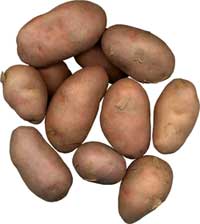
 Ad?n Felipe Mej?a, Peruvian poet and philosopher, describes some of
the vast array of potatoes in the world thus: "There are enormous sandy potatoes
with delicate hues and noble shape. Some are oval and perfect, others like a
rolling pin, with no holes, more resistant and dense. Some are round, smooth,
grooved and tender. Some have a black skin, and others are white inside. There
is an infinite variety, a wide range of tastes! And the yellow potato-that
poem-delicate, fine, with tiny holes in its side like the face of an enchanting
little girl, the yellow potato gleams like egg yolk."
Ad?n Felipe Mej?a, Peruvian poet and philosopher, describes some of
the vast array of potatoes in the world thus: "There are enormous sandy potatoes
with delicate hues and noble shape. Some are oval and perfect, others like a
rolling pin, with no holes, more resistant and dense. Some are round, smooth,
grooved and tender. Some have a black skin, and others are white inside. There
is an infinite variety, a wide range of tastes! And the yellow potato-that
poem-delicate, fine, with tiny holes in its side like the face of an enchanting
little girl, the yellow potato gleams like egg yolk."
Nepalis tend not
to wax too eloquent on the beauties of the spud, but catch them on a sunny
winter afternoon, well-fed on carbohydrate a la potato, and they can put up a
decent show. Unfortunately, their imagination and tuber-related vocabulary runs
out after they meditate on the powdery, delectable taste of potatoes grown in
mountain regions like Manang and Khumbu.
But make no
mistake. Here in Nepal we have a real reverence for the potato. So, you say, do
denizens of lands that can't do without their daily meat-and-potato fix. But
this is different. Plain boiled spuds can be delicious, it is true, as are
fries, but it takes a particularly obsessive evil genius to do things as diverse
to the potato as we do here-the delicate reek of aloo tama or that gem of
gustatory inspiration aloo ko achar, the complex flavours aloo masyaora or the
beautifully simple aloo dum. Your mouths watering yet? 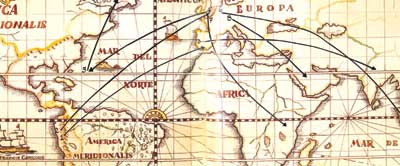 People in Palpa are proud of their aloo chykauni, plains Nepalis
enjoy aloo bhujiya with roti, those living in the highlands salivate over aloo
bhat and aloo daal. Sometimes even better on a cold, dark winter's day is plain
usineko aloo, boiled potatoes with marcha-chillies pounded with salt and garlic.
People in Palpa are proud of their aloo chykauni, plains Nepalis
enjoy aloo bhujiya with roti, those living in the highlands salivate over aloo
bhat and aloo daal. Sometimes even better on a cold, dark winter's day is plain
usineko aloo, boiled potatoes with marcha-chillies pounded with salt and garlic.
In the realm of the spud, Nepal might well be tops-the French have been
trying for centuries to do something innovative with the tuber king and have
managed one decent item, a potato souffle made with milk and a nice Gruyere.
Food writer and philosopher MFK Fisher writes in The Gastronomical Me that the
first time she ate one of these, it was like a revelation. (Although what is
French about French Fries, we never quite figured out.) Potatoes had until then
always seemed dissatisfying, somehow underdressed. Nepal's achievement is not to
be underestimated.
In places like Nepal and Bhutan, the big promoters of
potatoes in the 18th century were monastic groups. Robert Rhoades, an
anthropologist and former Peace Corp volunteer to Nepal, believes that potatoes
made keeping oneself fed a less onerous, time-consuming task, as a result of
which people in monastic communities had more time to devote to arts and craft.
 The influence of potatoes on the eating public here goes even
further. The development of the spud in this country might be said to have
paralleled that of the Nepali nation state. The first recorded reference to
potatoes in Nepal is, after all, in 1793. (See box) Given that potatoes only
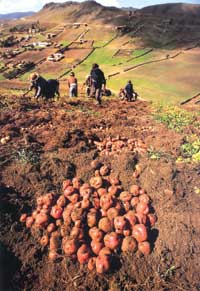
reached the Old World from their birthplace in the Andes in the 17th century,
many Nepalis probably had their first taste of the tuber and nationhood about
the same time. Coincidence? We think not. A decade after Colonel Kirkpatrick
wrote of the potato in Nepal, in 1803 another British traveller, Francis
Buchanan Hamilton wrote thus in An Account of the Kingdom of Nepal and of the
Territories Annexed to this Dominion by the House of Gorkha: "In the hilly parts
of the country (Solanum tuberosum) has been introduced, and grows tolerably; but
it does not thrive so well as at Patna, owing probably to a want of care."
The influence of potatoes on the eating public here goes even
further. The development of the spud in this country might be said to have
paralleled that of the Nepali nation state. The first recorded reference to
potatoes in Nepal is, after all, in 1793. (See box) Given that potatoes only
reached the Old World from their birthplace in the Andes in the 17th century,
many Nepalis probably had their first taste of the tuber and nationhood about
the same time. Coincidence? We think not. A decade after Colonel Kirkpatrick
wrote of the potato in Nepal, in 1803 another British traveller, Francis
Buchanan Hamilton wrote thus in An Account of the Kingdom of Nepal and of the
Territories Annexed to this Dominion by the House of Gorkha: "In the hilly parts
of the country (Solanum tuberosum) has been introduced, and grows tolerably; but
it does not thrive so well as at Patna, owing probably to a want of care."
Originally cultivated in Peru and the temperate climate of the Andes,
the potato found its way to Europe via the Spanish conquistadors in the 17th
century. Research is divided over whether it was the Portuguese or the Spanish
who first introduced the potato to India shortly thereafter. Today, India is one
of the world's largest producers of potato, after China. "The British in India
grew the potato in their kitchen gardens in summer hill stations like Shimla and
Darjeeling. It probably arrived in Ilam via Darjeeling, and to western Nepal via
Shimla and Naintal through seasonal migrants," says Bhim Bahadur Khatri, a
horticulturist with the Potato Research Program at the National Agriculture
Research Centre (NARC) in Khumaltar. "Potatoes in the Valley probably arrived
via Patna."
Other potato researchers will tell you that more than
anything else, the introduction of the potato into the Himalaya, had a massive
impact on the population growth in the region. "Like in Europe," says Dr.
Alejandro Camino, a Peruvian academic with the International Centre for
Integrated Mountain Development (ICIMOD), "the root crop produced a population
explosion." The introduction of potatoes to the highlands allowed communities to
move higher, and also stay through the winter in their high-altitude homes.
 This, in a way, is exactly why the Potato Research Program was set
up in 1991, to increase the production of potato to feed a rapidly growing
population. It produces clean seeds through tissue culture, educates farmers to
improve traditional seed practice, and is even experimenting with growing
potatoes from the seeds of the flower and not the tuber, as is traditionally
done. Every year, the centre distributes 200,000 disease-free seeds germinated
in its laboratory. "This may be peanuts considering the demand. But these are
good quality seeds and it's the initial first step to flush out the use of
degenerated seeds," says Khatri.
This, in a way, is exactly why the Potato Research Program was set
up in 1991, to increase the production of potato to feed a rapidly growing
population. It produces clean seeds through tissue culture, educates farmers to
improve traditional seed practice, and is even experimenting with growing
potatoes from the seeds of the flower and not the tuber, as is traditionally
done. Every year, the centre distributes 200,000 disease-free seeds germinated
in its laboratory. "This may be peanuts considering the demand. But these are
good quality seeds and it's the initial first step to flush out the use of
degenerated seeds," says Khatri.
After rice, maize and wheat, potato
production in Nepal is fourth in terms of area coverage. In terms of
productivity, however, the miracle tuber is first in terms of production per
unit area. But we have some catching up to do-Nepal could grow 125 tons per
hectare, it manages less than a tenth of that.
Things have changed
beyond belief in the last 20 years. "Until 15 years ago, there were some Nepalis
who had never eaten potatoes, but on the whole, now, much of Nepal has some sort
of potato diet. It's one of the few crops that can be grown the year round,"
says Bhairab Risal, a communications expert. In the 1980s Risal was involved in
a Swiss project (the Swiss helped promote potatoes in Nepal as early as 1960) to
motivate Nepali farmers in the mid-hills and high hills of Nepal to store
standard potato seeds in rustic stores at 6,000 ft. "It meant that Nepali
farmers wouldn't have to rely on potato seeds entering from neighbouring India,"
says Risal "The culture among Nepali farmers has always been to use the good
produce for their own consumption and store the okay ones for seed. This
increases the probability of a bad crop." Degenerative seeds from India and
Nepal's not-so-strict quarantine rules also affected Nepal's potato yield. The
project did was build rustic stores across the country, in Ilam, Letang in
Morang, Sunsari and Panchthar in the east, Dolakha in the centre, Kaski and
Surkhet in the western and middle west development regions, and taught farmers
to store quality seeds to ensure a next generation of fine potatoes. Most of
these attempts have borne fruit that is visible till today.
The Potato
Research Program currently recommends six varieties of spuds for Nepal. That may
seem like nothing compared with the 4,000-odd strains that the Peru-based
International Potato Centre classified there, but then the potato is intertwined
with the very origins of Peru. Legend has it that when the first Inca ruler
Manco Cap?c and his wife Mama Ocllo emerged from Lake Tititica to found the Inca
empire, the first thing the god Wirachocha taught them was to plants potato
fields.
Aloo ko achar
 Ingredients
? pound potatoes
? cup sesame seeds
?
teaspoon fenugreek seeds
? teaspoon turmeric
? teaspoon salt
?
teaspoon chilli powder
2 tablespoon mustard oil
Juice from 2 lemons or
? teaspoon chook or
1 teaspoon mango powder
Boil the potatoes. Peel
and cut each into eight pieces. Roast sesame seeds lightly in a pan without
using any grease until they start to pop, then grind them in a blender. Mix
potatoes, sesame powder, salt and chilli powder. Squeeze the lemons into this
mixture. Heat the mustard oil in a small pan and fry fenugreek seeds until they
blacken, then fry the turmeric. Add to the potato mixture with a very small
quantity of water.
Time required: 15-50 minutes
Serves: Four-six persons
Sukhe aloo
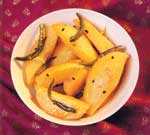 Ingredients
1 pound potatoes
3 tablespoons butter
1
onion
? teaspoon turmeric
? tablespoon coriander leaves chopped
?
teaspoon cumin seed
salt to taste
pinch of chilli
Wash, peel and
quarter potatoes. Heat butter and brown onion. Add cumin, turmeric, coriander,
and potatoes. Mix well and fry for ten minutes on low heat, stirring frequently.
Cook till potatoes are done, adding salt and chilli 10 minutes before they are
cooked through.
Time required: 35-40 minutes
Serves: Two-four persons
Aloo Raita
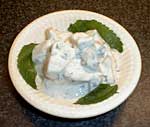 Ingredients
2 cups yoghurt
2 big potatoes
? cup tomatoes
sliced
? cup teaspoon cumin seeds (dry fry and powder)
? cup teaspoon
salt
pinch of black pepper
pinch of chilli pepper
1 tablespoon
chopped coriander leaves
Boil potatoes, peel and cut into fine pieces. Mix
with tomatoes. Beat yoghurt smooth, add cumin powder, salt and pepper. Fold into
tomatoes and potatoes. Garnish with chilli powder and coriander leaves.
Time
required: Five minutes
Serves: Four persons
From The Joys of
Nepalese Cooking
POTATOE
"I had heard, before my visit to Nepaul, that our most esteemed
kitchen vegetables did not only grow there in much higher perfection than in
Bengal, but that the propagation of them was annually continued from their own
seed, whereas the short duration of our cold season admits but of a scanty and
degenerate produce not to be depended upon. My disappointment, therefore, was
very great on finding the fact otherwise, and on being assured that they could
not raise even potatoes, without procuring every year from Patna fresh roots for
sowing; I think it extremely probable, however, that their failure in this
respect has been occasioned solely by want of attention or skill, having no
doubt, for my own part, that with proper management, there are few of our
hortulan productions, whether fruit, flower, or herb, which might not be
successfully reared, and abundantly multiplied, either in the valley of Nepaul
itself, or in one or other of the numerous situations adjacent to it. The only
kitchen vegetables we met with here were cabbages and peas, both of which were
of the worst kind. They have the Tibet turnip, but cannot raise it, any more
than the potatoe, without renewing the seed annually."
Colonel Kirkpatrick in An Account of the Kingdom of Nepaul,
A Mission to that Country in the Year 1793.