
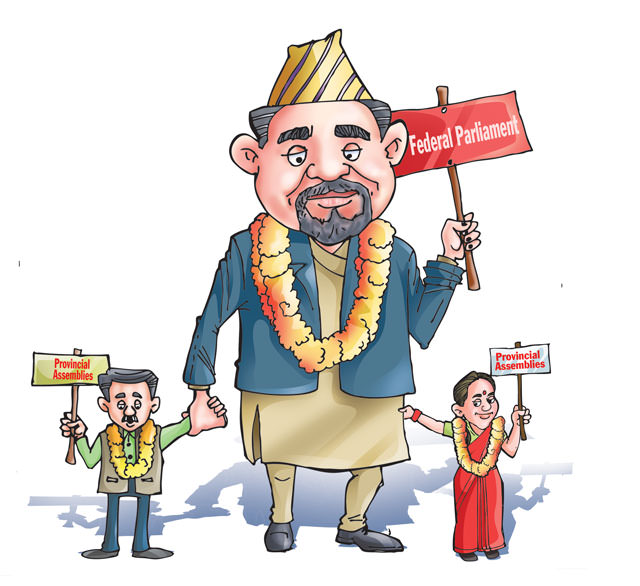
In a month or so, when the new Parliament and seven state assemblies come into being, Nepal will join a list of countries ruled by federal governments.
Parliamentary and provincial elections being held simultaneously in two phases (26 November and 7 December) will be the last step towards replacing Nepal’s obsolete unitary state with a federal system.
But electing the Parliament and state assemblies does not necessarily ensure the kind of decentralisation that Nepalis have long needed. As the director of The Asia Foundation Nepal, George Varughese, argues in a commentary, those who ran and benefitted from the centralised system are desperately clinging to the status quo.
‘It shows how difficult it is to change a mindset towards orchestrating governance and development from Kathmandu,’ he writes.
That each province will elect its own parliament from these polls is what makes them really historic. But no political party has come up with manifestos exclusively for provinces, and only a very few prominent faces are in the race to be in the state assemblies.
In every constituency, a parliamentary candidate is leading his (rarely her) party’s election campaign and provincial candidates are simply following along like sidekicks. This reveals the top leaders’ proclivity for the unitary setup, and how disinterested they are in real decentralisation.