
Protecting peace with pictures

Researcher makes an academic exploration of photographic documentation of post-conflict societies

Shristi KarkiReviews

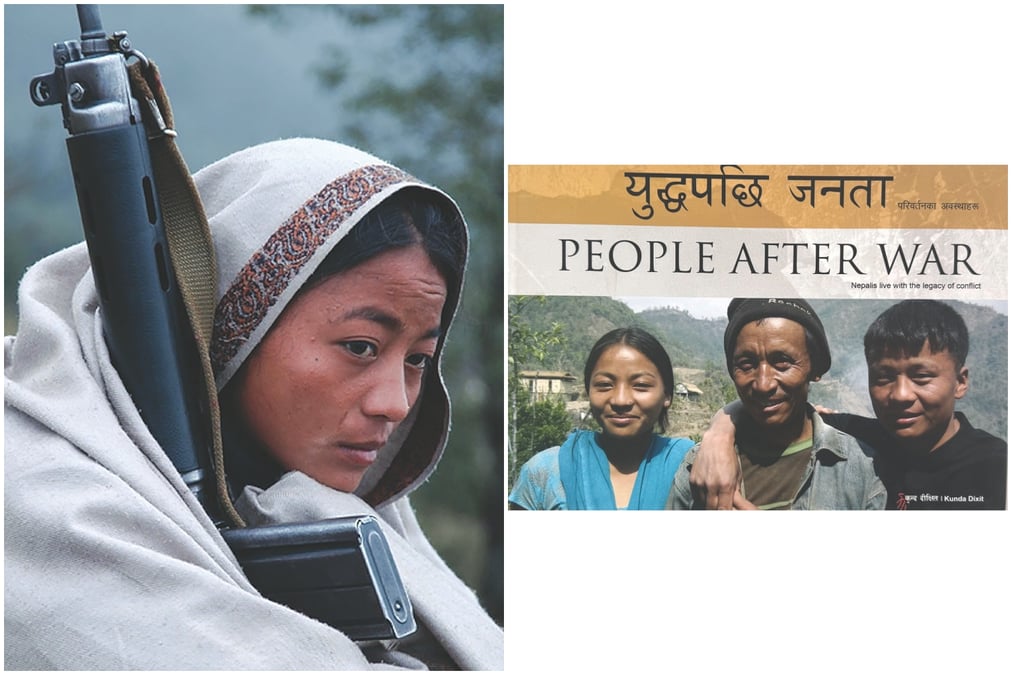
WAR AND PEACE: Sagar Shrestha's photo of 'Comrade Chuanti' (left) in the book, A People's War, and Charles Havilland's photograph of her identified as Juna Rai with her father and brother on the cover of People After War (right).

A mushroom cloud rising over Hiroshima after the US dropped an atom bomb on the city in 1945. Children fleeing a US napalm attack on a Vietnamese village in 1972. A lone man carrying shopping bags standing in front of a line of tanks on Tiananmen Square in 1989. Passengers lying dead in the aftermath of a Maoist ambush of a passenger bus in Chitwan in 2005. Children desperately extending utensils in the hope of recieving aid amid the genocide in Gaza.

The history of violence, conflict, and genocide across the world is well documented and ingrained in the global consciousness. But what comes to mind when people are told to conjure an image of peace?

The foreword of Tiffany Fairey’s new book Imaging Peace, asks this very question, leaving the reader to ponder. Unlike imagery of violent events, photos of peace are passive symbols – a V sign, a dove, an olive branch, a dove carrying an olive branch.

One could argue that depicting peace has limitations. After all, in the absence of violence, don’t all photographs depict peace? But in societies which have faced wars, conflicts, and genocide, peace is not a foregone conclusion, it needs to be built and protected. The end of war does not automatically mean peace.

This is where peace photography comes in.

COUNTER ARCHIVE

Fairey’s book looks at various methods of the visual documentation of peace in six countries which have faced armed conflicts, genocide, and violent events: in Colombia, Rwanda, Nepal, Northern Ireland, Mexico, as well as Bosnia and Herzgovina.

The approaches include photovoice, photo mentorship, therapeutic and participatory photography, and in the case of Nepal, visual archives that focus directly on the memory and aftermath of the decade-long Maoist conflict.

The Nepal chapter looks at post-conflict visual documentation by three collectives in the aftermath of the decade-long Maoist insurgency: a trilogy of books and travelling exhibitions titled A People War, Never Again, and People After War led by journalist Kunda Dixit, who is the publisher of Nepali Times, The Feminist Memory project initiated by the Nepal Picture Library, and Memory, Truth and Justice, of Voices of Women (VOW) media.

The case studies are examples of a 'counter archive', a component of peace photography which subverts established historical accounts and creates space for previously sidelined and intersectional stories to be shared.

Through travelling exhibitions and books, the initiatives allowed what began as a collection of photographs to evolve into testimonies, facilitating discourse and ultimately helping healing.

Fairey argues that in Nepal, like elsewhere in the world, historical archives are repositories of power structures, and archival practices have served to uphold dominant historical narratives of the decade-long conflict while excluding ‘marginalised and plural histories’.

‘Such archives not only establish and legitimise hidden and revised histories, but by making them visible they work to activate and build public and political imaginaries,’ writes Fairey.
Ashmita khadka
Photo: NEPAL PICTURE LIBRARY

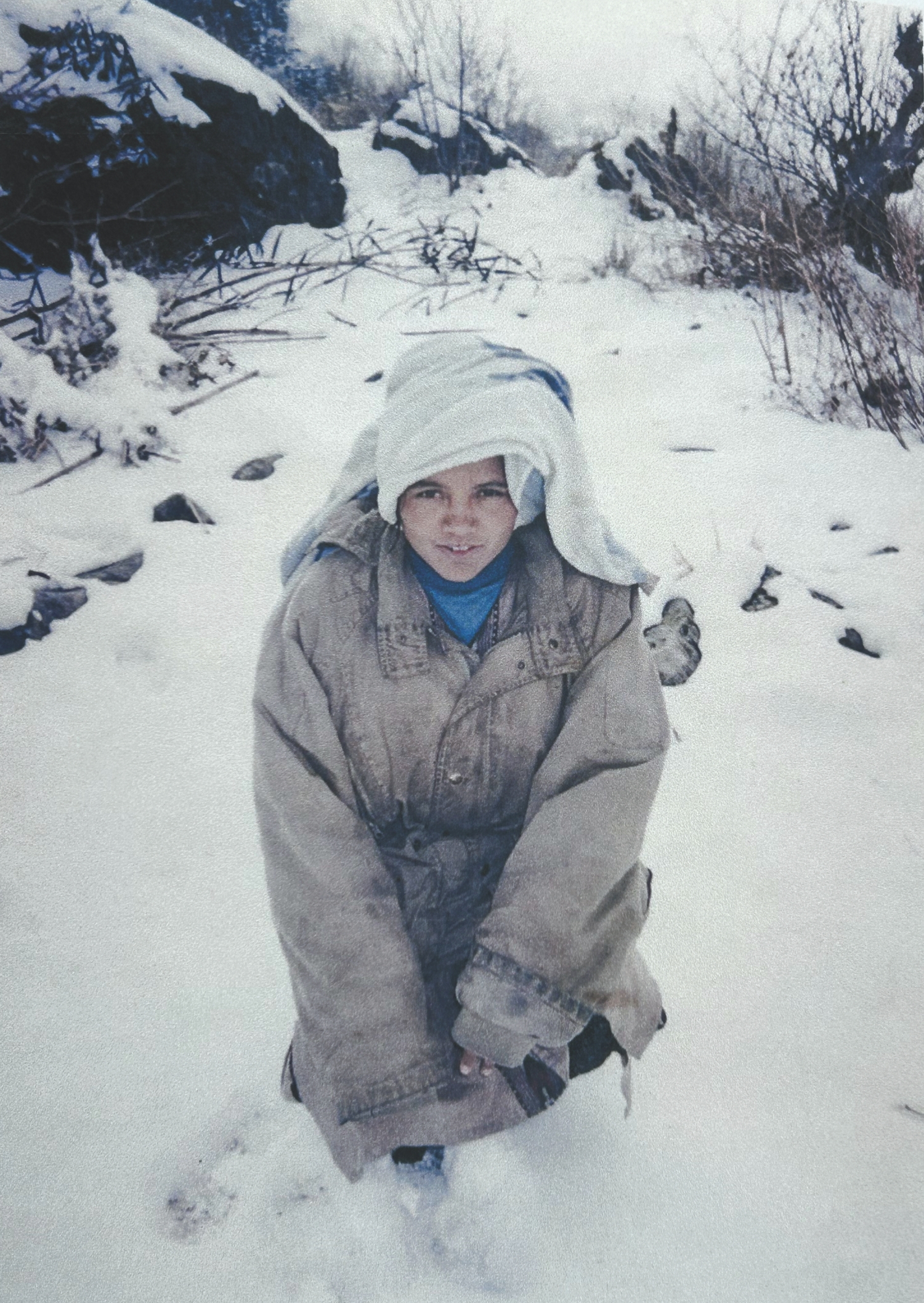
One of the women featured in the Feminist Memory project is Ashmita Khadka. In an archival image, Khadka is smiling at the camera (pictured, above) with her hair wrapped in a towel as she kneels in the snow, happy because to wash after many days.
Khadka joined the militia with 11 others when she was only 12 because teachers at her school had said that the Maoists would give women their rights. She spent the her insurgency years underground as a media member.

All her comrades were either killed or disappeared in the conflict. She survived because her role was underground.

"There is no peace because the reasons we went to war are still there," Khadka tells Fairey. It is a sentiment many in Nepal share.

The stories in the Feminist Memory Project also show how post-conflict peace processes are linked to gendered justice.

A significant number of women took up arms on behalf of the Maoists because the resistance promised inclusion and environment. And for many women who joined the armed struggle, those promises that saw them recruited into a rebellion remain unkept, 30 years after the beginning and 20 years after the end of the insurgency.

‘Documenting histories of the harms and abuses of conflict…and of women’s activism and resistance in the face of gendered violence and injustice…these archives reject the official narrative that consigns the conflict to the past while insisting that Nepal is at peace,’ writes Fairey.

Elsewhere in the world, different approaches to peace photography have produced varied results.

To Yuliana Andrea David Hidalgo, a young girl in Colombia, peace means her young siblings and her neighbour’s kids now hide under beds to play hide-and-seek, not for safety from flying bullets.

For Rwandan photographer and mentor Jacques Nkinzingabo, contemporary Rwanda is reflected in the friendship and camaraderie of young men who have come to the city from across the country to make a living, which they do with smiles on their faces.

For a Northern Irish photographer, who was institutionalised due to the trauma endured during the Troubles, freedom means getting to look at the vast sea after their discharge from a mental health facility.

For indigenous communities in Mexico, using photography to reconnect with their history and heritage after being denied their identity by the state apparatus is a symbol of how these communities are taking their time to heal. To an inter-ethnic couple in Sarajevo, building a life together over 28 years of marriage in post-segregation Bosnia and Herzegovina is a milestone in a nation held together in fragile peace.

And for former Maoist guerilla Tara Basnet, her small convenience store in Koteswor is proof of her liberation, but she has not forgotten, and nor will she let anyone else forget, the contributions she made as Comrade Rashmi to Nepal’s political transformation.

Book details

The premise that Fairey presents at the beginning of her book is that how we see peace, and who sees it, matters. The stories that these projects have allowed people to tell the world proves her thesis to be true.

Their lived experiences, the context of the violence their peoples went through, and what they envision as a peaceful life might vary, but the aspiration of enduring peace is universal.

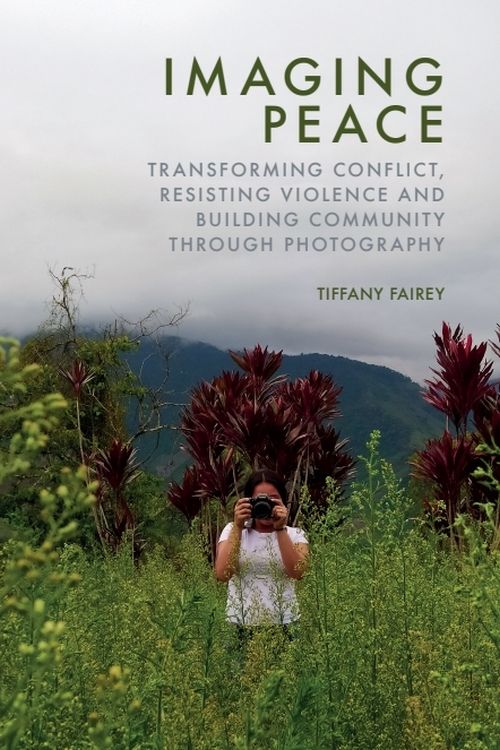
Imaging Peace: Transforming Conflict, Resisting Violence, and Building Community through Photography

by Tiffany Fairey

Edinburgh University Press, 2026

370 pages, £34.99