 |
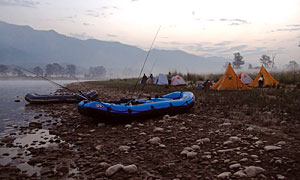
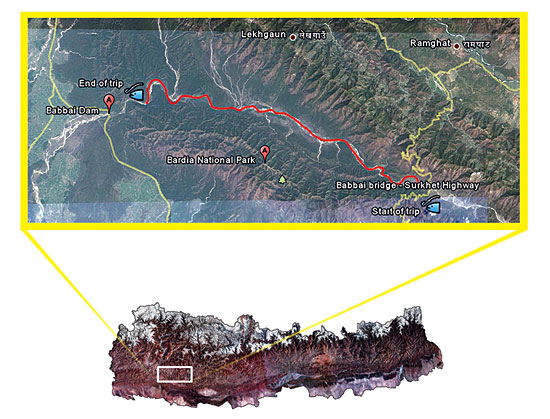
It feels like a dream already, yet it's only been a couple of weeks since we returned to the urban jungle from the Babai Valley in Bardia National Park. This is perhaps the most pristine wilderness remaining in Nepal. Regular sightings of wild elephants are guaranteed, as are the chances of seeing a Royal Bengal Tiger. But we were on another quest altogether: we were seeking the Golden Mahseer, the legendary gamefish of the Himalayan waters.
 PICS: ARUN RANA |
The Golden Mahseer was immortalised by Jim Corbett, the hunter-turned-conservationatist, in his classicwork 'Maneaters of Kumaon'. In the chapter titled 'The fish of my dreams', Corbett describes watching a shoal of Mahseer in a deep pool and casting his lure in front of the biggest fish. The specimen he landed weighed a whopping 22 kg – probably around five feet long. Sadly, those days are gone. Thanks to overfishing, habitat destruction, and pollution, such mammoth Mahseer are only to be seen behind the dusty frames of black and white prints from decades ago.
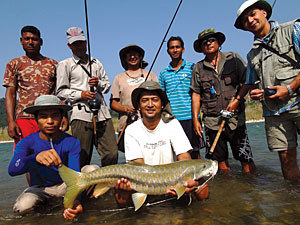
But absence makes the heart fonder, at least for anglers. There is always the dream of landing the big one. Our group was doubly unusual in being composed of anglers from Kathmandu and Dharan – myself, Viplava, Denis, Upen and Bharat – dedicated to the philosophy of catch-and-release that views fishing as a sport rather than a means to dinner. Each of us has been fishing the waters of Nepal for years on end in pursuit of this magnificent fish. Trekking over rugged hills for days at a time and camping on the banks of rivers that only ghosts are thought to frequent, we harboured the dream of one day breaking the record catch for a Golden Mahseer (Tor putitora), currently set at 12.25 kg.
But much bigger fish once swam in our waters. Today, the odds are stacked against the Golden Mahseer. These fish are long-distance migrants that swim from the lower stretches of our large rivers to their spawning grounds upriver, every monsoon. It's a minor miracle that they survive the mass harvesting with gill nets and hooked lines stretched across rivers in the lowlands, but even more so if they find shallow, gravel-rich streams to spawn in upriver. Destructive excavation across Nepal means any river with road access has been stripped of spawning grounds. The lucky few that manage to spawn will lay around 20,000 eggs at a time, repeating this several times over the monsoon.